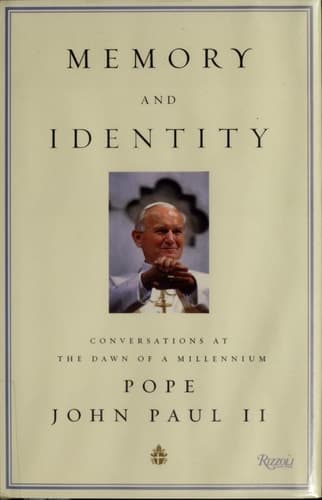
Memory and Identity: Conversations at the Dawn of a Millennium
Pope John Paul IIPublished2005
Pages192
Formathardcover
PublisherRizzoli
Synopsis
In conversations with two Polish philosophy professors, the Pope offers his views on recent history and politics, evil, freedom, democracy, the moral status of modern Europe, and related topics, including the attempt on his life.
Recommendations
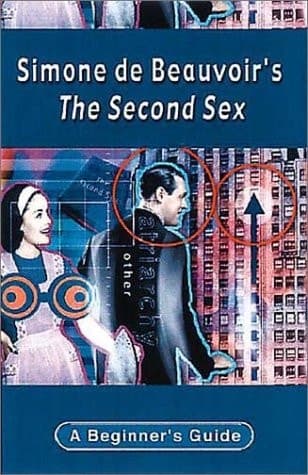
Simone de Beauvoir's the Second Sex
by George Myerson
Like John Paul II's meditations on freedom and moral philosophy, de Beauvoir constructs a rigorous philosophical argument through lived experience and historical analysis. Both writers grapple with how individuals navigate moral choice within systems larger than themselves, though they arrive at strikingly different conclusions—which is precisely why reading them together creates productive tension rather than echo chamber confirmation.
View book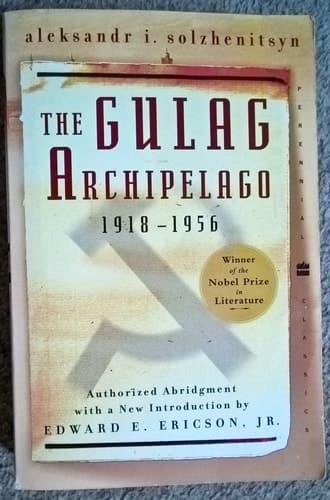
The Gulag Archipelago 1918-1956
by Aleksandr I. Solzhenitsyn
Both works emerge from Eastern European thinkers processing totalitarianism and its aftermath, but Solzhenitsyn approaches through testimony and witness rather than dialogue. His unflinching documentation of evil's machinery complements John Paul II's more abstract meditations on suffering and freedom—you'll find the Pope's philosophical points suddenly made visceral and concrete through Solzhenitsyn's firsthand accounts.
View book
C-SPAN's Traveling Tocqueville's America: Retracing the 17-state tour that inspired Alexis de Tocqueville's poltical classic Democracy in America
by Anne Bentzel
Here's your surprise recommendation: a 19th-century French aristocrat's travel journal that reads like a conversation partner across centuries. Tocqueville shares John Paul II's concern about democracy's spiritual foundations and whether modern societies can sustain moral coherence, but he's asking these questions through observations of American civic life rather than papal reflection—it's philosophy disguised as journalism, which gives it an immediacy the Pope's dialogues sometimes lack.
View book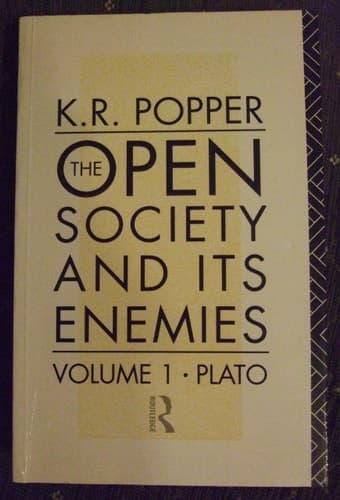
The Open Society and Its Enemies
by Karl Raimund Popper
Popper's dense but rewarding defense of liberal democracy against totalitarian thinking directly engages the same historical moment and philosophical stakes as John Paul II's reflections. Where the Pope speaks from religious authority, Popper argues from logic and epistemology—but both are essentially asking: what intellectual and moral habits keep free societies from collapsing into authoritarianism?
View book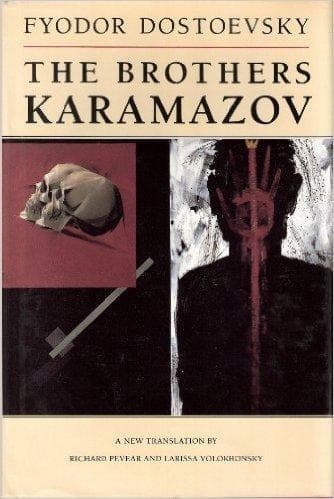
Fyodor Dostoevsky's the Brothers Karamazov (Bloom's Modern Critical Interpretations)
by Unknown
This novel does what John Paul II's conversations attempt philosophically: it stages the actual collision between faith, doubt, freedom, and morality through characters who embody different positions rather than simply arguing them. The Grand Inquisitor sequence alone is a more dramatic version of the Pope's wrestling with evil and authority—you'll recognize his concerns, but filtered through the psychological complexity only fiction can achieve.
View bookAbout Pope John Paul II
P
Pope John Paul II
1920–2005
Biography coming soon.
View author page