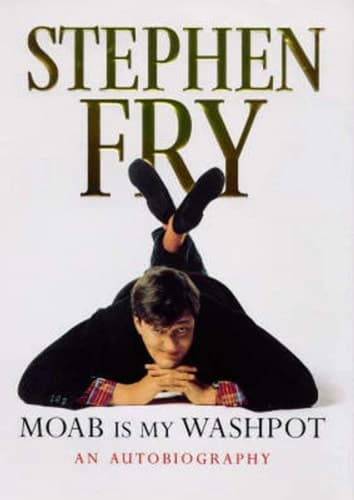
Synopsis
"Stephen Fry has already given readers a taste of his tumultuous adolescence in his autobiographical first novel, The Liar, and now he reveals the equally tumultuous life that inspired it. Sent to boarding school at the age of seven, he survived beatings, misery, love affairs, carnal violation, expulsion, attempted suicide, criminal conviction and imprisonment to emerge, at the age of eighteen, ready to start over in a world in which he had always felt a stranger. One of very few Cambridge University graduates to have been imprisoned prior to his freshman year, Fry is a character who continues to attract controversy, empathy and real devotion.
Recommendations
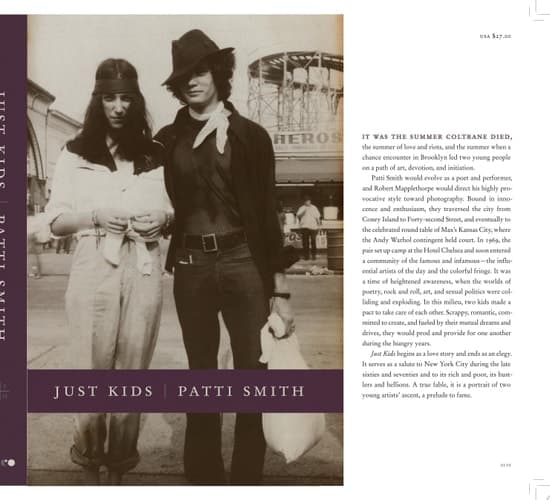
Just Kids
by Patti Smith
Smith's memoir has that same unflinching honesty about artistic struggle, sexual awakening, and survival in hostile environments that Fry brings to his own story. Both writers refuse to sanitize their younger selves, and both found salvation through wit, intelligence, and an almost defiant commitment to becoming who they needed to be—but Smith's New York bohemia of the 1970s gives you a completely different landscape for exploring similar themes of displacement and reinvention.
View book
Donna Tartt's The Secret History A Reader's Guide
by Tracy Hargreaves
Tartt captures that particular claustrophobia of elite institutions—the seduction and toxicity of belonging to an exclusive circle—with the same dark intelligence Fry brings to his boarding school years. Where Fry's narrative is confessional and direct, Tartt builds her story through layers of retrospection, but both explore how brilliant people can become trapped by their own brilliance and the corrupting influence of those who admire them.
View book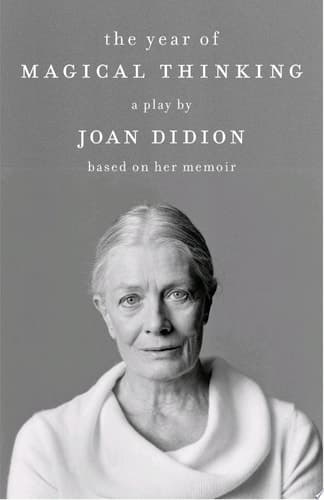
The Year of Magical Thinking A Play by Joan Didion Based on Her Memoir
by Joan Didion
Here's your surprise recommendation: this isn't a memoir in the traditional sense, but rather Didion's meditation on grief and the mind's attempt to make sense of chaos. If you loved Fry's ability to excavate emotional truth from personal catastrophe, Didion's crystalline prose and her refusal to offer false comfort will resonate deeply—she writes about loss the way Fry writes about survival, with unflinching precision and no sentimentality.
View book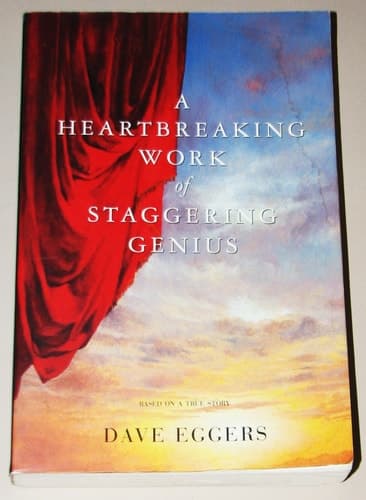
A Heartbreaking Work Of Staggering Genius : A Memoir Based on a True Story
by Dave Eggers
Eggers shares Fry's gift for making you laugh while describing genuinely devastating circumstances—in this case, raising his younger brother after their parents' deaths. Both writers use their considerable wit as a survival mechanism and a way of connecting with readers, and both are unafraid of digression, footnotes, and formal experimentation to capture the texture of their experiences rather than just the plot points.
View book
One Day, when I was Lost A Scenario Based on Alex Haley's "The Autobiography of Malcolm X"
by James Baldwin
Published in 1965, this gives you that decade-spanning perspective while offering something structurally different: a life transformed through intellectual awakening and spiritual conviction. Like Fry, Malcolm X writes about imprisonment, alienation, and the power of education to remake a self, but his journey outward toward activism contrasts with Fry's more inward psychological excavation—together they create a fuller picture of how brilliant minds survive and transcend their circumstances.
View bookAbout Stephen Fry
S
Stephen Fry
Born 1957
Stephen John Fry (born 24 August 1957) is a British actor, writer, journalist, comedian, television presenter and film director. He first came to attention in the 1982 Cambridge Footlights Revue presentation, "The Cellar Tapes", which also included Hugh Laurie, Emma Thompson and Tony Slattery. With Hugh Laurie, as the comedy double act Fry and Laurie, he co-wrote and co-starred in A Bit of Fry and Laurie, and the duo also played the title roles in Jeeves and Wooster. As a solo actor, Fry played the lead in the film Wilde, was Melchett in the Blackadder television series and is the host of the quiz show, QI. He also presented a 2008 television series Stephen Fry in America, which saw him travelling across all 50 U.S. states in six episodes. Fry has become known to American audiences for his recurring guest role as Dr. Gordon Wyatt on the Fox crime series Bones. Since the publication of his first novel, *The Liar* (1993), Fry has written three additional novels, several non-fiction works and an autobiography. *Making History* (1997) is partly set in an alternative universe where Adolf Hitler's father is made infertile and his replacement proves a rather more effective Führer. The book won the Sidewise Award for Alternate History. *The Hippopotamus* (1994) centers around Edward (Ted/Tedward) Wallace and his stay at his old friend Lord Logan's country manor in Norfolk. *The Stars' Tennis Balls* (2000) is a modern retelling of The Count of Monte Cristo. Fry's book, *The Ode Less Travelled: Unlocking the Poet Within*, is a guide to writing poetry. In the United Kingdom, he is a well-known narrator of audiobooks, notably the Harry Potter series. He has recorded audio versions of works by Roald Dahl, Michael Bond, A. A. Milne, Anthony Buckeridge and Douglas Adams, as well as several of his own books. When writing a book review for Tatler, Fry wrote under an alias, Williver Hendry, editor of *A Most Peculiar Friendship: The Correspondence of Lord Alfred Douglas and Jack Dempsey*, a field close to Fry's heart as an Oscar Wilde enthusiast. Once a columnist in The Listener and The Daily Telegraph, he now writes a weekly technology column in the Saturday edition of The Guardian. His blog attracted more than 300,000 visitors in its first two weeks of existence. On 26 May 2009, Fry unveiled The Dongle of Donald Trefusis, an audiobook series following the character Donald Trefusis (a character from Fry's novel The Liar and from the BBC Radio 4 series Loose Ends), set over 12 episodes. After its release, it reached No. 1 on the UK Album Chart album chart list. ([Source][1]) [1]: http://en.wikipedia.org/wiki/Stephen_Fry
View author page