Synopsis
Moby-Dick, by Herman Melville, is part of the Barnes & Noble Classics series, which offers quality editions at affordable prices to the student and the general reader, including new scholarship, thoughtful design, and pages of carefully crafted extras. Here are some of the remarkable features of Barnes & Noble Classics:
• New introductions commissioned from today''s top writers and scholars
• Biographies of the authors
• Chronologies of contemporary historical, biographical, and cultural events
• Footnotes and endnotes
• Selective discussions of imitations, parodies, poems, books, plays, paintings, operas, statuary, and films inspired by the work
• Comments by other famous authors
• Study questions to challenge the reader''s viewpoints and expectations
• Bibliographies for further reading
• Indices & Glossaries, when appropriate
All editions are beautifully designed and are printed to superior specifications; some include illustrations of historical interest. Barnes & Noble Classics pulls together a constellation of influences—biographical, historical, and literary—to enrich each reader''s understanding of these enduring works.
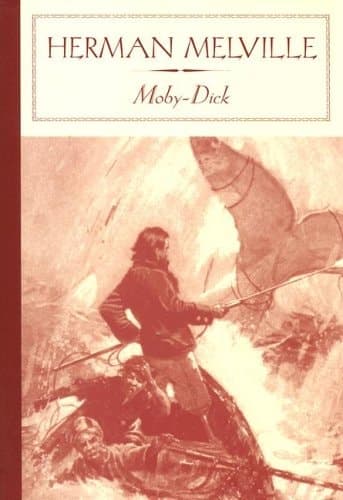
On a previous voyage, a mysterious white whale had ripped off the leg of a sea captain named Ahab. Now the crew of the Pequod, on a pursuit that features constant adventure and horrendous mishaps, must follow the mad Ahab into the abyss to satisfy his unslakeable thirst for vengeance. Narrated by the cunningly observant crew member Ishmael, Moby-Dick is the tale of the hunt for the elusive, omnipotent, and ultimately mystifying white whale—Moby Dick.
On its surface, Moby-Dick is a vivid documentary of life aboard a nineteenth-century whaler, a virtual encyclopedia of whales and whaling, replete with facts, legends, and trivia that Melville had gleaned from personal experience and scores of sources. But as the quest for the whale becomes increasingly perilous, the tale works on allegorical levels, likening the whale to human greed, moral consequence, good, evil, and life itself. Who is good? The great white whale who, like Nature, asks nothing but to be left in peace? Or the bold Ahab who, like scientists, explorers, and philosophers, fearlessly probes the mysteries of the universe? Who is evil? The ferocious, man-killing sea monster? Or the revenge-obsessed madman who ignores his own better nature in his quest to kill the beast?
Scorned by critics upon its publication, Moby-Dick was publicly derided during its author’s lifetime. Yet Melville’s masterpiece has outlived its initial misunderstanding to become an American classic of unquestionably epic proportions.
Includes an extensive Dictionary of Sea Terms (37 pages).
Carl F. Hovde taught at Columbia University for thirty-five years. An editor for the Princeton University Press edition of Henry David Thoreau, he has also written about Ralph Waldo Emerson, Henry James, and William Faulkner.
Recommendations
Billy Budd, Sailor
by Herman Melville
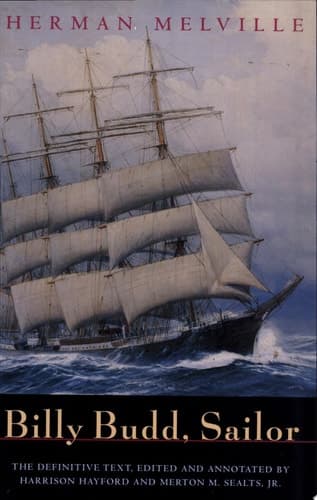
Wait—I know what you're thinking. But hear me out: this novella has none of Moby-Dick's sprawling digression, yet it contains Melville's most concentrated meditation on innocence versus fate. Where Ahab chases his white whale across oceans, here a single ship becomes a microcosm where good and evil collide with tragic inevitability. It's Melville distilled to his essence.
View book
The Narrative of Arthur Gordon Pym of Nantucket
by Edgar Allan Poe
Poe takes the seafaring adventure you loved in Moby-Dick and pushes it toward psychological horror and the unknowable. Like Melville, he layers his narrative with technical detail and obsessive documentation, but where Melville's whale is a force of nature, Poe's Antarctic mysteries become increasingly surreal and nightmarish. Both authors make the ocean itself a character.
View book
Treasure Island, Robert Louis Stevenson
by Brian Phillips
This might seem like a step backward into adventure fiction, but Stevenson does something Melville admired: he creates a narrative where every crew member has their own agenda and moral code. The island itself becomes as much a character as the whale, and the hunt for treasure mirrors Ahab's obsession—except Stevenson explores it through multiple perspectives, showing how the same quest looks different depending on who's pursuing it.
View book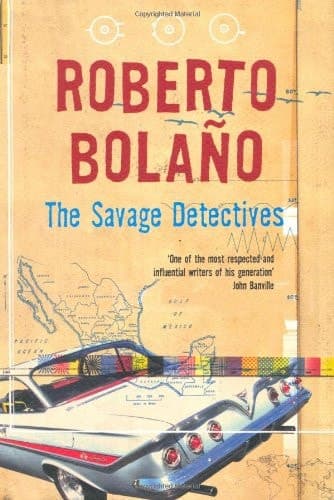
The Savage Detectives A Novel
by Roberto Bolaño
This is my surprise pick, and it's deliberately challenging: Bolaño's novel is obsessive and encyclopedic like Moby-Dick, following a group of poets on a quest that becomes increasingly mythic and doomed. Published in 1998, it proves that Melville's DNA—the digressive narrator, the mixture of mundane detail and cosmic significance, the sense that the hunt matters more than the destination—still animates contemporary literature. You'll recognize the DNA even as the form shocks you.
View book
Wuthering Heights Emily Brontë
by Emily Bronte
I'm recommending this because both Melville and Brontë understand that revenge and obsession are forms of madness that destroy everyone around the obsessed person. Where Ahab's vendetta against the whale consumes the Pequod's crew, Heathcliff's vendetta against his social rivals poisons an entire household across generations. Both authors refuse to let us simply condemn their protagonists—we're forced to understand the wound that created the monster.
View bookAbout Unknown
U
Unknown
Biography coming soon.