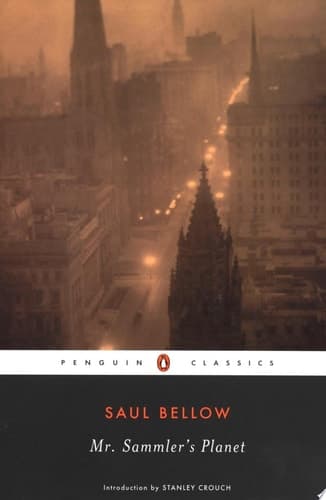
Synopsis
Winner of the National Book Award in Fiction
“An enduring testament and prophecy.” —Chicago Sun-Times
A Penguin Classic
Mr. Artur Sammler, Holocaust survivor, intellectual, and occasional lecturer at Columbia University in 1960s New York City, is a “registrar of madness,” a refined and civilized being caught among people crazy with the promises of the future (moon landings, endless possibilities). His Cyclopean gaze reflects on the degradations of city life while looking deep into the sufferings of the human soul. “Sorry for all and sore at heart,” he observes how greater luxury and leisure have only led to more human suffering. To Mr. Sammler—who by the end of this ferociously unsentimental novel has found the compassionate consciousness necessary to bridge the gap between himself and his fellow beings—a good life is one in which a person does what is “required of him.” To know and to meet the “terms of the contract” was as true a life as one could live. At its heart, this novel is quintessential Bellow: moral, urbane, sublimely humane.
This Penguin Classics edition features an introduction by Stanley Crouch.
For more than seventy years, Penguin has been the leading publisher of classic literature in the English-speaking world. With more than 1,700 titles, Penguin Classics represents a global bookshelf of the best works throughout history and across genres and disciplines. Readers trust the series to provide authoritative texts enhanced by introductions and notes by distinguished scholars and contemporary authors, as well as up-to-date translations by award-winning translators.
Recommendations
The Victim
by W. E. B. Griffin
Like Sammler, Canetti's protagonist is a man of intellect and conscience wrestling with the moral weight of existence in an urban setting—but where Bellow observes madness from a distance, Canetti pulls you into the claustrophobic interior of a man being slowly consumed by his own scruples. Both novels share that rare quality of being philosophically rigorous without ever feeling like essays; the ideas emerge through the texture of daily life.
View book
Ralph Ellison - Invisible Man
by Anke Balduf
Ellison's unnamed narrator, like Sammler, is a witness to American chaos and contradiction, but he's also trapped within it rather than observing from the margins. Both novels use a single consciousness to interrogate what it means to be civilized and seen in a society that seems determined to render you invisible or grotesque—and both find unexpected grace in that struggle.
View book
The remains of the day de Kazuo Ishiguro
by Gallix/François
Here's where I'd normally say 'similar exploration of duty,' but what makes this pairing work is how Ishiguro uses Sammler's exact preoccupation—what does one owe to the 'terms of the contract'?—and slowly reveals the terrible cost of that philosophy. The restraint and precision of Ishiguro's prose mirrors Bellow's urbane tone, but the emotional devastation creeps up on you in a completely different way.
View book
The Apocalyptic Vision of Mikhail Bulgakov's the Master and Margarita (Studies in Slavic Language & Literature)
by Edward E. Ericson
A genuine surprise here, but stay with me: both novels are set in specific historical moments (1960s New York, 1930s Moscow) where the author uses a single observing consciousness to capture a society in the grip of collective delusion. Where Sammler watches moon-landing mania, Bulgakov watches Soviet ideology—but Bulgakov adds a wildly inventive, almost carnivalesque energy that shows how madness can be darkly comic and metaphysically profound at once.
View book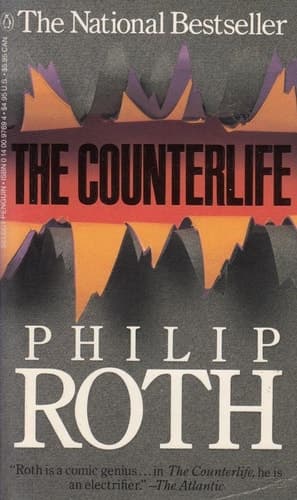
The Counterlife
by Philip Roth
Roth shares Bellow's gift for making intellectual and moral anxiety feel like lived experience, and this novel—with its nested narratives and competing versions of truth—captures that same sense of a civilized mind trying to make sense of a world that refuses coherence. It's also a book about Jewish identity and historical consciousness that doesn't sentimentalize either, much like Sammler's hard-won compassion.
View bookAbout Saul Bellow
S
Saul Bellow
1915–2005
Saul Bellow was a Canadian-born American writer. For his literary contributions, Bellow was awarded the Pulitzer Prize, the Nobel Prize for Literature, and the National Medal of Arts.[2] He is the only writer to have won the National Book Award three times, and the only writer to have been nominated for it six times. Source and more information: http://en.wikipedia.org/wiki/Saul_Bellow
View author page