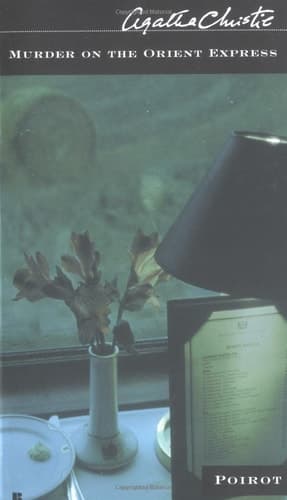
Murder on the Orient Express A Hercule Poirot Mystery
Agatha ChristiePublished2004
Pages322
Formatpaperback
PublisherBerkley Books
Synopsis
While en route from Syria to Paris, in the middle of a freezing winter's night, the Orient Express is stopped dead in its tracks by a snowdrift. Passengers awake to find the train still stranded and to discover that a wealthy American has been brutally stabbed to death in his private compartment. Incredibly, that compartment is locked from the inside. With no escape into the wintery landscape the killer must still be on board. Fortunately, the brilliant Belgian inspector Hercule Poirot is also on board, having booked the last available berth.
Recommendations
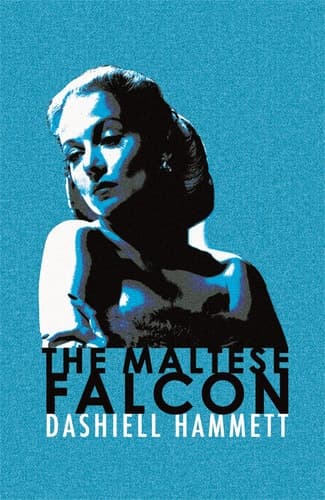
The Maltese Falcon
by Dashiell Hammett
Hammett's Sam Spade operates in the same locked-room logic as Poirot, but with a harder edge—everyone on the page is a potential suspect with their own agenda, and the detective must navigate lies layered upon lies. Where Christie gives you a puzzle to solve, Hammett gives you a moral maze, yet both demand you pay attention to every detail and motive.
View book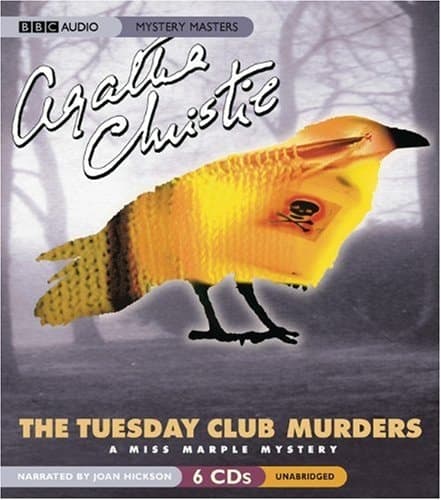
The Tuesday Club Murders
by Agatha Christie
This is my surprise pick for you—it's technically a mystery, but Osman is far more interested in the warmth between his amateur sleuths than in the whodunit mechanics. You'll recognize the careful clue-planting and misdirection you loved in Christie, but filtered through genuine affection for characters who bicker like old friends. It's cozy mystery with actual emotional weight.
View book
The Moonstone, by Wilkie Collins
by Jean-Pierre Naugrette
Published in 1868, this is the grandfather of the locked-room mystery—a stolen diamond, a house full of suspects, and a detective (Sergeant Cuff) who must untangle motive from opportunity. Collins practically invented the form that Christie perfected, and reading it after Orient Express lets you see how the DNA of the modern mystery thriller was established. The narrative structure, told through multiple perspectives, influenced everything that came after.
View book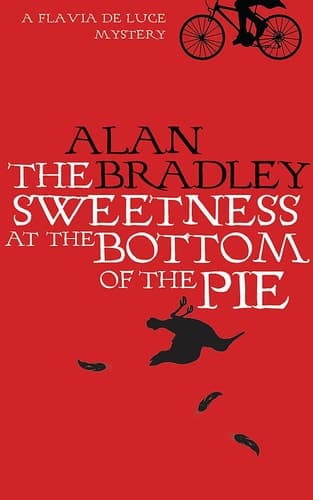
The Sweetness at the Bottom of the Pie
by Alan Bradley
Eleven-year-old Flavia de Luce solves mysteries with the same meticulous attention to detail as Poirot, but she's operating in post-WWII England with chemistry as her weapon rather than psychology. Bradley gives you that same satisfaction of watching a brilliant mind work through clues, but with a protagonist who's delightfully sharp-tongued and genuinely young—it's Christie's methodology applied to a character who feels entirely fresh.
View book
Reading The Water (David Hughes Fishing Library)
by Dave Hughes
A departure, I know—this is narrative nonfiction about a 1740s naval court-martial where competing testimonies and hidden motives create a mystery as intricate as any fiction. What drew you to Orient Express was likely the architecture of suspicion: how does one person's truth become another's lie? Mametsch builds that same tension from real events, and you'll find yourself doing exactly what Poirot does—weighing evidence and character against the official story.
View bookAbout Agatha Christie
A
Agatha Christie
1890–1976
Agatha Mary Clarissa Miller was born in Torquay, Devon, in the United Kingdom, the daughter of a wealthy American stockbroker. Her father died when she was eleven years old. Her mother taught her at home, encouraging her to write at a very young age. At the age of 16, she went to Mrs. Dryden's finishing school in Paris to study singing and piano. In 1914, at age 24, she married Colonel Archibald Christie, an aviator in the Royal Flying Corps. While he went away to war, she worked as a nurse and wrote her first novel, The Mysterious Affair at Styles (1920), which wasn't published until four years later. When her husband came back from the war, they had a daughter. In 1928 she divorced her husband, who had been having an affair. In 1930, she married Sir Max Mallowan, an archaeologist and a Catholic. She was happy in the early years of her second marriage, and did not divorce her husband despite his many affairs. She travelled with her husband's job, and set several of her novels set in the Middle East. Most of her other novels were set in a fictionalized Devon, where she was born. Agatha Christie is credited with developing the "cozy style" of mystery, which became popular in, and ultimately defined, the Golden Age of fiction in England in the 1920s and '30s, an age of which she is considered to have been Queen. In all, she wrote over 66 novels, numerous short stories and screenplays, and a series of romantic novels using the pen name Mary Westmacott. She was the single most popular mystery writer of all time. In 1971 she was made a Dame Commander of the Order of the British Empire.
View author page