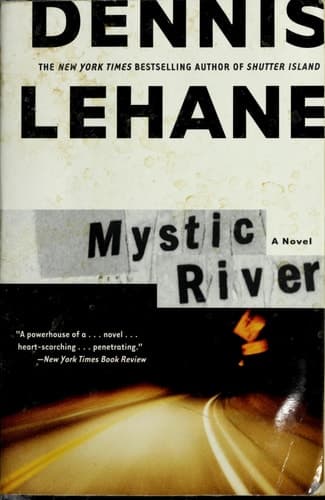
Synopsis
When they were children, Sean Devine, Jimmy Marcus, and Dave Boyle were friends. But then a strange car pulled up to their street. One boy got into the car, two did not, and something terrible happened -- something that ended their friendship and changed all three boys forever.
Twenty-five years later, Sean is a homicide detective. Jimmy is an ex-con who owns a corner store. And Dave is trying to hold his marriage together and keep his demons at bay -- demons that urge him to do terrible things. When Jimmy's daughter is found murdered, Sean is assigned to the case. His investigation brings him into conflict with Jimmy, who finds his old criminal impulses tempt him to solve the crime with brutal justice. And then there is Dave, who came home the night Jimmy's daughter died covered in someone else's blood.
A tense and unnerving psychological thriller, Mystic River is also an epic novel of love and loyalty, faith and family, in which people irrevocably marked by the past find themselves on a collision course with the darkest truths of their own hidden selves.
Recommendations

Winning by Losing Drop the Weight, Change Your Life
by Jillian Michaels
Connelly shares Lehane's gift for weaving together multiple character perspectives across a single crime, but he layers in the procedural details of detective work with surgical precision. Like Mystic River, this novel examines how a murder investigation cracks open the hidden lives of seemingly ordinary people, revealing moral compromises and buried secrets that feel earned rather than manufactured.
View book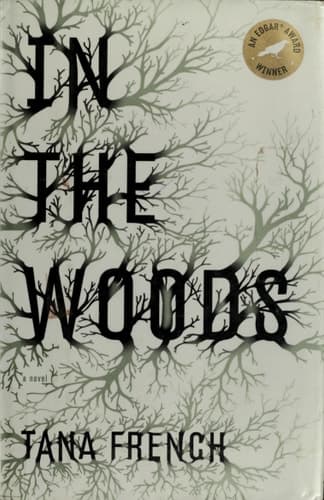
In the Woods
by Tana French
French constructs her mystery with the same architectural precision as Lehane—a detective haunted by childhood trauma investigating a crime that mirrors his past—but she's even more interested in the unreliable narrator's psychology. The way she slowly reveals what the detective is hiding from himself (and us) creates that same creeping dread you felt watching Dave Boyle unravel.
View book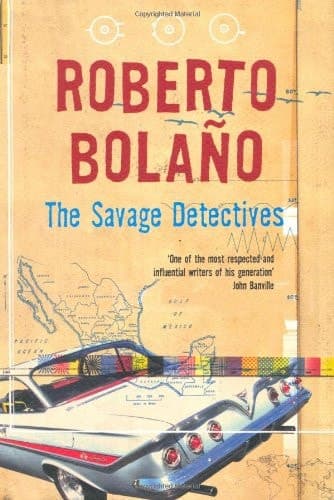
The Savage Detectives A Novel
by Roberto Bolaño
This is the curveball, but hear me out: Bolaño's novel shares Lehane's obsession with how a central mystery (or absence) warps everyone around it, and how loyalty and friendship become complicated by secrets and time. Instead of a murder investigation, it's a literary quest, but the emotional architecture—young men bound by something they can't quite articulate, their lives diverging and reconverging—echoes Mystic River's meditation on how the past refuses to stay buried. It's denser and more experimental, but the emotional core is surprisingly similar.
View book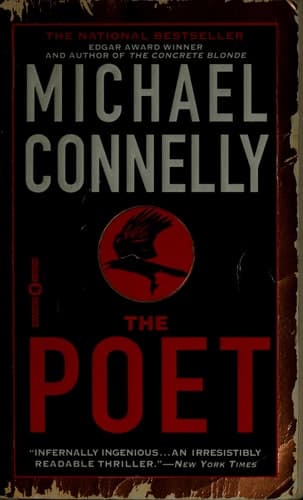
The Poet
by Michael Connelly
Wait—I know I just recommended Connelly, but this is a different book and a different kind of investigation entirely. A journalist (not a cop) pursues a serial killer across state lines, and the obsession consumes him in ways that echo Jimmy Marcus's descent into vigilantism. Connelly captures that same sense of a man whose past makes him uniquely suited—and uniquely vulnerable—to a particular kind of darkness.
View book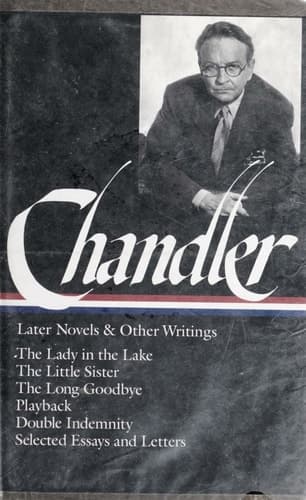
Raymond Chandler: Later Novels and Other Writings: The Lady in the Lake / The Little Sister / The Long Goodbye / Playback /Double Indemnity / Selected Essays and Letters (Library of America)
by Raymond Chandler
Published in 1953, this is your bridge to an earlier tradition of crime fiction that influenced Lehane directly. Marlowe's investigation into a friend's apparent suicide mirrors Sean Devine's position—caught between loyalty and truth-seeking—but Chandler's prose has a lyrical, almost noir-poetic quality that shows you where Lehane learned to make a city feel like a character. The moral ambiguity about what friendship actually requires will feel familiar.
View bookAbout Dennis LeHane
D
Dennis LeHane
Born 1965
Dennis Lehane is an American author. He has published more than a dozen novels; the first several were a series of mysteries featuring recurring characters, including *A Drink Before the War*. Four of his novels were adapted into award-wining films of the same names: *Mystic River* (2003), *Shutter Island* (2010), and *Gone Baby Gone* (2007) and *Live by Night* (2016). [*--Wikipedia*](https://en.wikipedia.org/wiki/Dennis_Lehane)
View author page