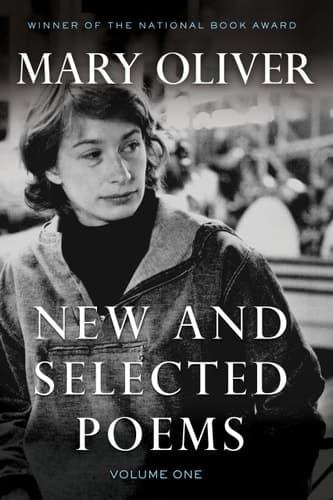
New and Selected Poems, Volume One
Mary OliverPublished2005
Pages272
Formathardcover
PublisherBeacon Press
Synopsis
When New and Selected Poems, Volume One was originally published in 1992, Mary Oliver was awarded the National Book Award. In the fourteen years since its initial appearance it has become one of the best-selling volumes of poetry in the country. This collection features thirty poems published only in this volume as well as selections from the poet's first eight books.
Mary Oliver's perceptive, brilliantly crafted poems about the natural landscape and the fundamental questions of life and death have won high praise from critics and readers alike. In "The Summer Day," she asks, "Tell me, what is it you plan to do / with your one wild and precious life?" "Do you love this world?" she interrupts a poem about peonies to ask the reader. "Do you cherish your humble and silky life?" She makes us see the extraordinary in our everyday lives, how something as common as light can be "an invitation / to happiness, / and that happiness, / when it's done right, / is a kind of holiness, / palpable and redemptive." She illuminates how a near miss with an alligator can be the catalyst for seeing the world "as if for the second time/the way it really is." Oliver's passionate demonstrations of delight are powerful reminders of the bond between every individual, all living things, and the natural world.
Recommendations
Quilting and Braiding The Feminist Christologies of Sallie McFague and Elizabeth A. Johnson in Conversation
by Shannon Schrein
Kimmerer shares Oliver's gift for finding the sacred in botanical observation, but she weaves in Indigenous philosophy and scientific rigor alongside the wonder. Where Oliver asks 'what will you do with your one wild and precious life?', Kimmerer answers by showing how reciprocity with the natural world becomes a practice of gratitude and belonging—her essays have the same meditative quality as Oliver's best poems, just in prose form.
View book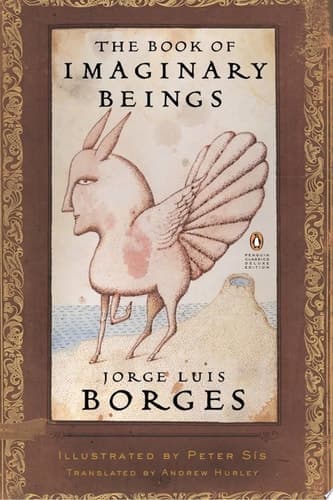
The Book of Imaginary Beings (Penguin Classics Deluxe Edition)
by Jorge Luis Borges
Henderson catalogs strange creatures—from the axolotl to the anglerfish—with the same attentive wonder Oliver brings to herons and grasshoppers, but he's writing natural history essays rather than poetry. His prose has an almost Romantic quality; he makes you see how an obscure animal's existence is its own kind of poem, and his curiosity about what these beings 'mean' echoes Oliver's deeper questioning about our relationship to the living world.
View book
The Savage Detectives A Novel
by Roberto Bolaño
This is the surprise pick—a sprawling, sometimes chaotic novel that seems nothing like Oliver's crystalline poems until you realize both writers are obsessed with the same question: how do you live meaningfully in a world that often feels indifferent to meaning? Bolaño's young poets are searching for something transcendent through literature and experience, much like Oliver searches through attention to the natural world. The book's underlying current is a kind of spiritual hunger dressed up in literary adventure.
View book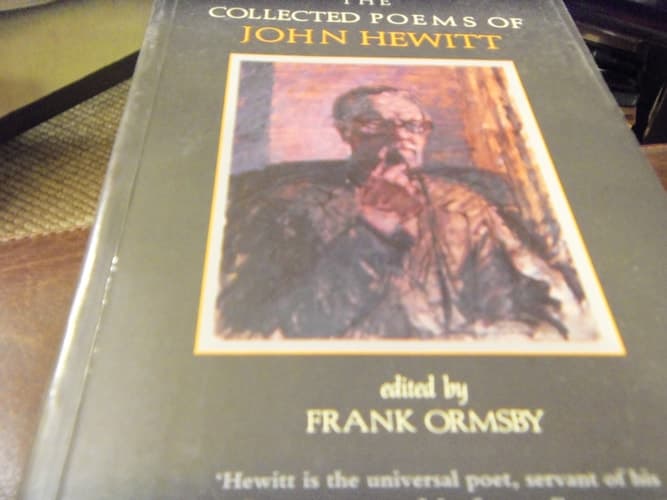
The Collected Poems of John Hewitt
by John Harold Hewitt
Merwin was Oliver's contemporary and shares her commitment to clarity and the natural world, but his poems often have a quieter, more elusive quality—less declarative joy and more mysterious presence. Where Oliver might celebrate a summer day directly, Merwin approaches wonder sideways, through absence and silence. If you loved Oliver's accessibility and her refusal to make nature writing precious, you'll find Merwin's work similarly grounded but with an additional layer of enigmatic restraint.
View bookAbout Mary Oliver
M
Mary Oliver
1925–2005
Biography coming soon.
View author page