Synopsis
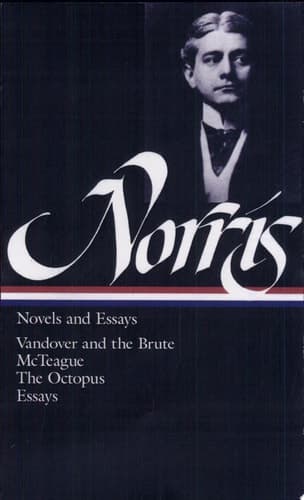
This Library of America volume presents three novels and the collected essays of the most promising of the American naturalist writers. Inspired by the "new novel" developed by Zola and Flaubert, Frank Norris adapted its methods to American settings, adding his own taste for exciting action and a fascination with the emergent sciences of economics and psychology.
Vandover and the Brute (1914) was published posthumously but written in 1895 during Norris's year at Harvard. Drunkenness, sensuality, gambling, and debauchery reduce young Vandover, once a fashionable playboy and aspiring artist, to virtual bestiality. His dissipation is described with shocking realism, as Norris paints each level of San Francisco society he encounters in his descent.
The novel McTeague (1899) represented a radical departure for American fiction of its era in its frank treatment of sex, domestic violence, and obsession. McTeague is a huge, simple dentist who dreams of having a giant tooth to hang outside his office and who carries his pet canary wherever he goes; Trina is his gentle, diminutive wife, who wins a lottery and compulsively hoards her money. They live on Polk Street in San Francisco, where the new middle class struggles with its pathological underside. Erich von Stroheim based his classic film Greed (1924) on this immensely powerful and grimly realistic novel.
The Octopus (1901), the first work in Norris's unfinished trilogy "The Epic of the Wheat," is a novel about the ranchers and wheat producers of California. Pitted against the railroad monopoly and political machine, the members of the ranching community are forced to take up arms against the state. Inspired by the Mussel Slough Massacre of 1880, it depicts a band of strong ruthless Westerners who are crushed by inexorable forces of nature and capital they had sought to control.
The twenty-two essays in this volume include book reviews, articles, literary columns, and parodies of popular authors in the hilarious "Perverted Tales."
LIBRARY OF AMERICA is an independent nonprofit cultural organization founded in 1979 to preserve our nation's literary heritage by publishing, and keeping permanently in print, America's best and most significant writing. The Library of America series includes more than 300 volumes to date, authoritative editions that average 1,000 pages in length, feature cloth covers, sewn bindings, and ribbon markers, and are printed on premium acid-free paper that will last for centuries.
Recommendations
Studies in the Financial Markets of the Pacific Basin
by Theodore Bos
Dreiser was Norris's contemporary in American naturalism, and this novel shares that unflinching examination of how economic forces shape individual destiny—but where Norris focuses on agricultural monopolies, Dreiser traces a man's ruthless climb through finance and his eventual moral reckoning. The protagonist's amoral pragmatism and the novel's refusal to sentimentalize his ambitions will feel immediately familiar to anyone who absorbed Norris's philosophy that humans are driven by forces beyond their control.
View book
Henry James Daisy Miller * Washington Square * the Portrait of a Lady * the Bostonians * the Aspern Papers
by Henry James
This is the surprise pick—James is often seen as Norris's opposite (psychological subtlety versus brutal realism), but both writers are obsessed with power dynamics and how desire corrupts relationships. Where McTeague shows violence erupting from domestic obsession, James shows it festering beneath polite society's surface; the triangle between Basil, Olive, and Verena operates with the same inexorable logic as Trina and McTeague's marriage, just expressed through manipulation rather than brutality.
View book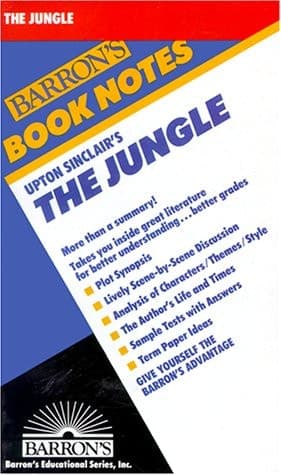
Upton Sinclair's The Jungle
by Eric F. Oatman
Published just two years after McTeague, Sinclair takes Norris's naturalist methods and applies them to industrial capitalism with even more explicit political rage. Both novels use a specific American industry (dentistry/meatpacking) as a lens to examine how systems crush individuals, but where Norris remains coolly observational, Sinclair writes with crusading fury—you'll recognize the same unflinching documentation of human degradation, now weaponized for social reform.
View book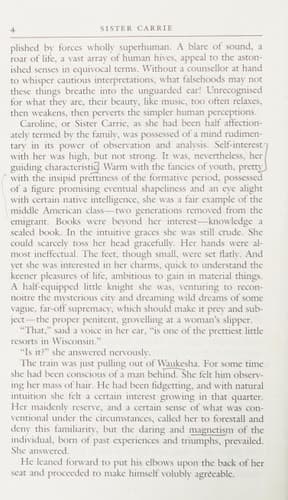
Dreiser Sister Carrie; Jennie Gerhardt; Twelve Men
by Theodore Dreiser
Wait, another Dreiser? Yes, but this one's essential: it predates McTeague and was equally scandalous for its refusal to moralize about a woman who uses sexuality to survive. Like Norris, Dreiser treats his protagonist's choices as products of circumstance rather than character flaws, and the Chicago setting gives you that same vivid sense of a specific American city's social strata that makes Polk Street in McTeague so memorable.
View bookAbout Frank Norris
F
Frank Norris
1870–1902
Frank Norris, (1870-1902), was an American novelist and journalist and a leader of the Naturalism movement. Norris believed that a novel should serve a moral purpose. "The novel with a purpose," he explained, "brings the tragedies and griefs of others to notice" and "prove(s) that injustice, crime, and inequality do exist." [Source][1] [1]: http://www.pbs.org/wnet/americannovel/timeline/norris.html
View author page