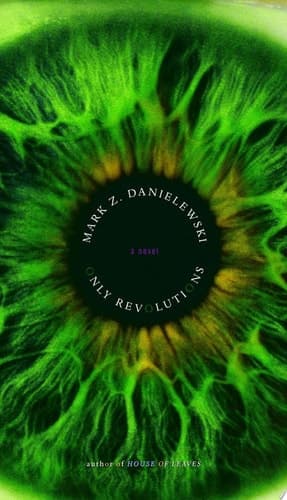
Only Revolutions A Novel
Mark Z. DanielewskiPublished2006
Pages360
Formathardcover
PublisherPantheon Books
Synopsis
Sam:
They were with us before Romeo & Juliet. And long after too. Because they’re forever around. Or so both claim, carolling gleefully:
We’re allways sixteen.
Sam & Hailey, powered by an ever-rotating fleet of cars, from Model T to Lincoln Continental, career from the Civil War to the Cold War, barrelling down through the Appalachians, up the Mississippi River, across the Badlands, finally cutting a nation in half as they try to outrace History itself.
By turns beguiling and gripping, finally worldwrecking, Only Revolutions is unlike anything ever published before, a remarkable feat of heart and intellect, moving us with the journey of two kids, perpetually of summer, perpetually sixteen, who give up everything except each other.
Hailey:
They were with us before Tristan & Isolde. And long after too. Because they’re forever around. Or so both claim, gleefully carolling:
We’re allways sixteen.
Hailey & Sam, powered by an ever-rotating fleet of cars, from Shelby Mustang to Sumover Linx, careen from the Civil Rights Movement to the Iraq War, tearing down to New Orleans, up the Mississippi River, across Montana, finally cutting a nation in half as they try to outrace History itself.
By turns enticing and exhilarating, finally breathtaking, Only Revolutions is unlike anything ever conceived before, a remarkable feat of heart and intellect, moving us with the journey of two kids, perpetually of summer, perpetually sixteen, who give up everything except each other.
Recommendations
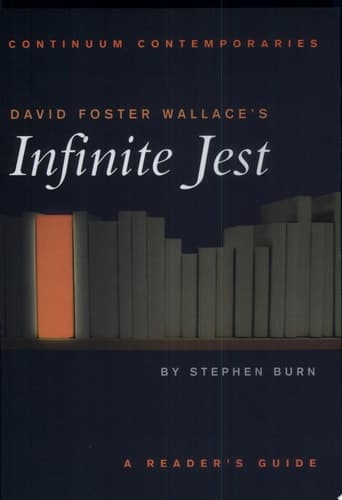
David Foster Wallace's Infinite Jest
by Stephen Burn
Like Danielewski, Wallace constructs a labyrinthine narrative that demands active participation from the reader—footnotes, nested stories, and multiple perspectives that accumulate into something larger than any single thread. Both authors treat the page itself as a character, using typography and structure to mirror the disorientation and beauty of their worlds. If you loved the formal audacity of *Only Revolutions*, this maximalist approach to American mythology will feel like a natural next step.
View book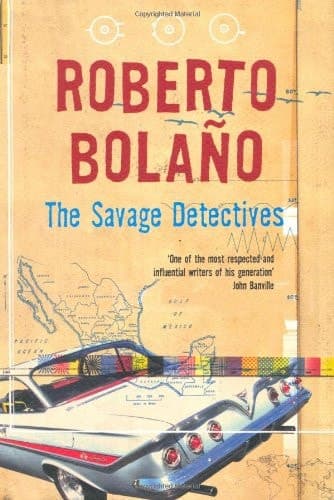
The Savage Detectives A Novel
by Roberto Bolaño
Bolaño mirrors Danielewski's obsession with journeys across geography as a way to chase something ineffable—here, a missing poet; there, History itself. The novel shifts between multiple narrators and time periods much like Sam and Hailey's dual perspectives, and it shares that same intoxicating quality where the *movement* through space becomes more important than any destination. Both books treat restlessness as a form of love.
View book
Toni Morrison - Beloved
by Carl Plasa
This might seem like a departure, but Morrison does something Danielewski also does: she makes History itself a haunting, present character that won't let her protagonists move forward. Where *Only Revolutions* has Sam and Hailey racing against historical moments, Morrison shows how the past literally materializes and demands reckoning. The lyrical, incantatory prose shares that same dreamlike quality, and both books use love as their anchor in narratives that could otherwise dissolve into abstraction.
View book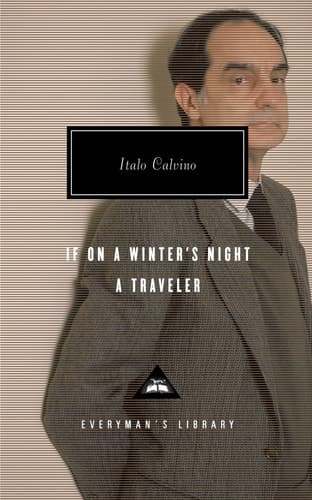
If on a Winter's Night a Traveler Introduction by Peter Washington
by Italo Calvino
Calvino's metafictional playfulness—where the reader becomes a character and the book constantly shifts genres and narratives—shares Danielewski's delight in making the reader complicit in the construction of meaning. Both authors seem to be asking: what does it mean to *read* a love story when the form itself is unstable? This one's from 1979, so it gives you a different era's approach to the same formal innovations you clearly loved.
View bookAbout Mark Z. Danielewski
M
Mark Z. Danielewski
Born 1966
Mark Z. Danielewski (born March 5, 1966) is an American fiction author. He is most widely known for his debut novel *House of Leaves* (2000), which won the New York Public Library's Young Lions Fiction Award. His second novel, *Only Revolutions* (2006), was nominated for the National Book Award. **Source**: [Mark Z. Danielewski](https://en.wikipedia.org/wiki/Mark_Z._Danielewski) on Wikipedia.
View author page