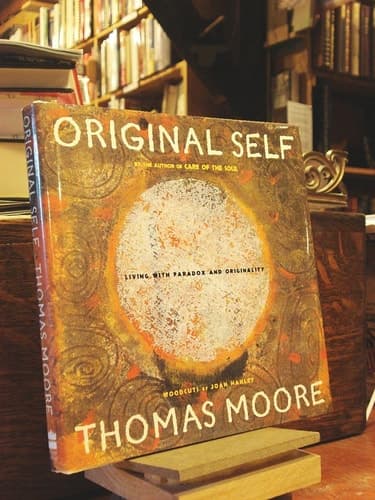
Original Self Living with Paradox and Originality
Thomas MoorePublished2000
Pages160
Formathardcover
PublisherHarperCollins
Synopsis
"I spent many years trying to become conscious, but all that effort led merely to self-consciousness, which in turn generated guilt, anxiety, and ambition. I was told that higher consciousness was a worthy goal and that its opposite, unconsciousness, was the result of laziness and ignorance. Around the age of fifty my ideals and values began to change, so much so that many of them turned upside down and inside out. Now I see great value in laziness, understood as giving up both effort and the attempt to justify my life. I have come to appreciate the teaching I have found in many religions that praises holy ignorance. And I have been discovering how to live with little consciousness
"Emerson once remarked that it is advisable to live without consciousness of the workings of the body, and I wonder if the same recommendation applies to the whole of life. Perhaps in some ways we do have to become conscious, and that may be the proper work of the first half of life. But then all our education and learning experiences may fade, not into oblivion, where they are simply lost, but by a process of absorption into us, so that they become us or we become them."
from Original Self
It's easy today to lose the deep, direct, and vivid sense of living with passion and originality. Thomas Moore states in his preface that we are "chronically trying to be someone other than this original self, persuaded that we are not adequate and should fit some norm of health or correctness, we may find a cool distance may gradually separate us from the deep and eternal person, that God-given personality, and we may forget both who we were and who we might be."
The fifty meditations in this collection offer fresh interpretations of living with originality rather than conformity, presenting multi-dimensional portraits of the creative self and different angles from which to tap one's primal emotions and possibilities. These pages show what it means to live from the burning essence of the heart, with the creativity that comes from allowing the soul to blossom in its own colors and shapes. Simple and beautiful woodcut drawings accompany each meditation, showing the primal yet complex nature of experience and suggesting with great subtlety the themes of paradox and contrariety that characterize the deep self.
With his usual grace and insight, Moore counters the prevailing assumptions of the day and offers strikingly unorthodox views on at is virtuous and healthy, opening up possibilities for a renewal of the way we live socially and in our private lives.
Recommendations
Voyage to the Sonorous Land, Or, The Art of Asking ; And, The Hour We Knew Nothing of Each Other
by Peter Handke
Palmer's memoir grapples with the same tension Moore explores—how we're taught to perform adequacy rather than embrace vulnerability. Where Moore meditates on shedding false consciousness, Palmer documents her actual lived experience of dismantling the persona others expected and discovering what remained underneath, making this a real-world companion to Moore's philosophical framework.
View book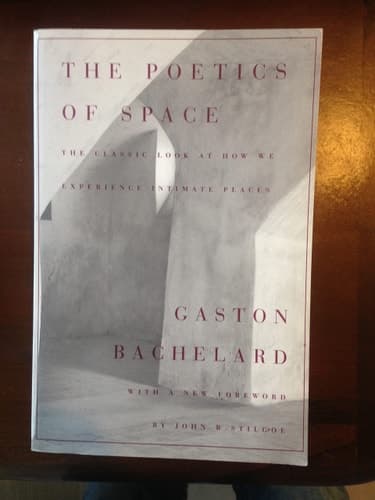
The Poetics of Space
by Gaston Bachelard
Published in 1958, this earlier work shares Moore's reverence for the intimate and overlooked—but instead of meditating on the self, Bachelard meditates on how spaces (a corner, a drawer, a house) hold our deepest selves. If Moore's book taught you to stop trying to optimize your consciousness, Bachelard will show you how the physical world around you has been quietly supporting your original self all along.
View book
Assault With a Deadly Weapon: The Autobiography of a Street Criminal
by John Allen
This spiritual classic actually predates Moore's work (1946) and offers something his meditations point toward but don't fully inhabit—a lived narrative of someone who genuinely surrendered the Western drive for self-improvement and discovered what Moore calls 'holy ignorance.' It's less abstract than Moore and more grounded in actual practice, giving you a different angle on the same liberation.
View book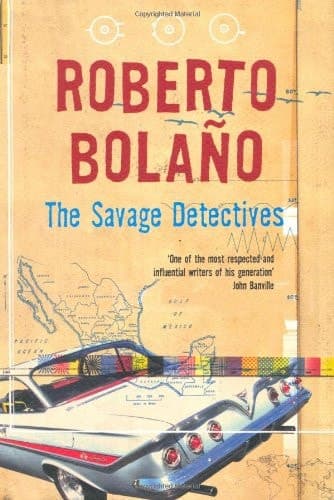
The Savage Detectives A Novel
by Roberto Bolaño
Here's the surprise: this sprawling, unconventional novel is essentially a meditation on authenticity and originality disguised as literary fiction. Bolaño's characters are obsessed with finding 'real' poetry and 'real' experience beneath layers of pretense, and the book's refusal to follow conventional narrative structure mirrors Moore's argument that we need to abandon our learned frameworks to find ourselves. It's messier and more chaotic than Moore, but it's asking the same burning question.
View book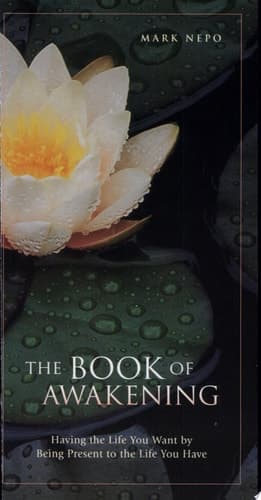
The Book of Awakening Having the Life You Want by Being Present to the Life You Have
by Mark Nepo
Nepo's daily meditations operate in the same register as Moore's—poetic, paradoxical, and deeply skeptical of the self-help industrial complex—but where Moore draws on philosophy and depth psychology, Nepo weaves in poetry, nature observation, and Zen teaching. If you found Moore's woodcuts and brief meditations nourishing, this will extend that practice into a full year's worth of similarly gentle, subversive wisdom.
View bookAbout Thomas Moore
T
Thomas Moore
Born 1946
Roméo Antonius Dallaire OC CMM GOQ MSC CD is a Canadian humanitarian, author, retired senator and Canadian Forces lieutenant-general. Dallaire served as force commander of UNAMIR, the ill-fated United Nations peacekeeping force for Rwanda between 1993 and 1994, and attempted to stop the genocide that was being waged by Hutu extremists against the Tutsi people and Hutu moderates. *-- Wikipedia* *Photo Attribution:* Michelle Campbell, CEO, St Joseph's Health Care Foundation, London Ontario, CC BY-SA 4.0 <https://creativecommons.org/licenses/by-sa/4.0>, via Wikimedia Commons
View author page