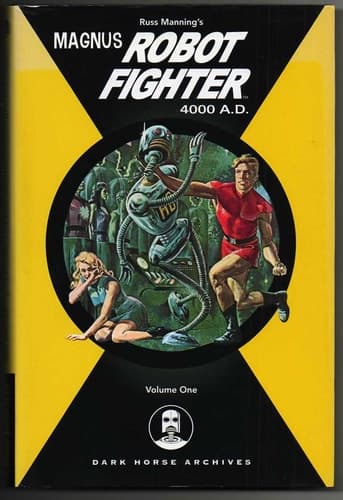
Russ Manning's Magnus, Robot Fighter, 4000 A.D.
Russ ManningPublished2004
Pages205
Formathardcover
PublisherDark Horse Books
Synopsis
Graphic novel. Classic comics.
Recommendations

Akira, Vol. 2
by Katsuhiro Otomo
Like Magnus, Akira pairs stunning visual storytelling with a retrofuturistic world where technology and humanity collide, but Otomo layers in political intrigue and psychological complexity that makes you reconsider what you're seeing on each page. Both works use their sci-fi settings not as window dressing but as essential to exploring what it means to be human—or post-human.
View book
The Three-Body Problem
by Mauri J. Valtonen
This is the surprise pick: it's prose, not comics, but it shares Magnus's sense of wonder about technology meeting the cosmos, except Liu treats first contact as a genuine intellectual and existential crisis rather than an adventure. The way he builds a world where physics itself becomes a weapon will scratch the same itch for hard sci-fi concepts that Manning's robot-fighting stories provide, just operating at a different scale.
View book
Nexus
by Deborah Morrison
Naam writes near-future thrillers where neural technology creates the same kind of body-and-mind questions that Magnus grapples with—what happens when consciousness can be augmented, networked, or copied? The pacing mirrors classic action comics: propulsive, visually imaginative in prose, with genuine stakes that keep escalating.
View book
Vous descendez ?
by Nick Hornby
Lemire creates a world where a young robot awakens to find humanity has turned against all artificial life, and what unfolds is part mystery, part coming-of-age, part meditation on what makes someone worthy of protection. It has Manning's gift for making readers care about mechanical characters, but adds emotional depth and moral ambiguity that complicates the hero's journey.
View book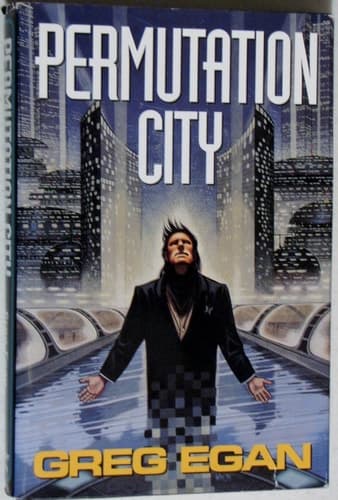
Permutation City
by Greg Egan
Egan takes the question of artificial consciousness that Magnus hints at and builds an entire philosophical thriller around it: what if you could upload your mind into a computer? The novel reads like watching someone solve an impossible puzzle, with the kind of rigorous, inventive worldbuilding that makes you trust the author completely. It's cerebral where Magnus is kinetic, but both trust readers to engage with genuinely strange ideas.
View bookAbout Russ Manning
R
Russ Manning
1929–1981
Biography coming soon.
View author page