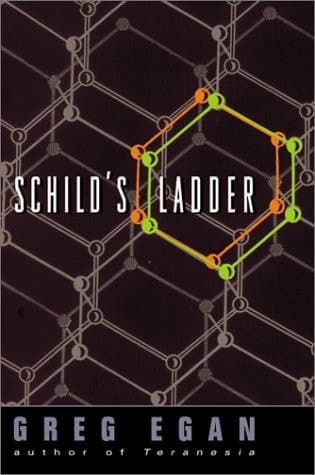
Synopsis
The Age of Death ended countless millennia ago. No longer burdened by limited lifespans, the immortal humans who populate inhabited space now have the luxury to travel vast distances effortlessly and to tinker with the intricate mechanics of spacetime. But one such experiment in quantum physics has had a catastrophic and unanticipated result, creating an enormous, rapidly expanding vacuum -- a region of new physics -- with the frightening potential to devour countless inhabited solar systems.
Tchicaya abandoned his homeworld four thousand years ago to travel the universe, freely choosing, as have others of his bent, to endure the hardships of distance and loneliness for the sake of knowledge and experience. Aboard the Rindler, a starship trawling the border of the allconsuming novo-vacuum, he feels his endless life has new purpose. For the Rindler is the center for the scientific study the phenomenon -- a common ground for Preservationists and Yielders alike, those working to halt and destroy the encroaching worlds-eater ... and those determinedto investigate its marvels while allowing its growth to continue unchecked. Tchicaya has allied himself firmly with the latter camp.
The passing decades -- and inevitable expansion of the void -- widen the great rift between the two factions, intensifying what was once simply ideological differences into something more angry, explosive, and dangerous. And the arrival of Tchicaya's fiery first love, Mariama, and her immediate embracing of the Preservationist cause, intensifies an inner turmoil he has been struggling with since his distant childhood.
But everything onboard the Rindler -- and, ultimately, in the inhabited universe itself-is on the cusp of further cataclysmic change, as the Yielders' explorations threaten to transform discord into violent action and potential xenocide. For new evidence suggests that something unthinkable is developing at an astounding rate deep within the mysterious, 600-light-years-wide void -- something neither Tchicaya and his compatriots nor Mariama and hers could ever have imagined possible: life.
Recommendations
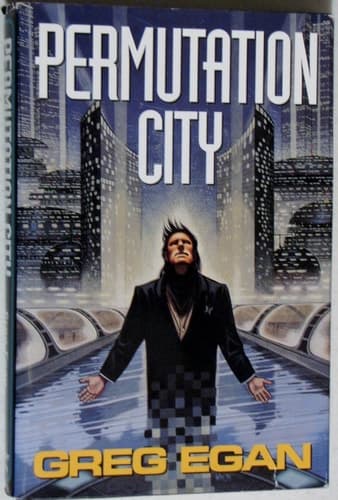
Permutation City
by Greg Egan
I know you just finished Egan, but hear me out—this one operates on a completely different wavelength from Schild's Ladder. Where that book uses hard physics as a canvas for exploring ideological conflict, Permutation City uses digital consciousness and simulation theory to ask what it means to *want* to exist. The philosophical vertigo is similar, but the intimacy is entirely different; you're trapped inside minds rather than watching civilizations collide.
View book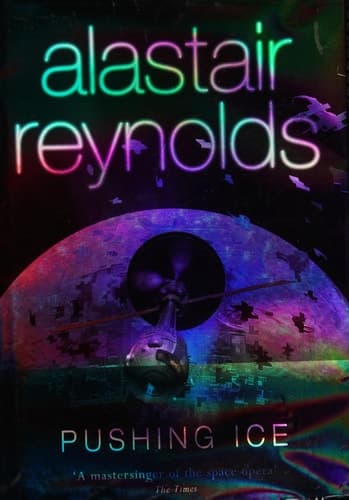
Pushing Ice
by Alastair Reynolds
Reynolds gives you that same sense of vast timescales and humanity scattered across incomprehensible distances, but he's more interested in how people actually *fracture* under those pressures. The Rindler's crew tensions feel intimate compared to the slow-motion catastrophe Reynolds orchestrates here—a mission that starts as industrial salvage and becomes something that rewrites what humans thought they knew about the universe. His prose is grittier, less abstract than Egan's, which makes the strangeness hit harder.
View book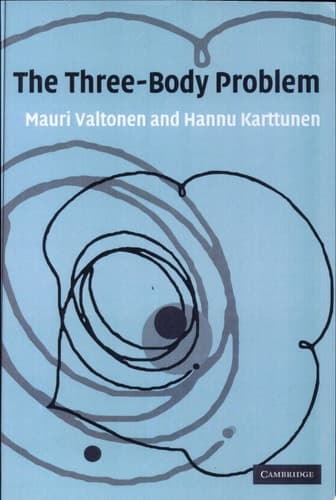
The Three-Body Problem
by Mauri J. Valtonen
This is where I'd send you if you want that same collision between scientific curiosity and existential dread, but filtered through a completely different cultural lens and with a much darker view of what happens when knowledge becomes a weapon. Liu structures his narrative across decades the way Egan does, but he's asking whether understanding the universe is worth the cost of survival—a question that haunts every page in ways Schild's Ladder only hints at.
View book
The Princess and the Goblin
by George MacDonald
This is my surprise pick, and I'm recommending it because you clearly love watching intelligent people navigate impossible political situations with incomplete information. Swap the vacuum-devouring void for court intrigue, and you've got the same core tension: Tchicaya trying to do right while surrounded by factions with irreconcilable goals. Addison writes with such warmth and specificity about how institutions actually work that it becomes its own kind of hard science fiction—just applied to bureaucracy instead of physics.
View bookAbout Greg Egan
G
Greg Egan
Born 1961
Biography coming soon.
View author page