Synopsis
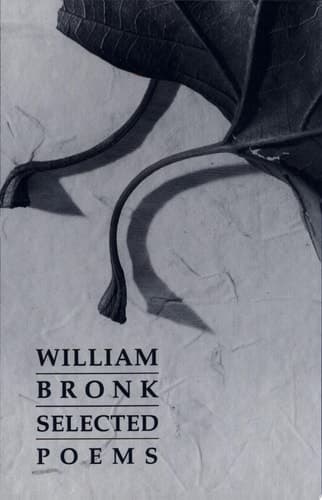
In 1982 William Bronk won the American Book Award for his book Life Supports: New & Collected Poems. Since then, he has written seven additional books, and Sagetrieb has devoted an entire issue to his work. Bronk is unquestionably a major poet--utterly original, uncompromisingly abstract in content, and deeply sensuous in form. Michael Heller, in The New York Times Book Review, said Bronk's poetry is "singularly persistent in its own investigation of how our deepest truths are those which are most unsayable." This volume spans Bronk's entire career, from his first book Light and Dark, to his most recent Some Words and The Mild Day (Talisman), which the Village Voice praised as "offering epigrammatic style, philosophical reverie, and haiku-like concision." Selected Poems is an indispensable collection, containing the most compelling and the most popular of Bronk's eloquent poems.
Recommendations
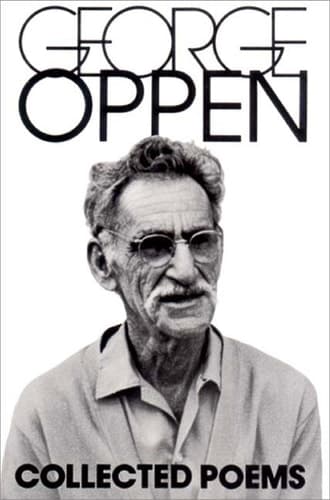
The Collected Poems of George Oppen
by George Oppen
Like Bronk, Oppen is an uncompromising modernist poet who believed the deepest truths resist easy articulation—his work has that same philosophical rigor wrapped in deceptively spare language. Both poets share a commitment to what you might call 'sensuous abstraction,' where the physical world becomes a vehicle for investigating consciousness itself rather than mere description.
View book
Lionel Trilling: Negative Capability and the Wisdom of Avoidance
by Robert Boyers
Howe shares Bronk's conviction that poetry must resist closure and easy meaning—her work fractures syntax and visual space on the page to enact the very difficulty of articulation that Bronk pursues. If you found yourself rereading Bronk's lines to catch what they're doing beneath the surface, Howe will give you that same productive uncertainty, though through radically different formal strategies.
View book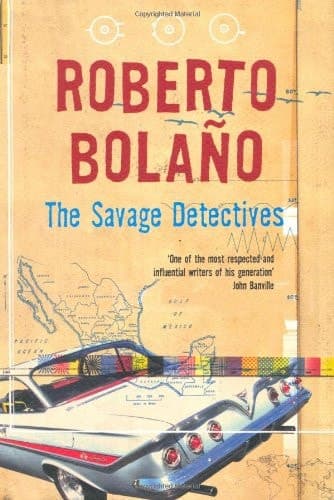
The Savage Detectives A Novel
by Roberto Bolaño
This is the surprise pick: while Bolaño writes prose rather than poetry, his novel operates with the same epigrammatic, philosophical sensibility you loved in Bronk—fragments, digressions, and meditations that circle around what cannot quite be said directly. The book's structure mirrors Bronk's haiku-like concision across larger passages, and both writers share a conviction that meaning lives in the spaces between statements rather than in explicit declaration.
View book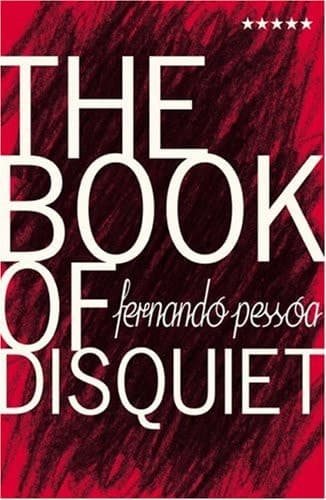
The Book of Disquiet
by Fernando Pessoa
Written across several decades (1913-1935) but published posthumously, Pessoa's fragmentary prose-poetry collection shares Bronk's obsession with how consciousness encounters the world—both writers refuse conventional narrative or argument in favor of accumulating observations that gesture toward something larger and more elusive. The sensuous attention to ordinary moments combined with abstract philosophical questioning will feel immediately familiar to you.
View book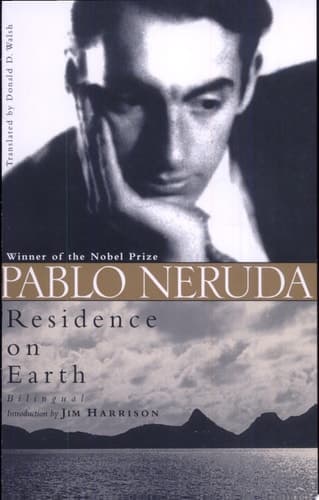
Residence on Earth
by Pablo Neruda
Before Neruda became famous for accessible love poetry, he wrote these surrealist sequences where language becomes almost sculptural—dense, sensuous, and deliberately resistant to paraphrase. Like Bronk, Neruda here trusts that the deepest truths emerge through formal invention rather than direct statement, and his investigation of how objects and sensations resist meaning will resonate with your experience of Bronk's 'uncompromisingly abstract' approach.
View bookAbout William Bronk
Biography coming soon.
View author page