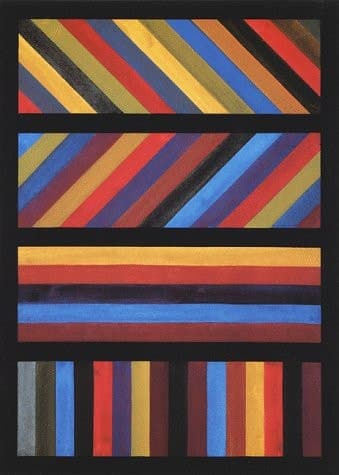
Sol Lewitt Bands of Color
Sol LeWittPublished1999
Pages136
Formatpaperback
PublisherMuseum of Contemporary Art
Synopsis
Sol LeWitt is a systematic artist, creating a set of rules for a work and then following them to their conclusion. Using classical geometric components, such as cubes, squares, triangles, and circles, he is able to create an almost mystical expressivity with minimal means, resulting in art of great sensuous beauty. One-, Two-, Three-, and Four-Part Combinations of Vertical, Horizontal, and Diagonal, Left and Right Bands of Color (1993-94), a suite of sixty-four gouaches, is composed of stripes of equal thickness in diluted primary colors to fill the area of each sheet. The artist established the components -- vertical, horizontal, and diagonal -- in the first group of four, and varied them to remarkable effect in the sheets that followed. LeWitt's art invites not only an appreciation of the beauty of the completed work, but also an understanding of the intellectual demands the work makes.
Recommendations
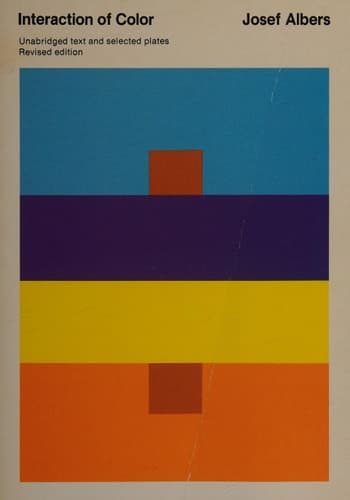
Interaction of color Unabridged text and selected plates
by Josef Albers (Maler/Bildhauer, Graphiker/Designer, Kunstpädagoge, Deutschland, USA)
Albers was working in the same conceptual territory as LeWitt—using systematic constraints (in his case, nested squares and color relationships) to unlock perceptual mysteries. Where LeWitt builds rules and executes them, Albers builds experiments that reveal how color behaves in relationship, and you'll find the same marriage of intellectual rigor and sensuous visual experience that drew you to the Bands of Color.
View book
Gödel, Escher, Bach: An Eternal Golden Braid
by Douglas Hofstadter
This is the surprise pick, but hear me out: Hofstadter explores how simple rules generate infinite complexity through Bach's fugues, Escher's tessellations, and mathematical recursion. It's the philosophical companion to what LeWitt was doing visually—showing how constraint and variation create meaning. You'll recognize the same intellectual pleasure in watching a system unfold.
View book
The Bauhaus Ideal, Then & Now An Illustrated Guide to Modernist Design
by William Smock
LeWitt was deeply influenced by Bauhaus thinking, and Wingler's comprehensive documentation shows you the genealogy of exactly what LeWitt inherited—the idea that art could be taught through fundamental principles, that geometry and color are languages, that systems could liberate rather than constrain creativity. It's a historical context that will deepen your appreciation of what LeWitt was doing.
View book
The Rings of Saturn
by Winfried Georg Sebald
A completely different medium, but Sebald constructs his narrative through accumulation and variation—walking a path, observing details, following threads—much like LeWitt's systematic variations on a theme. Both artists trust that constraint and repetition, rather than dramatic gesture, can create something haunting and beautiful. The prose has the same meditative quality as staring into those color bands.
View book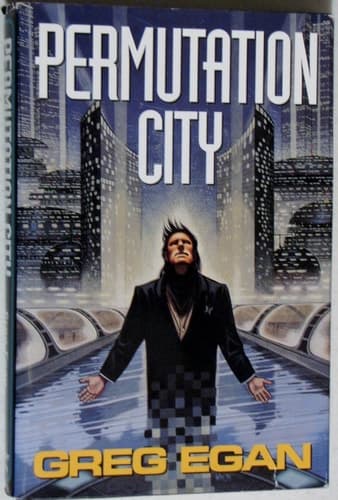
Permutation City
by Greg Egan
Egan explores what happens when you take a rule-based system to its logical extreme—in this case, a simulated universe governed by mathematical principles. Like LeWitt, he's fascinated by how simple rules can generate complex, beautiful, even meaningful realities. If you appreciated the intellectual rigor behind LeWitt's method, you'll find Egan asking similar questions about what systems can express.
View bookAbout Sol LeWitt
Biography coming soon.
View author page