Synopsis
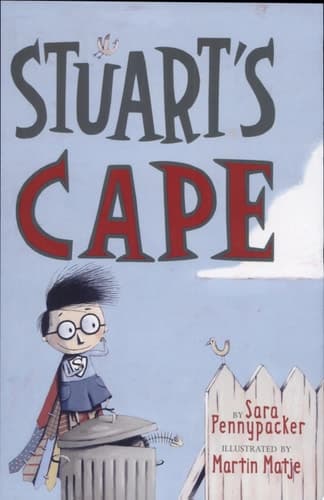
A quick, inventive chapter book featuring an unusual hero--an eight-year-old worrier.
We meet Stuart pressed against a rainy window, worried and bored. Worried, because hundreds of things could go wrong in a new house, a new town, a new school. Bored, because he has no one to play with and because his collection of Valuable Things disappeared during the move. He really needs an adventure.
In one fateful moment, it all becomes clear: Stuart realizes that in order to have adventure, he needs a cape! After all, don't all those superheroes have capes? Each day the cape brings a different and unexpected adventure. He entertains a gorilla, a horse, and a dinosaur in his bedroom.
Recommendations
The Talented Clementine (Clementine, 2)
by Sara Pennypacker
Wait—I know you just finished Pennypacker, but hear me out. Clementine has that same inventive, slightly chaotic energy as Stuart, except she's a girl who creates mayhem through sheer optimism rather than worry. If you loved how Stuart's cape transforms his perspective on an anxious situation, you'll appreciate how Clementine's rambling, associative voice turns ordinary moments into unexpected adventures.
View book
The Tale of Despereaux
by Kate DiCamillo
DiCamillo writes with the same kind of whimsy as Pennypacker, but she layers in genuine emotional stakes—Despereaux is a small, unusual hero (a mouse who loves stories) navigating a world that doesn't quite understand him, much like Stuart navigating his new town. The cape becomes a metaphor here too, though it's more about finding your courage than finding adventure.
View book
A Guide for Using From the Mixed-up Files of Mrs. Basil E. Frankweiler in the Classroom Based on the Novel Written by E.L. Konigsburg
by Mari Lu Robbins
This is from 1967, so it's got that different-era flavor, but the DNA is identical: a child (or two) who feel out of place and discover that adventure isn't something you need to find—it's something you create by changing how you see the world around you. Like Stuart's cape, the museum becomes a tool for transformation, and the real discovery is internal.
View book
The Root of Wild Madder Chasing the History, Mystery, and Lore of the Persian Carpet
by Brian Murphy
This one's my surprise pick for you—it reads like a picture book for older readers, with gorgeous illustrations and a quieter tone than Stuart's Cape, but it's got that same sense of an unlikely character (a robot) learning to see the world with wonder and purpose. Brown uses the robot's perspective to make ordinary nature feel as adventurous as Stuart's cape makes his bedroom feel.
View book
Ivy + Bean and the Ghost that Had to Go The Ghost That Had to Go
by Annie Barrows
Two kids, instant friendship, and schemes that spiral into genuine adventure—Blackall captures that same energy of ordinary moments becoming extraordinary through imagination and collaboration. Where Stuart uses his cape as a solo tool, Ivy and Bean show how shared creativity and a willingness to look foolish together creates the real magic.
View bookAbout Sara Pennypacker
S
Sara Pennypacker
Born 1951
Biography coming soon.
View author page