Textual Politics from Slavery to Postcolonialism Race and Identification
Carl PlasaPublished2000
Pages172
Formatpaperback
PublisherMacmillan
Synopsis
"Textual Politics from Slavery to Postcolonialism explores questions of race and identification from slavery to the so-called postcolonial present through close readings of texts by Olaudah Equiano, Jane Austen, Charlotte Bronte, Jean Rhys, Frantz Fanon, Toni Morrison and Tsitsi Dangarembga. Carl Plasa draws attention to the larger networks of dialogue and constestation in which those texts are located. In the course of the analysis, the crossings of identification - whether between black self and white other or white self and black other - emerge both as sites of political tension and spaces in which psychic and historical realities powerfully collide."--BOOK JACKET.Title Summary field provided by Blackwell North America, Inc. All Rights Reserved
Recommendations

Wide Sargasso Sea
by Jean Rhys
I notice Plasa actually analyzes Rhys in your book, but this novel deserves your direct attention—it's the prequel to Jane Eyre that rewrites the mad woman in the attic as a fully realized Creole woman whose identity is systematically erased. You'll see those 'crossings of identification' Plasa discusses play out in real time, as Rhys forces readers to confront whose story gets told and who gets silenced.
View book
Things Fall Apart, Chinua Achebe
by Chinua Achebe
Achebe does something radical here—he tells the colonization story from the colonized perspective, giving you the interior life and dignity of Okonkwo before the arrival of European forces. Where Plasa examines how texts negotiate race and power, Achebe constructs an entire world that refuses to be read through a colonial lens, making this essential counterpoint to the Western literary canon your book interrogates.
View book
The Apocalyptic Vision of Mikhail Bulgakov's the Master and Margarita (Studies in Slavic Language & Literature)
by Edward E. Ericson
This might seem like a departure, but hear me out: Bulgakov uses fantastical elements and narrative fragmentation to critique power structures and ideological control in ways that parallel Plasa's analysis of how texts encode political struggle. The novel's layered storytelling—where truth gets contested across multiple narratives—mirrors how identification and meaning-making become battlegrounds in politically charged texts.
View book
Toni Morrison - Beloved
by Carl Plasa
Morrison appears in Plasa's analysis, but reading her directly will show you how she transforms the slave narrative form itself—using magical realism and fragmented memory to make the interior psychic reality of enslaved people undeniable. The way she collapses past and present, and forces readers into uncomfortable identification with characters across racial lines, is exactly the kind of textual politics Plasa theorizes.
View book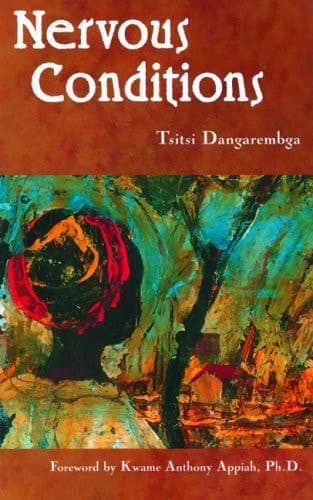
Nervous Conditions
by Tsitsi Dangarembga
Dangarembga also appears in your source text, but her novel deserves your full engagement—it traces how colonialism and patriarchy intersect in the consciousness of a young Zimbabwean woman navigating education, family, and cultural identity. You'll see how she uses a bildungsroman structure to expose the psychological violence of being caught between colonial and traditional worlds, making visible the 'collisions' between psychic and historical realities that Plasa identifies.
View bookAbout Carl Plasa
C
Carl Plasa
Born 1959
Biography coming soon.
View author page