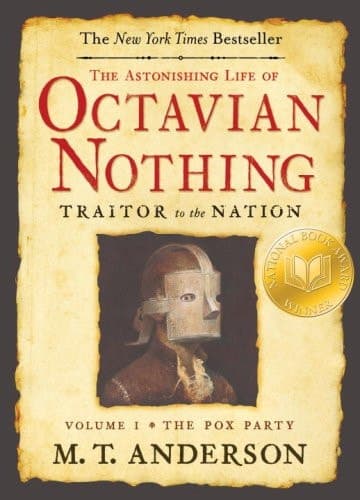
The Astonishing Life of Octavian Nothing, Traitor to the Nation, Volume I The Pox Party
M.T. AndersonPublished2008
Pages384
Formatpaperback
PublisherNational Geographic Books
Synopsis
Anderson’s imaginative and highly intelligent exploration of . . . the ambiguous history of America’s origins will leave readers impatient for the sequel. — The New York Times Book Review
Young Octavian is being raised by a group of rational philosophers known only by numbers — but it is only after he opens a forbidden door that learns the hideous nature of their experiments, and his own chilling role them. Set in Revolutionary Boston, M. T. Anderson’s mesmerizing novel takes place at a time when Patriots battled to win liberty while African slaves were entreated to risk their lives for a freedom they would never claim. The first of two parts, this deeply provocative novel reimagines past as an eerie place that has startling resonance for readers today.
Recommendations
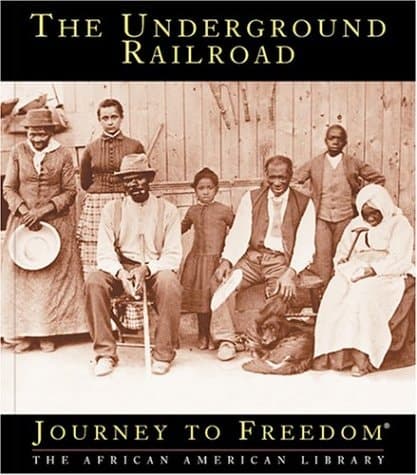
The Underground Railroad
by Carla Williams
Like Anderson, Whitehead uses speculative reimagining to interrogate American history's foundational contradictions—here, an actual railroad becomes the vehicle for exploring slavery and freedom. Both authors refuse easy answers, instead layering philosophical inquiry with visceral emotional weight, and both create protagonists caught between worlds trying to understand their own exploitation.
View book
Toni Morrison - Beloved
by Carl Plasa
Morrison's prose operates at the same level of linguistic sophistication as Anderson's—dense, allusive, demanding active reading—and both novels use supernatural or uncanny elements to make historical trauma viscerally present rather than safely distant. The way Morrison braids together multiple timelines and perspectives to reveal hidden histories parallels Anderson's structure of gradual, horrifying revelation.
View book
Cryptonomicon Tome 2 : Le Reseau Kinakuta
by Neal Stephenson
This is my surprise pick: while it's science fiction rather than historical fiction, Stephenson shares Anderson's fascination with how systems of knowledge and power operate, and how individuals become unwitting instruments within larger ideological machines. The novel interweaves WWII cryptography with contemporary tech culture, using multiple timelines to show how history shapes present power structures—a thematic echo of Octavian's dawning awareness.
View book
The remains of the day de Kazuo Ishiguro
by Gallix/François
Ishiguro's narrator gradually reveals his complicity in a morally compromised system through careful, restrained prose—much like how Anderson's structure forces readers to piece together Octavian's situation. Both novels examine how individuals rationalize their participation in larger historical atrocities, and both use an unreliable perspective to create mounting dread about what the reader is actually witnessing.
View book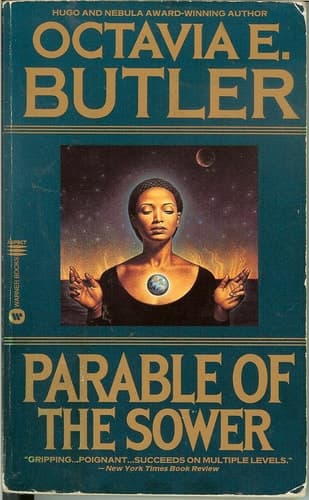
Parable of the Sower
by Octavia E. Butler
Butler's near-future America mirrors Anderson's colonial Boston in showing how systems fracture and how marginalized people navigate survival within collapsing institutions. Both authors write speculative fiction grounded in rigorous social analysis, and both create protagonists developing consciousness about their own position within larger forces—though Butler adds a visionary dimension absent from Anderson's more skeptical worldview.
View bookAbout M.T. Anderson
Biography coming soon.
View author page