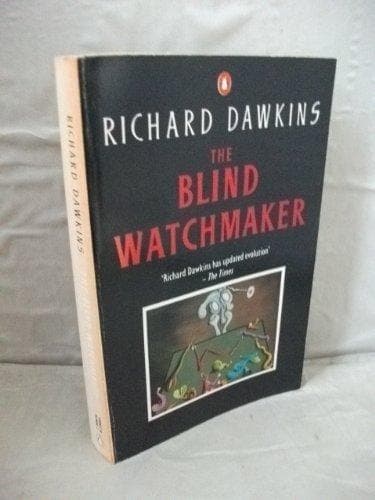
Synopsis
From the author of The God Delusion, Richard Dawkins' The Blind Watchmaker has been acclaimed as the most influential work on evolution in the last hundred years. In 1802 the Rev. William Paley's argued in Natural Theology that just as finding a watch would lead you to conclude that a watchmaker must exist, the complexity of living organisms proves that a Creator exists. Not so, says Richard Dawkins, and in this brilliant and controversial book, the acclaimed evolutionary biologist sets out to demonstrate that the theory of evolution by natural selection - the unconscious, automatic, blind yet essentially non-random process discovered by Charles Darwin - is the only answer to the biggest question of all: why do we exist? 'I want to persuade the reader, not just that the Darwinian world-view happens to be true, but that it is the only known theory that could, in principle, solve the mystery of our existence' To Dawkins, The Blind Watchmaker is nature itself, gradually forming order from the very building-blocks of life: DNA. 'This might just be the most important evolution book since Darwin'
John Gribbin 'Richard Dawkins has updated evolution ... his subject is nothing less than the meaning of life'
The Times 'Enchantingly witty and persusive ... pleasurably intelligible to the scientifically illiterate'
Observer Richard Dawkins is a Fellow of both the Royal Society and the Royal Society of Literature, and Vice President of the British Humanist Association. He was first catapulted to fame with The Selfish Gene, which he followed with a string of bestselling books: The Extended Phenotype, The Blind Watchmaker, River Out of Eden, Unweaving the Rainbow, and an impassioned defence of atheism, The God Delusion.
Recommendations
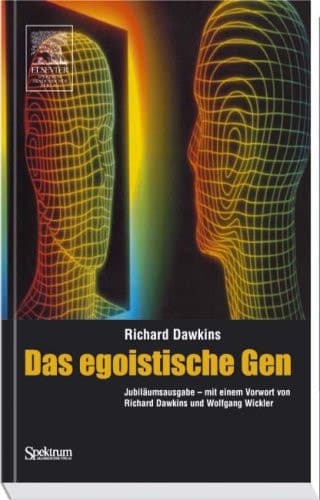
The Selfish Gene
by Richard Dawkins
Wait—I know what you're thinking. But hear me out: if you haven't read this yet, it's the philosophical foundation that makes The Blind Watchmaker click into place. Dawkins introduces the gene-centered view of evolution here, and reading it after The Blind Watchmaker gives you the reverse perspective—you'll see how he builds the architecture of his argument from the ground up, rather than defending it.
View book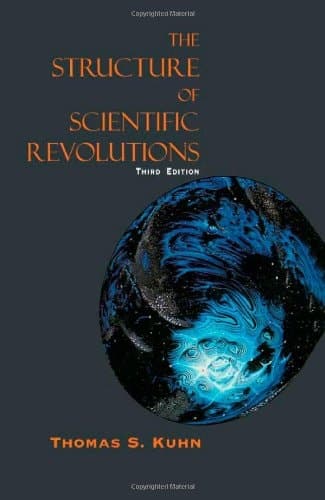
The Structure of Scientific Revolutions
by Thomas S. Kuhn
Kuhn examines how scientific paradigms shift—and Darwin's theory is his prime example of a revolution that fundamentally reorganized how we see the world. Where Dawkins argues *why* evolution is true, Kuhn explores *how* such a radical reframing becomes accepted by the scientific community. It's the meta-analysis of the very intellectual upheaval Dawkins describes.
View book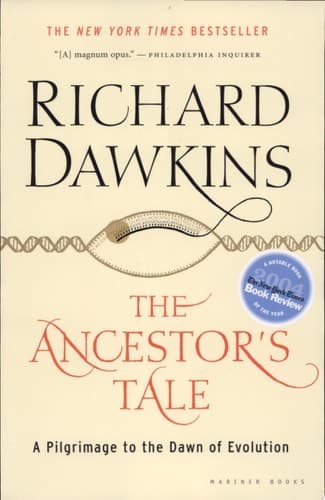
The Ancestor's Tale A Pilgrimage to the Dawn of Evolution
by Richard Dawkins
I'm bending the rules slightly here because this deserves mention: Dawkins takes the evolutionary framework from The Blind Watchmaker and traces it backward through time, meeting our evolutionary cousins along the way. It's like watching him apply his own theory as a narrative device—less argumentative than The Blind Watchmaker, more of a grand tour through deep time.
View book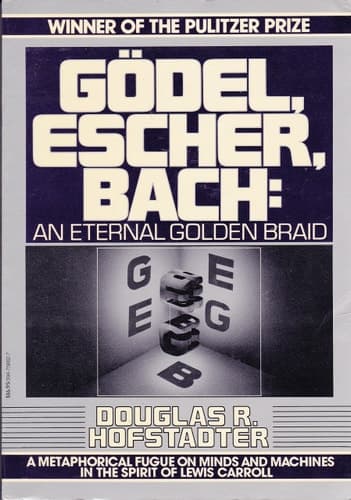
Gödel, Escher, Bach: An Eternal Golden Braid
by Douglas Hofstadter
This is your surprise recommendation. Hofstadter explores how complexity emerges from simple rules—much like Dawkins does with DNA—but he does it through music, art, and mathematics rather than biology. The book plays with self-reference and recursion the way evolution plays with replication; you'll find the same sense of wonder at how order bootstraps itself from chaos, just expressed through Bach fugues and visual paradoxes.
View book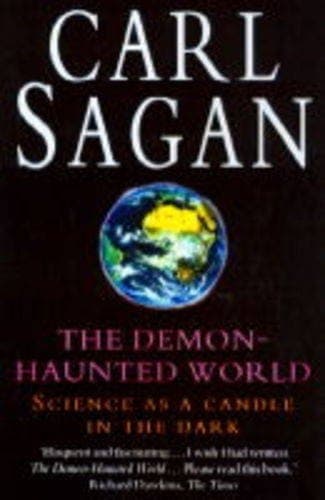
The Demon-haunted World Science as a Candle in the Dark
by Carl Sagan
Sagan shares Dawkins' mission to defend scientific thinking against supernatural explanations, but he does it with more warmth and less polemic. Where Dawkins is a prosecuting attorney building an airtight case, Sagan is a teacher showing you why the scientific method matters—and he tackles the same Paley-style arguments about design, just with more patience for how people actually think.
View bookAbout Richard Dawkins
R
Richard Dawkins
Born 1941
Clinton Richard Dawkins, FRS, FRSL is a British ethologist, evolutionary biologist and popular science author. He was formerly Professor for Public Understanding of Science at Oxford and was a fellow of New College, Oxford. Dawkins came to prominence with his 1976 book *The Selfish Gene*, which popularised the gene-centred view of evolution and introduced the term meme. In 1982, he made a widely cited contribution to evolutionary biology with the concept, presented in his book *The Extended Phenotype*, that the phenotypic effects of a gene are not necessarily limited to an organism's body, but can stretch far into the environment, including the bodies of other organisms. Dawkins is well known for his candid criticism of creationism and intelligent design. In his 1986 book *The Blind Watchmaker*, he argued against the watchmaker analogy, an argument for the existence of a supernatural creator based upon the complexity of living organisms. Instead, he described evolutionary processes as analogous to a blind watchmaker. He has since written several popular science books, and makes regular television and radio appearances, predominantly discussing these topics. ([Source][1]) [1]: http://en.wikipedia.org/wiki/Richard_Dawkins
View author page