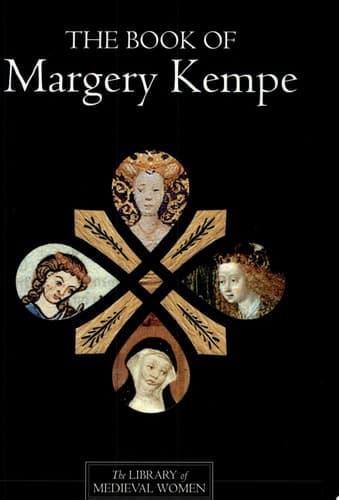
The Book of Margery Kempe An Abridged Translation
Margery KempePublished2003
Pages153
Formatpaperback
PublisherBoydell & Brewer Ltd
Synopsis
Margery Kempe's text draws on her maternal, female body to illuminate her relationship to the divine. A unique narrative of sin, sex and salvation, The Book of Margery Kempe comprises a text which has continued to perplex and fascinate contemporary audiences since its discovery in the library of an English country house in1934. Simultaneously exasperating, endearing, vulnerable and eccentric, Margery Kempe, mother of fourteen children and wife to a bemused John Kempe, provides us with an autobiographical account of her own singular brand of affective piety - excessive weeping, lack of bodily control, compulsive travelling, visionary meditations - and the growth of what she regarded as an individual and privileged mystical relationship with Christ. This new excerpted, thematically organised translation of the challenging text focuses on passages which will contextualise for the reader its author's reliance upon the experiences of her own maternal and sexualised body in an attempt to gain spiritual and literary authority. With detailed introduction and challenging interpretive essay, this volume uncovers in particular the importance of motherhood, sexuality and female orality to the inception and expression of Margery Kempe's singular mystical experiences and adds to contemporary debate regarding the agency of holy women during the later middle ages.
LIZ HERBERT McAVOY is Lecturer in Medieval Language and Literature, University of Leicester.
Recommendations
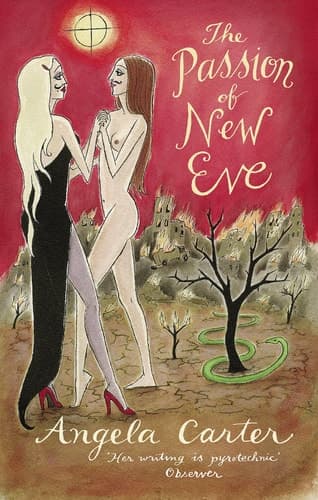
The Passion of New Eve
by Angela Carter
Carter shares Kempe's fascination with how the female body becomes a site of spiritual and political meaning, but she approaches it through surrealist fiction rather than autobiography. Where Kempe's excessive weeping and bodily experiences authenticate her mystical claims, Carter interrogates how women's bodies are constructed and reconstructed as vessels for meaning—making this a provocative literary companion that challenges the very premises of Kempe's authority.
View book
The Life (life of the Holy Mother Teresa of Jesus)
by Saint Teresa (of Avila)
Here's a contemporary (16th-century) spiritual autobiography that gives you another medieval/early modern holy woman's voice—but Teresa writes with a directness and theological sophistication that creates an interesting dialogue with Kempe's more chaotic piety. Both women claim authority through their bodies and visions, but Teresa's intellectual rigor and her willingness to defend her experiences to the Inquisition offers a different model of female mystical agency.
View book
Toni Morrison - Beloved
by Carl Plasa
This is my surprise pick, but stay with me: Morrison, like Kempe, uses a woman's maternal body as the absolute center of spiritual and historical reckoning. The excessive emotion, the haunting, the way motherhood becomes both trauma and transcendence—it echoes Kempe's affective intensity but grounds it in a completely different historical and racial context. You'll find the same refusal to separate the sacred from the bodily, the same insistence that a woman's interior life matters cosmically.
View book
The Book of Disquiet
by Fernando Pessoa
A radical shift in form and era, but Pessoa's fragmented, obsessive meditation on interiority and identity shares Kempe's compulsive need to document an idiosyncratic inner life. Where Kempe's text sprawls across pilgrimage and vision, Pessoa's sprawls across philosophical fragments and contradictions—both authors refuse conventional narrative shape in order to capture something truer about consciousness and spiritual seeking.
View book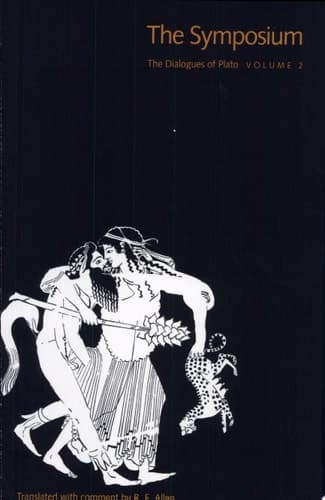
The Dialogues of Plato The Symposium
by Plato
I'm reaching back to ancient philosophy here, but Plato's dialogue about love and desire creates an unexpected mirror to Kempe's obsessive, embodied relationship with the divine. Both texts treat desire—whether erotic or spiritual—as a legitimate path to truth and transcendence, and both insist that the body and its experiences are philosophically serious. Reading them together reveals how Kempe participates in a much longer Western conversation about how we know and love.
View bookAbout Margery Kempe
Biography coming soon.
View author page