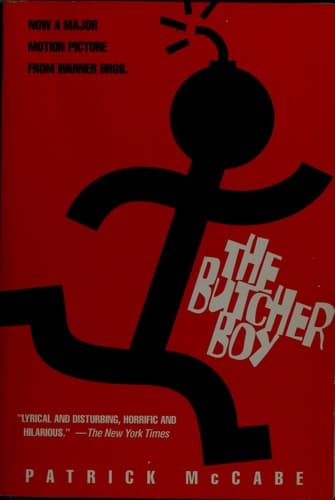
Synopsis
"When I was a young lad twenty or thirty or forty years ago I lived in a small town where they were all after me on account of what I done on Mrs. Nugent."
Thus begins Patrick McCabe's shattering novel The Butcher Boy, a powerful and unrelenting journey into the heart of darkness. The bleak, eerie voice belongs to Francie Brady, the "pig boy," the only child of and alcoholic father and a mother driven mad by despair. Growing up in a soul-stifling Irish town, Francie is bright, love-starved, and unhinged, his speech filled with street talk, his heart filled with pain...his actions perfectly monstrous.
Held up for scorn by Mrs. Nugent, a paragon of middle-class values, and dropped by his best friend, Joe, in favor of her mamby-pamby son, Francie finally has a target for his rage--and a focus for his twisted, horrific plan.
Dark, haunting, often screamingly funny, The Butcher Boy chronicles the pig boy's ominous loss of innocence and chilling descent into madness. No writer since James Joyce has had such marvelous control of rhythm and language... and no novel since The Silence Of The Lambs has stunned us with such a macabre, dangerous mind.
Recommendations
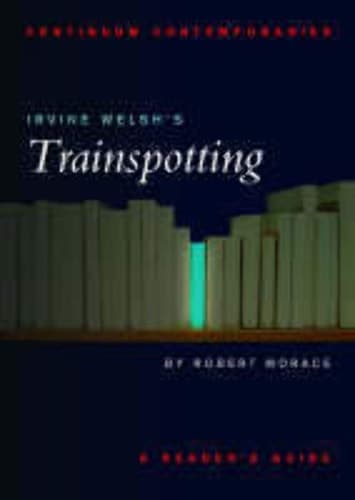
Irvine Welsh's Trainspotting A Reader's Guide
by Robert Morace
Welsh captures that same feverish, vernacular voice of a protagonist spiraling through addiction and desperation, but set in Edinburgh's underworld rather than rural Ireland. Like Francie, his characters are darkly funny even as they're utterly lost—the narrative style itself becomes a character, pulling you into their fractured perspective with the same linguistic brilliance McCabe deploys.
View book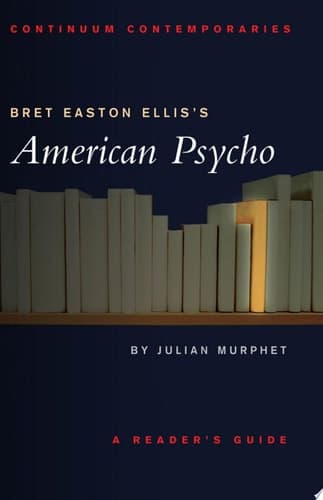
Bret Easton Ellis's American Psycho A Reader's Guide
by Julian Murphet
Ellis constructs a similarly monstrous consciousness—Patrick Bateman's hollow, performative existence and capacity for casual horror—but filters it through 1980s Manhattan excess rather than small-town Irish poverty. Both novels make you complicit in the narrator's madness through sheer narrative seduction, and both use grotesque detail and dark comedy to explore how society creates and then scapegoats its monsters.
View book
The Apocalyptic Vision of Mikhail Bulgakov's the Master and Margarita (Studies in Slavic Language & Literature)
by Edward E. Ericson
Here's your surprise pick: this 1960s Russian novel shares McCabe's gift for tonal whiplash—moving between the grotesque and the transcendent, the mundane and the nightmarish—but adds a layer of magical realism and philosophical inquiry. Like The Butcher Boy, it's a scathing portrait of a corrupt society told through fractured, darkly comic voices, but it reaches toward something almost redemptive beneath the chaos.
View book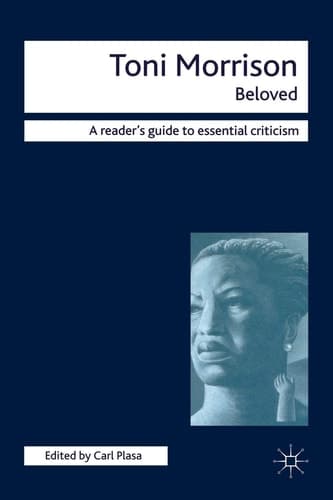
Toni Morrison - Beloved
by Carl Plasa
Morrison explores trauma and madness with the same unflinching intensity as McCabe, but through the lens of slavery's psychological devastation. Her prose has that same lyrical, almost incantatory quality—where language itself becomes destabilized by grief and violence. Both novels refuse to look away from how institutional cruelty warps the human mind, and both use fragmented storytelling to mirror their characters' fractured consciousness.
View book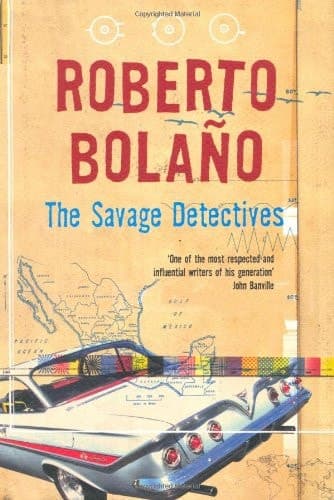
The Savage Detectives A Novel
by Roberto Bolaño
Bolaño's sprawling, digressive novel shares McCabe's fascination with how marginalized young men construct identity through language and obsession, but expands it into a vast, labyrinthine meditation on literature, friendship, and failure. The voice is equally intoxicating and unreliable—you're pulled into the narrator's worldview even as you sense how distorted it is—and the prose has that same dark, sardonic humor beneath genuine pathos.
View bookAbout Patrick McCabe
Biography coming soon.
View author page