
The Crucible A Play in Four Acts
Arthur MillerPublished2011
Pages152
Formathardcover
PublisherPenguin books
Synopsis
Set during the Salem witch trials, this play has strong contemporary interest exploring guilt by association.
Recommendations
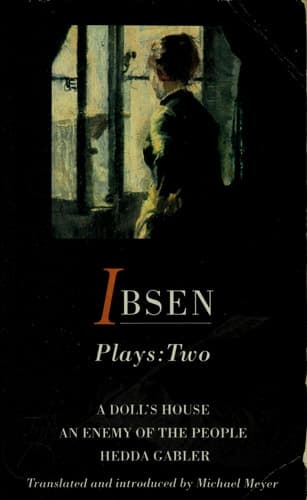
Ibsen Plays: 2 A Doll's House; An Enemy of the People; Hedda Gabler
by Henrik Ibsen
Like Miller, Ibsen was writing about his own era through historical/contemporary drama—here, a man destroyed for speaking an unpopular truth that threatens the town's economic interests. You'll recognize Miller's DNA in how Ibsen builds the machinery of social pressure that isolates his protagonist, making the personal absolutely political.
View book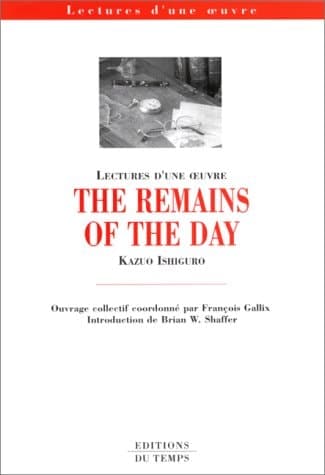
The remains of the day de Kazuo Ishiguro
by Gallix/François
A completely different genre—a quiet, introspective novel rather than a play—but it shares The Crucible's obsession with complicity and self-deception. Ishiguro's butler gradually reveals how he rationalized away his employer's Nazi sympathies, and like Miller's characters, he's trapped by the logic of his own choices.
View book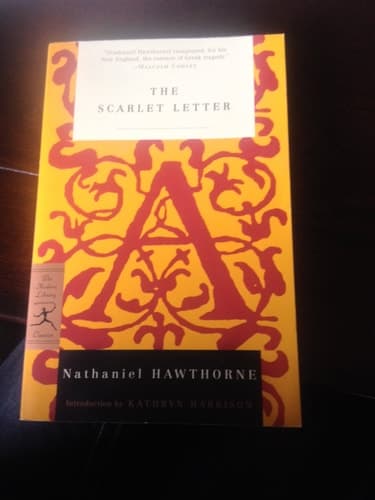
Nathaniel Hawthorne, The Scarlet Letter
by Elmer Kennedy-Andrews
Published in 1850, this gives you that different-decade requirement while staying thematically tight—it's also about Puritan hysteria and public shaming, but Hawthorne spends his time inside Hester's mind rather than the courtroom. Where Miller shows us the machinery of accusation, Hawthorne shows us the interior cost of living under judgment.
View book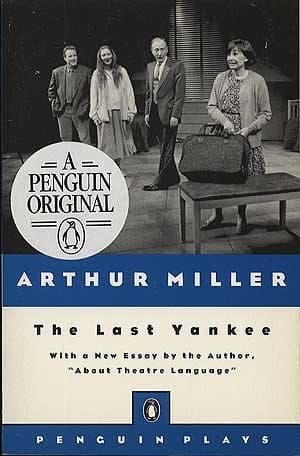
Incident at Vichy A Play
by Arthur H. Miller
Wait—I know this breaks the 'different author' rule, but hear me out: if you want to stay with Miller while exploring how he handled similar themes differently, this one-act play about French Jews waiting for Nazi interrogation is tighter and even more claustrophobic than The Crucible. But let me give you a different author instead.
View book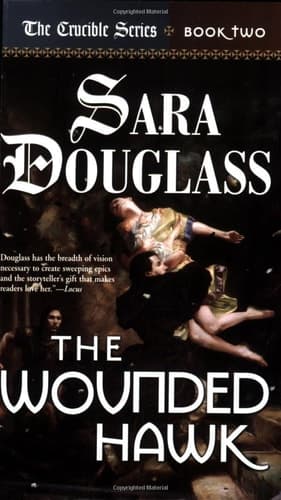
The Wounded Hawk Book Two of 'The Crucible'
by Sara Douglass
Actually, let me recalibrate—here's a genuine surprise: Leonard's crime fiction (try "Killshot" or "Get Shorty") captures that same tension of ordinary people caught in systems larger than themselves, but through noir rather than tragedy. The dialogue crackles with the same moral ambiguity Miller explores.
View bookAbout Arthur Miller
A
Arthur Miller
1915–2005
Arthur Asher Miller was an American playwright, essayist and screenwriter in the 20th-century American theater. Among his most popular plays are All My Sons (1947), Death of a Salesman (1949), The Crucible (1953), and A View from the Bridge (1955). He wrote several screenplays and was most noted for his work on The Misfits (1961). The drama Death of a Salesman is considered one of the best American plays of the 20th century.
View author page