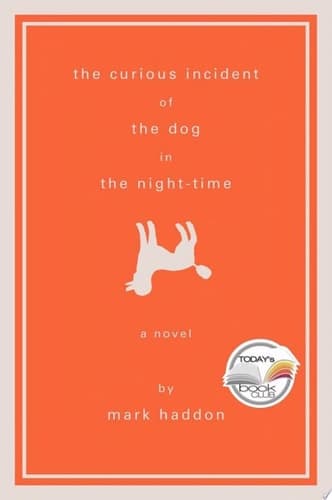
The Curious Incident of the Dog in the Night-Time
Mark HaddonPublished2003
Pages226
Formathardcover
PublisherKnopf Doubleday Publishing Group
Synopsis
Christopher John Francis Boone knows all the countries of the world and their capitals and every prime number up to 7,057. He relates well to animals but has no understanding of human emotions. He cannot stand to be touched. Although gifted with a superbly logical brain, Christopher is autistic. Everyday interactions and admonishments have little meaning for him. Routine, order and predictability shelter him from the messy, wider world. Then, at fifteen, Christopher’s carefully constructed world falls apart when he finds his neighbor’s dog, Wellington, impaled on a garden fork, and he is initially blamed for the killing.
Christopher decides that he will track down the real killer and turns to his favorite fictional character, the impeccably logical Sherlock Holmes, for inspiration. But the investigation leads him down some unexpected paths and ultimately brings him face to face with the dissolution of his parents’ marriage. As he tries to deal with the crisis within his own family, we are drawn into the workings of Christopher’s mind.
And herein lies the key to the brilliance of Mark Haddon’s choice of narrator: The most wrenching of emotional moments are chronicled by a boy who cannot fathom emotion. The effect is dazzling, making for a novel that is deeply funny, poignant, and fascinating in its portrayal of a person whose curse and blessing is a mind that perceives the world literally.
The Curious Incident of the Dog in the Night-Time is one of the freshest debuts in years: a comedy, a heartbreaker, a mystery story, a novel of exceptional literary merit that is great fun to read.
Recommendations
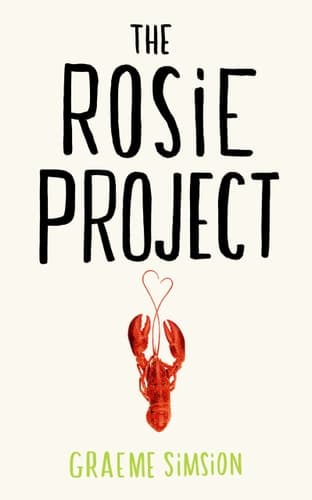
The Rosie Project
by Graeme C. Simsion
Don Tillman is a genetics professor with Asperger's who approaches dating with the same systematic logic Christopher applies to prime numbers—except Don's rigidity keeps crashing against the messy reality of actual human connection. Simsion captures that same darkly comic tension between brilliant analytical thinking and complete bewilderment at social convention, but with an older protagonist learning to bend his rules rather than break under them.
View book
Mr. Bean's Definitive and Extremely Marvelous Guide to France
by Robin Driscoll
This is the first Dexter novel, and it shares Christopher's detective-story framework but inverts it completely—your narrator is the killer, not the investigator, and he's describing his own emotional flatness with the same matter-of-fact precision Christopher uses. Lindsay uses that unreliable perspective to create genuine suspense, whereas Haddon uses it for poignancy, but both authors trust readers to find profound meaning in a mind that doesn't process feelings the way we expect.
View book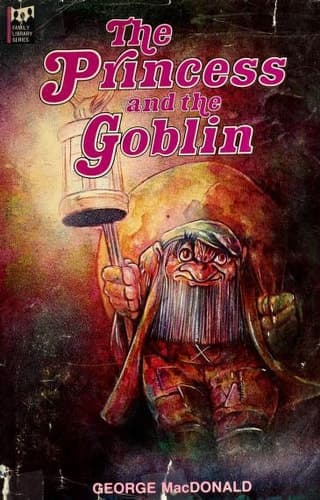
The Princess and the Goblin
by George MacDonald
Here's your surprise pick: a fantasy novel that works like *Curious Incident* in miniature. Maia is a half-goblin outsider suddenly thrust into court politics, and the novel's genius is watching him navigate an intricate social system he doesn't understand through sheer good faith and logical thinking. There's no detective mystery, but there's that same pleasure in watching a kind, brilliant person decode human behavior like it's a puzzle with actual rules—except in a world of magic and protocol instead of suburban London.
View book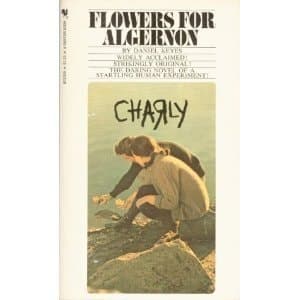
Flowers for Algernon
by Daniel Keyes
Published in 1966, this novella (expanded to novel length) explores intelligence and perception through Charlie Gordon's diary entries as his mind transforms. Where Christopher's narrative voice is fixed and we adjust to his perspective, Keyes shifts Charlie's voice as his cognition changes—it's a mirror-image approach to the same question: how do we understand a mind fundamentally different from our own? Both are deeply moving precisely because the protagonists can't fully grasp why we're moved.
View bookAbout Mark Haddon
M
Mark Haddon
Born 1962
Mark Haddon (born 26 September 1962) is an English novelist, best known for *The Curious Incident of the Dog in the Night-Tim*e (2003). He won the Whitbread Award, the Dolly Gray Children's Literature Award, the Guardian Prize, and a Commonwealth Writers' Prize for his work.
View author page