
Synopsis
Until he was thirty-two, Charlie Gordon --gentle, amiable, oddly engaging-- had lived in a kind of mental twilight. He knew knowledge was important and had learned to read and write after a fashion, but he also knew he wasn't nearly as bright as most of the people around him. There was even a white mouse named Algernon who outpaced Charlie in some ways. But a remarkable operation had been performed on Algernon, and now he was a genius among mice. Suppose Charlie underwent a similar operation...
Recommendations
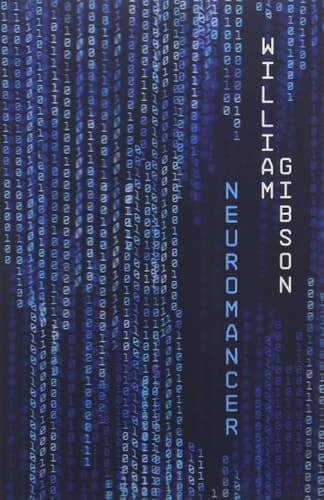
Neuromancer
by William Gibson
Gibson explores what happens when human consciousness intersects with artificial intelligence in ways that feel just as disorienting as Charlie's sudden leap into genius—except here the protagonist is already brilliant and grappling with what that brilliance costs him. The fragmented, almost stream-of-consciousness narrative style mirrors how Keyes uses Charlie's progress reports to show us a mind fundamentally changing its own relationship to language and thought.
View book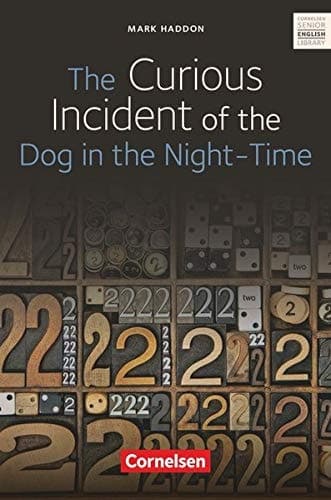
The Curious Incident of the Dog in the Night-time
by Mark Haddon
Like Charlie, fifteen-year-old Christopher has a mind that works differently from those around him—but Haddon lets us experience his extraordinary mathematical perception directly through the narrative itself, the way Keyes lets us read Charlie's own words. Both books ask us to reconsider what 'intelligence' actually means and whether society's definition of it is the only one that matters.
View book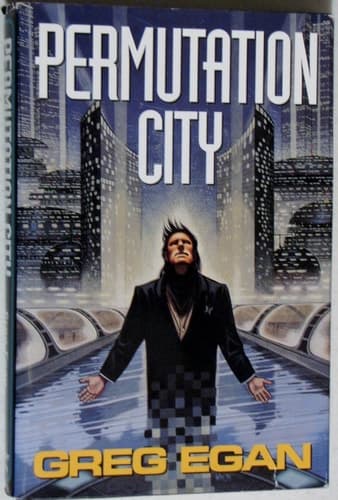
Permutation City
by Greg Egan
This is the deep-dive recommendation: Egan takes the philosophical questions Keyes raises about consciousness and identity and pushes them into genuinely strange territory—what if you could copy your mind, run it on different hardware, experience multiple versions of yourself? It's harder science fiction than Flowers for Algernon, but it has that same sense of wonder mixed with existential dread about what we lose and gain when our minds change.
View book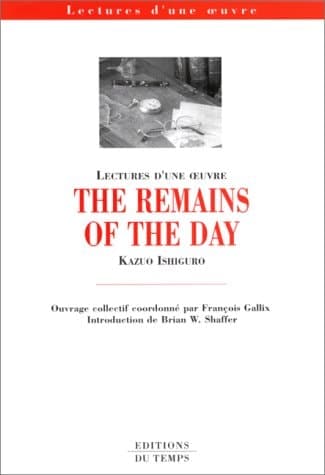
The remains of the day de Kazuo Ishiguro
by Gallix/François
A surprising pivot, but hear me out: Stevens, the narrator, has spent his entire life in a kind of intellectual and emotional twilight, choosing duty over self-awareness. Ishiguro's prose gradually reveals how Stevens has systematized his own blindness to his own life—it's the inverse of Charlie's journey, and the quiet tragedy of a mind that never allowed itself to fully awaken hits with the same emotional force as Charlie's decline.
View book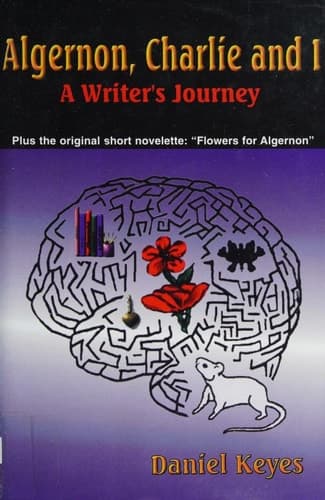
Algernon, Charlie and I: A Writer's Journey : Plus the Complete Original Short Novelette Version of "Flowers for Algernon"
by Daniel Keyes
If you haven't read the original 1966 Nebula Award-winning short story that preceded the novel, it's worth seeking out in anthologies—the compression of the arc into shorter space creates an almost unbearable emotional intensity. But if you want something genuinely different: try Ted Chiang's 'Story of Your Life' (collected in Stories of Your Life and Others), which uses language itself as the mechanism of transformation the way Keyes uses the operation, asking whether learning to perceive differently actually changes who you are at a fundamental level.
View bookAbout Daniel Keyes
D
Daniel Keyes
1927–2014
Biography coming soon.
View author page