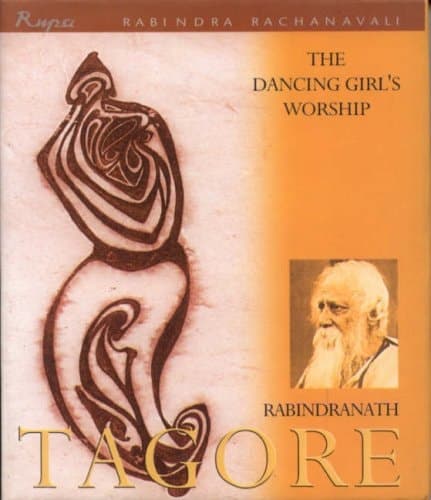
Synopsis
The Dancing Girl's Worship is Tagore's own translation of his Bengali drama Natir Puja. It is one of his simplest and most moving plays. It is comparatively free from symbolic complexities and intellectual abstractions.
Recommendations
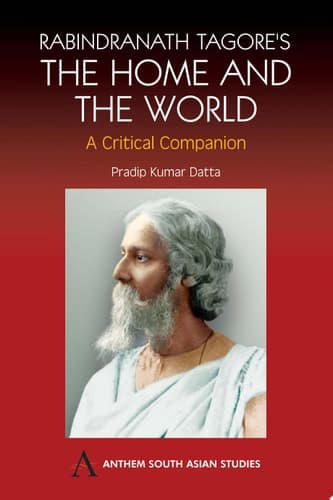
Rabindranath Tagore's The Home and the World A Critical Companion
by Pradip Kumar Datta
Wait—I know what you're thinking. But hear me out: this novel has everything that made Dancing Girl resonate with you, except Tagore here lets his philosophical tensions breathe across a full narrative rather than compress them into dramatic intensity. The emotional restraint and the way he captures unspoken longing between characters will feel like visiting an old friend's house and discovering new rooms you'd somehow missed.
View book
Four Great Plays of Henrik Ibsen A Doll's House, The Wild Duck, Hedda Gabler, The Master Builder
by Henrick Ibsen
Ibsen's play has that same deceptive simplicity as Dancing Girl—a domestic interior, a few characters, conversations that seem ordinary until you realize they're dismantling everything. Both writers use the stage to explore what happens when someone's inner world collides with the role society has written for them, and both do it without melodrama or easy answers.
View book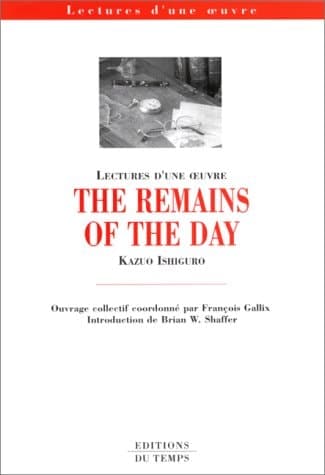
The remains of the day de Kazuo Ishiguro
by Gallix/François
This is your surprise recommendation. On the surface it's a butler's quiet memoir, but Ishiguro does something Tagore also mastered: he lets you feel the weight of what's *not* being said. The protagonist's restraint mirrors the emotional economy of Dancing Girl—every small gesture carries enormous meaning, and you'll find yourself rereading passages to catch what was hidden in plain sight.
View book
Bookclub-in-a-box Presents the Discussion Companion for Khaled Hosseini's Novel The Kite Runner
by Marilyn Herbert
Like Dancing Girl, this novel centers on a relationship that's both intimate and impossible—two people bound by something neither can fully articulate or escape. Hosseini captures that same quality of devotion mixed with shame, and the way he reveals what's really at stake between his characters echoes Tagore's understanding that the deepest dramas are internal, not external.
View book
The Vegetarian A Novel
by Kang Han
Published in 2007, this novella operates in the same register as Dancing Girl—minimal plot, maximum psychological intensity. Han Kang's protagonist makes one quiet decision that ripples through her relationships, and like Tagore, the author trusts you to understand the spiritual and emotional upheaval beneath the surface. It's unsettling in the best way, the kind of book that stays with you because it refuses to explain itself.
View bookAbout Rabindranath Tagore
R
Rabindranath Tagore
1861–1941
Bengali polymath who reshaped his region's literature and music. Author of "Gitanjali" and its "profoundly sensitive, fresh and beautiful verse" (The Nobel Foundation), he became the first non-European Nobel laureate by earning the 1913 Prize in Literature.
View author page