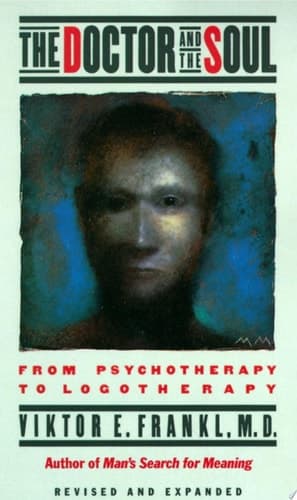
The Doctor and the Soul From Psychotherapy to Logotherapy
Viktor E. FranklPublished1986
Pages352
Formatpaperback
PublisherKnopf Doubleday Publishing Group
Synopsis
In this classic work, internationally known Viennese psychiatrist Viktor E. Frankl, founder of the school of logotherapy, sets forth the principles of existential psychiatry. He holds that man's search for meaning in existence is a primary facet of his being; if the search is unrequited, it leads to neurosis. The role of the therapist, then, is to help the patient discover a purposefulness in life.
Recommendations
Man's Search for Meaning
by Viktor E. Frankl
Wait—I know this seems like cheating, but hear me out: if you haven't read Frankl's most famous work yet, it's the natural companion to *The Doctor and the Soul*. Where this book builds the theoretical framework of logotherapy, *Man's Search for Meaning* grounds it in the harrowing reality of the concentration camps, showing you exactly why Frankl became so convinced that meaning-making is survival itself.
View book
The Myth of Sisyphus, and Other Essays. (English and French Edition)
by Albert Camus
Camus asks the question Frankl spends his career answering: how do we live when life seems meaningless? Reading these two back-to-back is like watching a philosophical debate unfold—Camus argues we must imagine Sisyphus happy despite the absurd, while Frankl insists we can *find* meaning even in suffering. The tension between them will reshape how you think about both books.
View book
Fyodor Dostoevsky's the Brothers Karamazov (Bloom's Modern Critical Interpretations)
by Unknown
This 1879 novel is essentially a 700-page exploration of the exact questions Frankl addresses clinically: Why should we live? What gives life meaning when faith fails? Ivan's rebellion and Alyosha's faith aren't just plot points—they're case studies in how different people construct (or fail to construct) meaning. Frankl actually references Dostoevsky's insights about suffering, and reading the source material will deepen your understanding of logotherapy's roots.
View book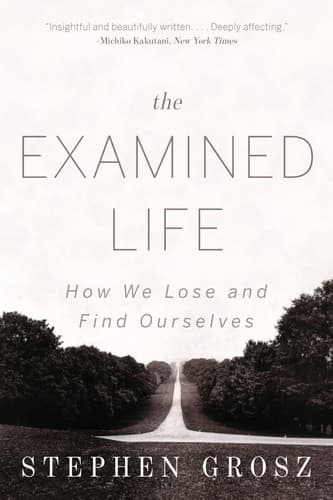
The Examined Life: How We Lose and Find Ourselves
by Stephen Grosz
Here's your surprise pick: Grosz is a psychoanalyst who writes like a storyteller, offering case studies that feel like short stories rather than clinical notes. Where Frankl is systematic and philosophical, Grosz is intimate and particular—he shows you logotherapy's cousin discipline at work through the messy, specific details of real people discovering (or avoiding) meaning in their lives. It's Frankl translated into the language of narrative.
View book
Outlines and Highlights for Flow The Psychology of Optimal Experience by Csikszentmihalyi
by Mihaly Csikszentmihalyi
Csikszentmihalyi takes Frankl's insight about meaning and asks a different question: what does it *feel* like when you're living meaningfully? His concept of 'flow'—that state of total absorption where self-consciousness disappears—is the experiential answer to Frankl's philosophical one. If logotherapy is the 'why' of meaningful living, this book is the 'how' and the 'what it feels like.'
View bookAbout Viktor E. Frankl
V
Viktor E. Frankl
1905–1997
Viktor Emil Frankl was an Austrian neurologist and psychiatrist as well as a Holocaust survivor. He was the founder of logotherapy, which is a form of existential analysis, the "Third Viennese School of Psychotherapy".
View author page