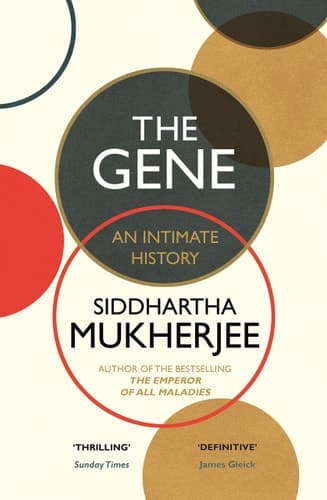
The Gene An Intimate History
Siddhartha MukherjeePublished2016
Pages608
Formathardcover
PublisherBodley Head
Synopsis
The Gene: An Intimate History is a book written by Siddhartha Mukherjee, an Indian-born American physician and oncologist. It was published on 17 May 2016 by Scribner. The book chronicles the history of the gene and genetic research, all the way from Aristotle to Crick, Watson and Franklin and then the 21st century scientists who mapped the human genome. The book discusses the power of genetics in determining people's well-being and traits. It delves into the personal genetic history of Siddhartha Mukherjee's family, including mental illness. However, it is also a cautionary message toward not letting genetic predispositions define a person or their fate, a mentality that the author says led to the rise of eugenics in history.
Recommendations

The Immortal Count The Life and Films of Bela Lugosi
by Arthur Lennig
Like Mukherjee, Skloot weaves together scientific history with deeply personal family narrative, but she does it by centering the human cost of genetic research rather than the triumphalism. Her investigation into HeLa cells and the Lacks family gives you that same sense of how genetics intersects with ethics, race, and power—but told from the perspective of those whose bodies were used without consent.
View book
The Selfish Gene
by Richard Dawkins
Dawkins takes the gene itself as a character and asks what it 'wants'—a provocative reframing that complements Mukherjee's historical narrative. Published in 1976, this older work predates The Gene and offers a completely different philosophical lens on heredity, one that's been both celebrated and fiercely debated. It's shorter and more argumentative than Mukherjee, so it reads like a spirited counterpoint rather than another comprehensive history.
View book
Quilting and Braiding The Feminist Christologies of Sallie McFague and Elizabeth A. Johnson in Conversation
by Shannon Schrein
This is the surprise pick—it's not about human genetics at all, but about inheritance and legacy through a completely different lens. Kimmerer, a botanist and Potawatomi author, explores how knowledge and traits are passed down through relationships with the natural world rather than DNA. If you appreciated Mukherjee's caution against genetic determinism, you'll find Kimmerer's alternative framework for understanding what we inherit genuinely liberating.
View book
The New Additive Code Breaker Everything You Should Know about Additives in Your Food
by Maurice Hanssen
Isaacson picks up where Mukherjee's narrative ends, focusing on CRISPR and the scientists making real-time decisions about how to edit genes. It's biography meets cutting-edge science, and it grapples with the same ethical questions Mukherjee raised about eugenics and determinism, but now applied to actual tools we can use today. The tension between possibility and responsibility runs through every chapter.
View bookAbout Siddhartha Mukherjee
Biography coming soon.
View author page