Synopsis
Reaffirming the "greatness and inestimable value of human life," Pope John Paul II discusses in this encyclical letter the present-day legal, ethical, and moral threats to life.
In view of today's climate of practical materialism, he addresses, among other issues:
• abortion
• artificial reproduction techniques
• contraception
• death penalty
• euthanasia
• legitimate defense
• sterilization
• suicide
The Holy Father encourages the faithful to promote and develop the Christian message concerning life, based on the goodness and dignity of life and on the human responsibility to share in the fullness and truth of God's love. In order to build a new culture of human life through prayer and action, he welcomes evangelization efforts and stresses the role of the family in bringing this to fruition. Noting the unique role of women in promoting a "new feminism" that overcomes discrimination, violence, and exploitation, the pope recognizes the witness of love through motherhood and also adds a special word to women who have had an abortion.
The letter concludes by looking to Jesus, in order that all may contemplate the life that was made manifest, and to the example and solace of Mary, who is the mother of life.
Recommendations
Re-thinking Children's Care: Getting beyond childcare: reflections on recent policy and future possibilities ; CHAPTER 3 The care of the illegitimate child: the Coram experience 1900-45 ; CHAPTER 4 Social pedagogy: an historical account of care and education as social control ; CHAPTER 5 An historical perspective on changing child care policy ; PART II Explorations in formal care : CHAPTER 6 Men in the nursery ; CHAPTER 7 Caring for children in need: the case of sponsored day care ; CHAPTER 8 Mother, teacher, nurse? How childminders define their role ; CHAPTER 9 Promoting children's health through nursing care ; PART III Care and family life : CHAPTER 10 Care-giving and independence in four-generation families ; CHAPTER 11 Concepts of care and children's contribution to family life ; CHAPTER 12 Some thoughts on rethinking children's care
by Julia Brannen
George approaches the same life-and-dignity questions as John Paul II but through the lens of secular philosophy and constitutional law rather than theology. Where the Pope grounds his arguments in Christian revelation, George shows how natural law reasoning reaches similar conclusions—it's like watching someone climb the same mountain from a different trail, and the view from the top becomes even clearer when you see both routes.
View book
Fyodor Dostoevsky's the Brothers Karamazov (Bloom's Modern Critical Interpretations)
by Unknown
This 1879 novel wrestles with the exact spiritual crisis John Paul II identifies—a world where materialism and nihilism threaten to hollow out meaning from human existence. Through Ivan's rebellion against God and Alyosha's faith, Dostoevsky dramatizes the theological stakes that the encyclical argues abstractly, giving you the lived experience of souls actually grappling with whether life has value when God seems absent.
View book
Choosing Life A Dialogue on Evangelium Vitae
by Kevin William Wildes
Rather than another papal document, this scholarly unpacking by a moral theologian gives you the philosophical architecture underneath John Paul II's arguments—the careful distinctions between contraception and natural family planning, or between capital punishment and legitimate defense, become much sharper when you see the reasoning spelled out step by step. It's the kind of deep dive that transforms a document you've read into something you can actually defend in conversation.
View book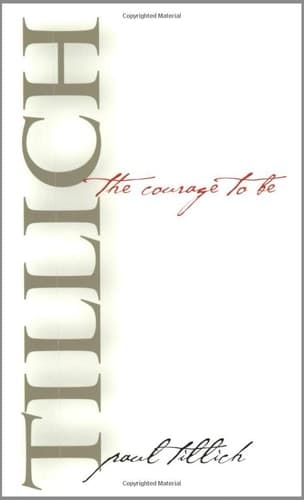
The Courage to be
by Paul Tillich
Here's the surprise recommendation: Tillich was a Protestant theologian writing in 1952, but he addresses the same modern anxiety about meaninglessness that haunts John Paul II's encyclical—except he does it through existentialist philosophy rather than Catholic doctrine. His meditation on how humans find courage to exist in a universe that seems indifferent becomes a kind of secular companion piece to the Pope's insistence on life's inviolable worth, showing you how different traditions arrive at similar convictions about human dignity.
View book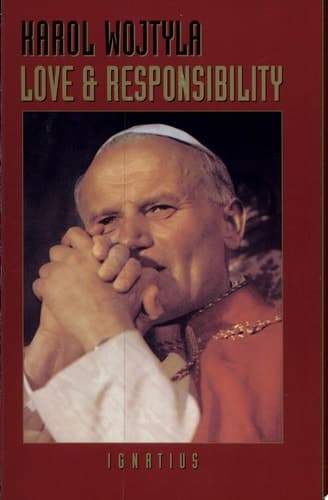
Love and Responsibility
by Unknown
This is John Paul II before he was Pope—his 1960 philosophical work on sexuality, marriage, and the personhood of both man and woman. Reading this alongside Evangelium Vitae shows you how his thinking evolved and deepened; you'll see the seeds of his later arguments about women's dignity and the sacredness of marital love planted here in more philosophical soil, giving you the intellectual biography of how these convictions formed.
View bookAbout Pope John Paul II
P
Pope John Paul II
1920–2005
Biography coming soon.
View author page