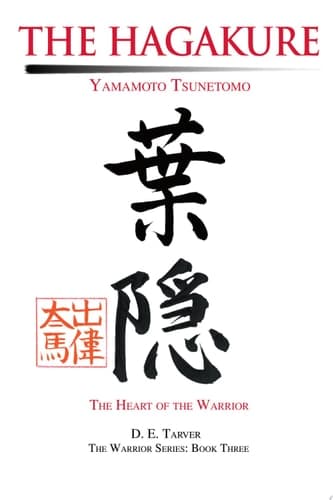
Hagakure The Book of the Samurai
Yamamoto TsunetomoPublished2002
Pages132
Formatpaperback
PublisheriUniverse
Synopsis
Hagakure ("In the Shadow of Leaves") is a manual for the samurai classes consisting of a series of short anecdotes and reflections that give both insight and instruction-in the philosophy and code of behavior that foster the true spirit of Bushido-the Way of the Warrior. It is not a book of philosophy as most would understand the word: it is a collection of thoughts and sayings recorded over a period of seven years, and as such covers a wide variety of subjects, often in no particular sequence.
The work represents an attitude far removed from our modern pragmatism and materialism, and possesses an intuitive rather than rational appeal in its assertion that Bushido is a Way of Dying, and that only a samurai retainer prepared and willing to die at any moment can be totally true to his lord. While Hagakure was for many years a secret text known only to the warrior vassals of the Hizen fief to which the author belonged, it later came to be recognized as a classic exposition of samurai thought and came to influence many subsequent generations, including Yukio Mishima.
This translation offers 300 selections that constitute the core texts of the 1,300 present in the original.
Hagakure was featured prominently in the film Ghost Dog, by Jim Jarmusch.
Recommendations
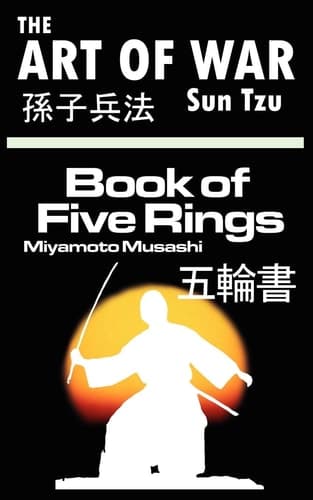
The Art of War by Sun Tzu and the Book of Five Rings by Miyamoto Musashi
by Sun Tzu
Where Hagakure gives you the samurai's internal code of honor and loyalty, Sun Tzu offers the strategic mind behind warfare itself—both are distilled wisdom texts meant to be read in fragments and contemplated rather than consumed linearly. You'll notice how differently Eastern military thought approaches conflict: Sun Tzu emphasizes deception and adaptation, while Yamamoto emphasizes acceptance of death, yet both texts share that same sparse, aphoristic quality that rewards rereading.
View book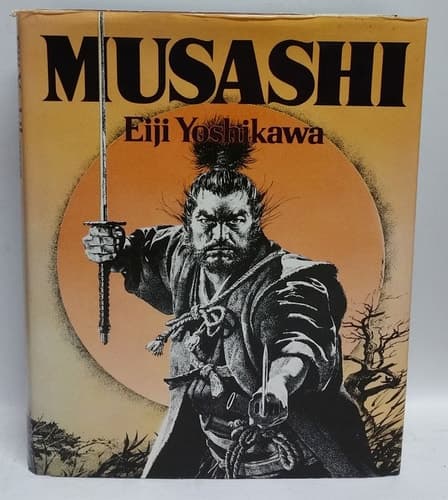
Musashi
by Eiji Yoshikawa
This is the novelized life of the legendary swordmaster Musashi, and it does something Hagakure doesn't—it shows you Bushido in action through a gripping narrative rather than reflection. Yoshikawa captures that same tension between duty and self-discovery that threads through Yamamoto's anecdotes, but lets you live inside a samurai's journey across decades rather than observing from the outside.
View bookThe Meditations of Marcus Aurelius Selections Annotated & Explained
The Meditations of Marcus Aurelius Selections Annotated & Explained
by Marcus Aurelius (Emperor of Rome)
Here's your surprise pick: a Roman emperor's private journal written nearly 2,000 years before Hagakure, yet it's remarkably kindred in spirit. Both are collections of personal reflections on duty, mortality, and how to live with integrity when everything is uncertain. Where Yamamoto writes for samurai retainers, Aurelius writes for himself, but you'll find the same unflinching acceptance of death and the same insistence that virtue is the only true good.
View book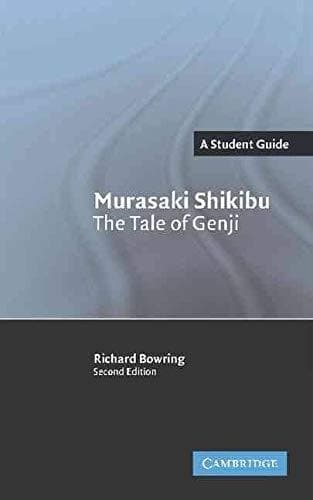
Murasaki Shikibu The Tale of Genji
by Richard Bowring
Published in the 11th century, this is the world Hagakure's samurai inherited—a portrait of Japanese court culture that shows you the aesthetic and social foundations underlying the warrior code. It's a completely different genre (psychological fiction rather than philosophy), but reading it after Hagakure gives you the cultural context for why those samurai valued what they valued, and how beauty and duty intertwined in Japanese thought.
View book
Way of the Peaceful Warrior A Book that Changes Lives
by Dan Millman
This is a modern Western attempt to translate Eastern warrior philosophy into contemporary life—part memoir, part spiritual guide. Where Hagakure is austere and uncompromising, Millman is more accessible and focuses on how ancient principles apply to an ordinary person's struggles. It's a fascinating counterpoint: you'll see what gets lost and what gets gained when samurai philosophy meets California in the 1960s.
View bookAbout Yamamoto Tsunetomo
Y
Yamamoto Tsunetomo
1659–1719
Biography coming soon.
View author page