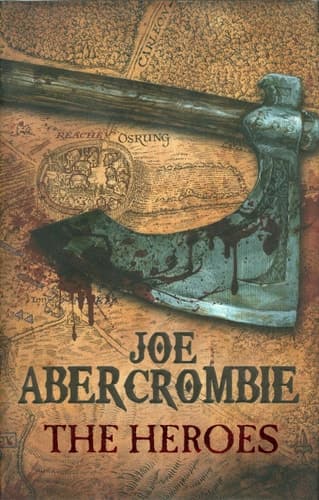
Synopsis
They say Black Dow’s killed more men than winter, and clawed his way to the throne of the North up a hill of skulls. The King of the Union, ever a jealous neighbour, is not about to stand smiling by while he claws his way any higher. The orders have been given and the armies are toiling through the northern mud. Thousands of men are converging on a forgotten ring of stones, on a worthless hill, in an unimportant valley, and they’ve brought a lot of sharpened metal with them.
Bremer dan Gorst, disgraced master swordsman, has sworn to reclaim his stolen honour on the battlefield. Obsessed with redemption and addicted to violence, he’s far past caring how much blood gets spilled in the attempt. Even if it’s his own.
Prince Calder isn’t interested in honour, and still less in getting himself killed All he wants is power, and he’ll tell any lie, use any trick, and betray any friend to get it. Just as long as he doesn’t have to fight for it himself.
Curnden Craw, the last honest man in the North, has gained nothing from a life of warfare but swollen knees and frayed nerves. He hardly even cares who wins any more, he just wants to do the right thing. But can he even tell what that is with the world burning down around him?
Over three bloody days of battle, the fate of the North will be decided. But with both sides riddled by intrigues, follies, feuds and petty jealousies, it is unlikely to be the noblest hearts, or even the strongest arms that prevail...
Three men. One battle. No Heroes.
Recommendations
The Blade Itself
by Joe Abercrombie
Wait—I know what you're thinking. But hear me out: if you haven't read the First Law trilogy that precedes The Heroes, you're missing the character arcs that make this battle truly devastating. Abercrombie plants seeds in The Blade Itself that don't fully bloom until The Heroes, and revisiting the earlier books will give you that rare pleasure of understanding how deliberately he's been playing the long game with Gorst, Calder, and the entire Northern political landscape.
View book
The Poppy War A Novel
by R. F. Kuang
Kuang does what Abercrombie does—strips away the romance from warfare and shows you the grinding, morally corrosive reality of it—but through a protagonist who's actively complicit in atrocities rather than just observing them. Like Gorst, your main character is addicted to violence and power, but Kuang forces you to reckon with the cost in ways that are even more uncomfortable than Abercrombie's cynicism.
View book
The Traitor and the Spy Benedict Arnold and John André
by James Thomas Flexner
This has the same DNA as The Heroes—a character willing to betray everyone around them to achieve power, told with surgical precision about how that actually works—but Dickinson adds economic and imperial systems into the mix. Where Abercrombie shows you scheming at a personal level, Dickinson shows you how individual ambitions get weaponized by larger structures. The battle sequences are fewer, but the strategic maneuvering will feel familiar.
View book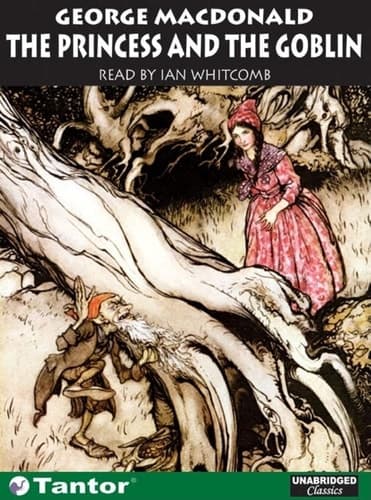
The Princess and the Goblin
by George MacDonald
This is your curveball—a genuinely kind protagonist navigating court intrigue and institutional resistance, which sounds like the opposite of what you just read. But Addison writes court politics with the same meticulous attention to faction, honor, and the gap between what people say and what they want that Abercrombie does. If you're craving the political scheming without the cynicism, this scratches that itch while offering something tonally fresh.
View bookAbout Joe Abercrombie
J
Joe Abercrombie
Born 1974
Joseph Edward Abercrombie is a British fantasy writer and film editor. He is the author of The First Law trilogy, as well as other fantasy books in the same setting and a trilogy of young adult novels. His novel Half a King won the 2015 Locus Award for best young adult book. Source: https://en.wikipedia.org/wiki/Joe_Abercrombie
View author page