Synopsis
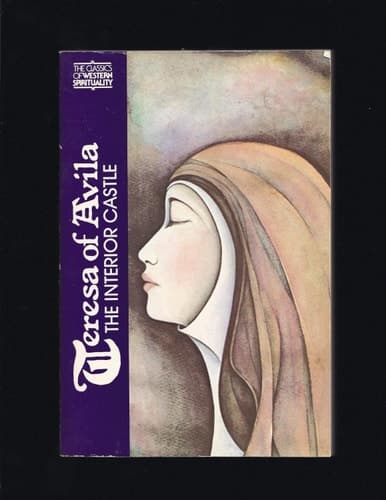
"The Classics of Western Spirituality(TM)...was the event of the year." Commonweal "We simply want to applaud..." The New Review of Books and Religion Teresa of Avila: Interior Castle "I t is that we consider our soul to be like a castle made entirely out of a diamond or of very clear crystal in which there are many rooms, just as in heaven there are many dwelling places." Teresa of Avila 1515-1582 This 16th-century Spanish mystic is considered one of the most profound spiritual teachers in the history of Christianity. Father Kieran Kavanaugh, the editor of the volume, says in his introduction, "The Interior Castle has come to be regarded as Teresa's best synthesis...If asked to single out one work as her masterpiece, most of those acquainted with the Teresian writings would probably choose The Interior Castle." Teresa received the image of the whole book in a vision on Trinity Sunday, 1577. An early biographer says that she beheld "a most beautiful crystal globe like a castle in which she saw seven dwelling places, and in the seventh, which was in the center, the King of Glory dwelt in the greatest splendor." The Second Vatican Council pointed out that by penetrating the revealed message the Christian mystics enrich our comprehension of it an thievery contribute to the Church's living tradition. Among the mystics, St. Teresa of Avila holds a unique position as a witness to divine realities. Her common sense, humor, and penchant for everyday images liven her writings; but she is above all remarkable for her analytical abilities in proving the mystery of God's workings in the soul. On September 27, 1970, Pope Paul VI proclaimed Teresa a Doctor of the Church. During the ceremony the pope spoke of her as a teacher of "marvelous profundity." +
Recommendations
The Cloud of Unknowing
by Anonymous
Where Teresa gives you a systematic map of the soul's journey with her seven mansions, this 14th-century English work takes the opposite approach—it argues the deepest union with God happens in radical unknowing, beyond all images and concepts. You'll find the same analytical rigor applied to mystical experience, but filtered through a completely different theological lens, which makes reading them together genuinely illuminating rather than repetitive.
View book
Assault With a Deadly Weapon: The Autobiography of a Street Criminal
by John Allen
This is my 'surprise' pick for you—it's Eastern rather than Western spirituality, but Yogananda does something Teresa also does beautifully: he grounds transcendent experiences in concrete, often humorous anecdotes about real people and their spiritual struggles. Both authors refuse to make mysticism abstract or precious; they want you to understand it as lived reality, complete with the mundane details that make it believable.
View book
A Generous Openness: Praying the Spiritual Exercises of Saint Ignatius
by Charlotte Prather
Ignatius was Teresa's contemporary and fellow reformer, but where she maps the interior landscape, he gives you a structured method for moving through it—a kind of spiritual technology. If you appreciated how Teresa balances visionary experience with practical guidance for the soul's development, Ignatius offers the complementary text: less about the destination, more about the deliberate steps to get there.
View book
Three by Annie Dillard The Writing Life, An American Childhood, Pilgrim at Tinker Creek
by Annie Dillard
Dillard writes about encountering the sacred through close observation of the natural world—a completely different register from Teresa's interior focus, but with that same quality of attention and wonder. She has Teresa's gift for making the mystical concrete and specific (notice how both writers use precise, almost scientific language to describe experiences that defy language), and she shares that dry, unsentimental humor when describing moments of genuine transcendence.
View book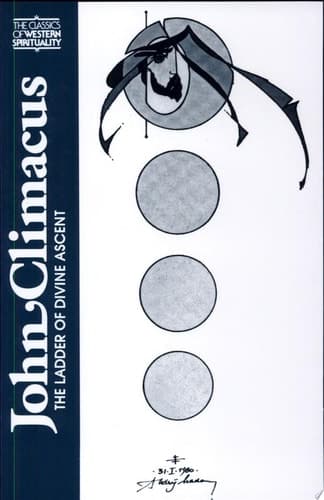
The Ladder of Divine Ascent
by Saint John (Climacus)
This 7th-century Eastern Orthodox text predates Teresa by nearly a thousand years, but it's structured around the same architectural metaphor she uses—a progression through stages toward union with God. Reading it alongside The Interior Castle shows you how this image of spiritual ascent recurs across centuries and traditions, and how John's emphasis on practical virtue complements Teresa's visionary mysticism in ways that feel genuinely complementary rather than redundant.
View bookAbout Saint Teresa of Avila
S
Saint Teresa of Avila
1515–1582
Also known as Teresa of Jesus. Spanish mystic and Roman Catholic saint who founded the religious Order of the Discalced Carmelites (OCD, for its initials in Spanish) with St. John of the Cross and wrote "The Interior Castle," "The Way of Perfection," and an autobiography
View author page