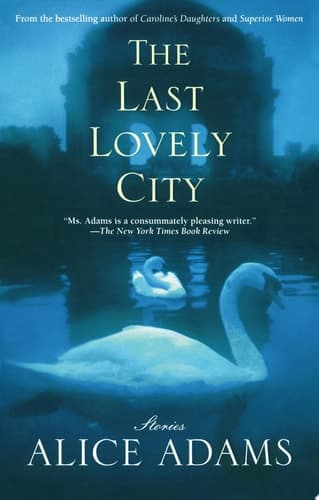
The Last Lovely City Stories
Alice AdamsPublished1999
Pages191
Formatpaperback
PublisherSimon and Schuster
Synopsis
Few writers interpret the depth and range of human experience as honestly as Alice Adams. A storyteller whose work "recall[s] such past masters as Flannery O'Connor and Katherine Mansfield" (Newsweek), Adams' stunning new set of short stories further charts the emotional minefields of companionship, sex, memory, and forgiveness. Presented in two parts, the collection moves from San Francisco to North Carolina to Mexico and Hawaii, delivering thirteen powerful stories that are sensitive, rich, and wise, yet surprisingly unsentimental. THE LAST LOVELY CITY is a masterful exploration of the tattered remnants of passion, of innocence too cheaply bartered for experience, and of old lovers and old lives that never quite get left behind.
Recommendations
Collected Stories
by Gabriel Garcia Marquez
Robinson shares Adams' gift for excavating the quiet devastations of ordinary lives, but she writes with a more meditative, almost spiritual patience. Where Adams moves briskly through emotional terrain, Robinson lingers in the spaces between what people say and what they actually mean—you'll find that same unsentimental wisdom, but filtered through a deeper theological questioning.
View book
The Stories of John Cheever
by John Cheever
Published in 1978, Cheever's collection predates Adams but shares her fascination with how passion corrodes under the weight of suburban respectability and aging. His stories have that same quality of watching people negotiate the gap between who they thought they'd become and who they actually are—though Cheever tends toward a darker, more tragicomic register.
View book
Promise You Won't Freak Out A Teenager Tells Her Mom the Truth About Boys, Booze, Body Piercing and Other..
by Doris A. Fuller
Here's the surprise: Machado writes stories that feel like Adams' emotional realism, but she's willing to slip into the surreal—a relationship told through a video game, a woman who can't stop sweating, bodies that behave strangely. It's as though Adams' interest in how we fail each other got filtered through speculative fiction, giving you that same unflinching look at intimacy but with permission to be stranger and more formally inventive.
View book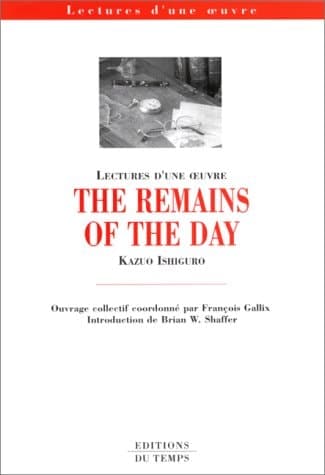
The remains of the day de Kazuo Ishiguro
by Gallix/François
Ishiguro's novel operates in that same territory Adams explores—the slow recognition of how we've compromised ourselves, how passion gets buried under duty, how we construct narratives to survive our own choices. His narrator's careful, almost evasive voice mirrors the way Adams' characters often can't quite admit what they've lost, and the emotional payoff arrives through what's deliberately *not* said.
View book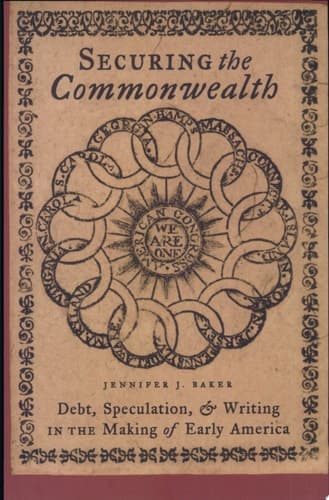
Securing the Commonwealth Debt, Speculation, and Writing in the Making of Early America
by Jennifer J. Baker
Offill fragments the marriage narrative into sharp, lyrical fragments—almost like reading Adams' stories about companionship but compressed into a single relationship's arc. The form itself enacts the emotional experience: gaps, silences, sudden intensities. You get that same unsentimental examination of how two people live alongside each other, but told in a way that feels almost like poetry.
View bookAbout Alice Adams
A
Alice Adams
Born 1926
Biography coming soon.
View author page