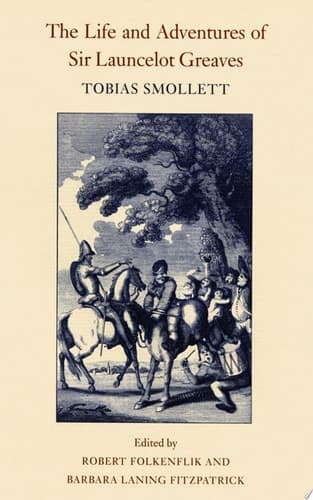
The Life and Adventures of Sir Launcelot Greaves
Tobias SmollettPublished2002
Pages314
Formathardcover
PublisherUniversity of Georgia Press
Synopsis
This new edition brings to life Tobias Smollett's fourth novel, The Life and Adventures of Sir Launcelot Greaves. No annotated edition of the work existed before the second half of the twentieth century, and this comprehensive edition by Robert Folkenflik and Barbara Laning Fitzpatrick features more accurate text as well as scrupulous textual and critical information. Also included in the detailed introduction is a unique examination of Sir Launcelot Greaves, the first illustrated serial novel, in relation to the engravings by Anthony Walker. Sir Launcelot Greaves was a groundbreaking novel for Smollett. Published in British Magazine beginning in January 1760, it was the first major work by an English novelist to have been written specifically for serial publication. The novel, Smollett's shortest, differs stylistically from his previous works. The most attractive of his heroes, Sir Launcelot is virtuous and strange, and he is surrounded by a Smollettian menagerie whose various jargons are part of this novel's linguistic virtuosity and satire. Sir Launcelot's character is an English naturalization of Quixote. Although Sir Launcelot, unlike Quixote, is not the object of the author's satire, an idealistic madness is central to both characters. In Smollett's work the theme of madness is integral to the relationship between self and society as the work ponders both the constitution of madness and the alternatives to revenge.
Sir Launcelot Greaves, though not Smollett's most heralded work, has not received the recognition it deserves. Folkenflik and Fitzpatrick present a definitive edition that will be appreciated by scholars and lovers of eighteenth-century literature.
Recommendations
The Pickwick Papers
by Charles Dickens
Dickens shares Smollett's gift for creating unforgettable minor characters with distinctive speech patterns and social quirks, and like Sir Launcelot Greaves, Pickwick is driven by an idealistic vision that puts him at odds with a cynical world. Both novels use episodic adventures to explore how virtue navigates through a society full of rogues and eccentrics, though Dickens brings a warmer sentimentality to the enterprise.
View book
The Expedition of Humphry Clinker
by Tobias Smollett
I know—same author—but this is Smollett at his most inventive with epistolary form, and it deepens what you've just experienced. Where Sir Launcelot Greaves experiments with serial publication's possibilities, Humphry Clinker shows Smollett mastering multiple narrative voices and regional dialects to create a richer portrait of Britain. It's like seeing a composer return to similar themes with greater technical confidence.
View book
The Castle of Otranto
by Horace Walpole
This might seem like a departure into Gothic melodrama, but Walpole's 1764 novel shares Smollett's interest in how genre conventions can be both honored and subverted—and like Sir Launcelot Greaves, it's genuinely experimental for its time. Where Smollett plays with serial form and linguistic variety, Walpole plays with readers' expectations of romance and realism, creating something that feels both ridiculous and oddly moving.
View book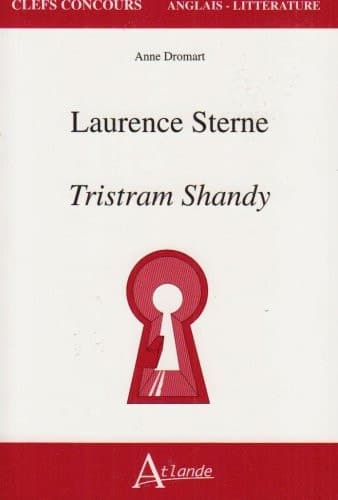
Laurence Sterne, "Tristram Shandy"
by Anne Dromart
Sterne's narrative is even more formally daring than Smollett's serial experiment—it's a novel that constantly interrupts itself, digresses, and plays with typography itself. Both authors use linguistic eccentricity and character obsession as their primary tools, but where Smollett grounds his satire in social observation, Sterne makes the act of storytelling itself the subject, creating something that feels almost modern in its self-consciousness.
View bookAbout Tobias Smollett
Biography coming soon.
View author page