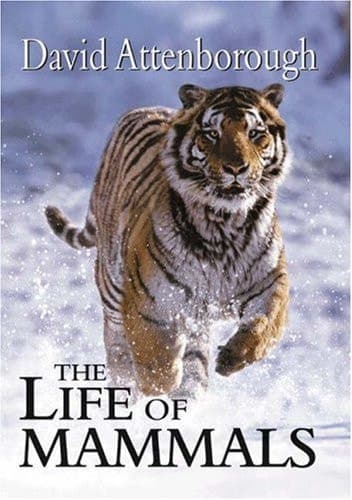
The Life of Mammals
David AttenboroughPublished2002
Pages320
Formathardcover
PublisherPrinceton University Press
Synopsis
From the under-snow tunnels of Arctic lemmings to the egg nests of the bizarre Australian echidna, from the Pacific waters inhabited by sea otters and whales to the subways of major cities, this extraordinary and attractive book brings us into the homes and lives of some of earth's most fascinating animals.
Published in conjunction with a ten-part television series that will air on the Discovery Channel, The Life of Mammals brings us nose-to-nose with mammals in all of their beauty and immense variety. Renowned naturalist, writer, and filmmaker David Attenborough treks across every continent and kind of terrain to introduce us to such unusual and evolutionarily successful creatures as the Patagonian opossum, the Canadian pygmy shrew, the Alpine marmot, and the Malaysian sun bear. We meet slow-moving algae-covered sloths. We enter a pack of African wild dogs, seeing how their division of labor enables them to provide protection and food to pups, mothers, and old dogs. We learn about the navigation systems of bats and find out why Borneo's colugo is a superior glider to a flying squirrel. Along the way, Attenborough considers how evolution has shaped mammalian habits, leading herbivorous sea cows to take to the water and humans to commence agriculture.
Containing more than 200 spectacular color photographs, this is a book that will gratify anyone intrigued by the natural world and the animals that inhabit it. Informative, utterly absorbing, and classic Attenborough, it represents natural history at its finest.
Recommendations
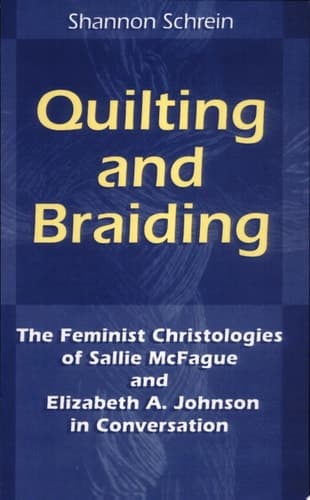
Quilting and Braiding The Feminist Christologies of Sallie McFague and Elizabeth A. Johnson in Conversation
by Shannon Schrein
Like Attenborough, Kimmerer is a naturalist-philosopher who makes you see the living world with fresh eyes, but she approaches it through the lens of reciprocal relationships rather than evolutionary mechanics. Where Attenborough shows you *how* animals survive, Kimmerer asks *why* we should care—and her answer is far more poetic and grounded in indigenous knowledge systems that Western science often overlooks.
View book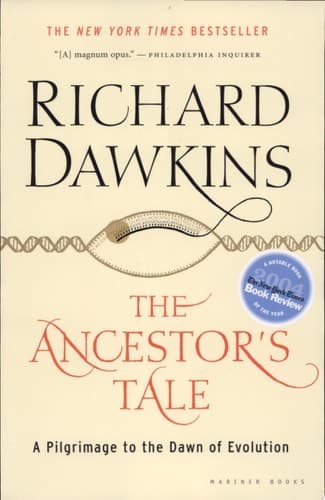
The Ancestor's Tale A Pilgrimage to the Dawn of Evolution
by Richard Dawkins
Dawkins takes the evolutionary thread that Attenborough weaves throughout *Life of Mammals* and pulls it all the way back to the beginning, tracing our lineage backward through time to meet our common ancestors with every creature on Earth. It's structured like a pilgrimage backward through deep time, which gives it a narrative momentum that makes evolutionary biology feel like an adventure story rather than a textbook.
View book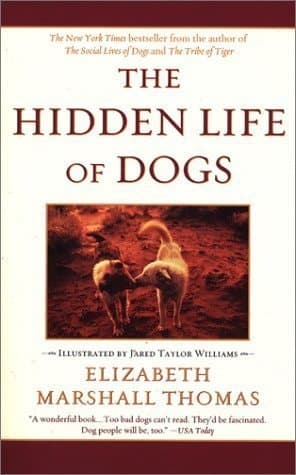
The Hidden Life of Dogs
by Elizabeth Marshall Thomas
Thomas spent decades observing a single family of deer with the patience of a field researcher and the storytelling gift of a novelist—she shows you mammalian behavior not through the lens of a camera crew, but through intimate, almost anthropological observation. Where Attenborough gives you breadth across species, Thomas gives you the profound depth of really *knowing* one animal's inner life.
View book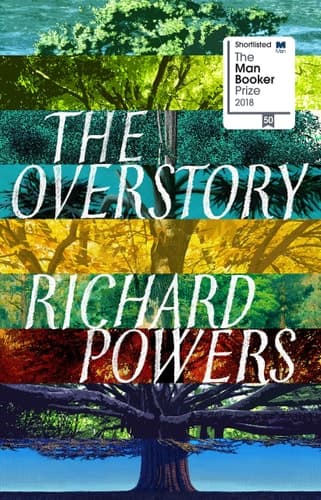
The Overstory A Novel
by Richard Powers
This is your surprise pick—it's a literary novel, not natural history, but Powers writes about ecological systems with the same sense of awe and interconnectedness that runs through Attenborough's work. Nine characters' lives become entangled with trees and forests, and the book gradually reveals how individual stories are part of a much larger, living system. It's what happens when you give Attenborough's ecological vision to a novelist with a gift for human drama.
View book
The Emerald Planet How Plants Changed Earth's History
by David Beerling
Published in 2007, this takes a different temporal approach than Attenborough—instead of surveying mammals across the globe, Beerling traces how plants have literally shaped the planet's atmosphere, climate, and the evolution of all animal life. It's the ecological backstory to everything Attenborough shows you; you'll never look at a forest or grassland the same way once you understand the deep history of how they came to be.
View bookAbout David Attenborough
D
David Attenborough
Born 1926
Sir David Frederick Attenborough is an English broadcaster and naturalist. He is best known for writing and presenting the nine Life series, in conjunction with the BBC Natural History Unit, which collectively form a comprehensive survey of animal and plant life on the planet. He is also a former senior manager at the BBC, having served as controller of BBC Two and director of programming for BBC Television in the 1960s and 1970s. He is the only person to have won BAFTAs for programmes in each of black and white, colour, HD, and 3D. - Wikipedia
View author page