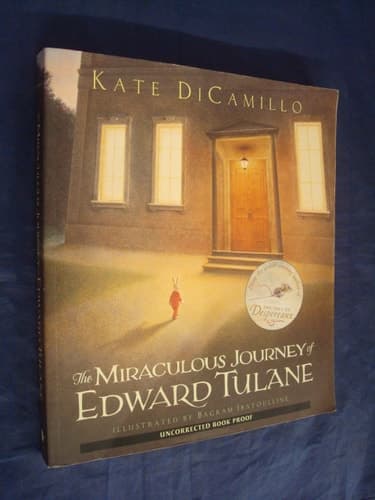
The Miraculous Journey of Edward Tulane
Kate DiCamilloPublished2006
Pages198
Formatpaperback
PublisherCandlewick Press
Synopsis
Once, in a house on Egypt Street, there lived a china rabbit named Edward Tulane. The rabbit was very pleased with himself, and for good reason: he was owned by a girl named Abilene, who adored him completely. And then, one day, he was lost. . . .
Kate DiCamillo takes us on an extraordinary journey, from the depths of the ocean to the net of a fisherman, from the bedside of an ailing child to the bustling streets of Memphis. Along the way, we are shown a miracle -- that even a heart of the most breakable kind can learn to love, to lose, and to love again.
Recommendations

A Reading Guide to Bridge to Terabithia by Katherine Paterson
by Jeannette Sanderson
Like Edward's journey, this novel traces how a guarded heart learns to open through an unexpected friendship, then grapples with the devastating cost of loving deeply. Paterson has the same gift DiCamillo does for making readers feel the weight of a child's emotional world without ever talking down to them.
View book
The Tale of Despereaux
by Kate DiCamillo
This one shares Edward's fairy-tale structure and its meditation on forgiveness and redemption, but Spinelli adds a darker, more complex moral landscape—his characters don't simply learn to love, they have to choose it despite genuine harm. The prose has that same lyrical, almost storybook quality that makes heartbreak feel both timeless and immediate.
View book
The Invention of Hugo Cabret
by Brian Selznick
Here's where I'm taking a slight risk: this is a book about objects coming to life (literally—a mechanical man) and the boy who loves them, but it's also a mystery wrapped in cinema history. Selznick's integration of hundreds of pencil drawings creates the same sense of wonder DiCamillo achieves with prose—you're not just reading about magic, you're experiencing it on the page.
View book
E.B. White Beyond Charlotte's Web and Stuart Little
by Laura Baskes Litwin
I know this feels obvious, but stay with me: White published this in 1952, and it's the spiritual ancestor of Edward's journey. What makes it essential here is how White treats mortality and impermanence—Charlotte's death isn't softened or sentimentalized, yet the book remains fundamentally about how love transcends loss. It's the template DiCamillo refined.
View book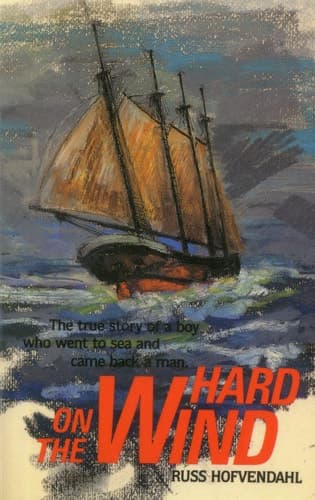
Hard on the Wind The True Story of a Boy Who Went to Sea and Came Back a Man
by Russ Hofvendahl
This memoir might seem like a departure, but it's actually the inverse of Edward's arc: a real boy in Malawi learns that even when everything is taken from you, ingenuity and hope can rebuild what's lost. It has the same quiet dignity and refusal to be pitied that makes Edward's journey so moving—these are stories about human (and rabbit) resilience that never feel sentimental.
View bookAbout Kate DiCamillo
K
Kate DiCamillo
Born 1964
Biography coming soon.
View author page