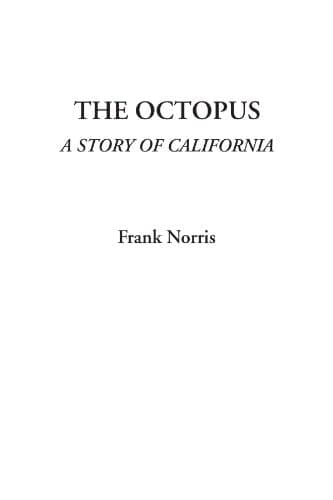
The Octopus A Story of California
Frank NorrisPublished2002
Pages472
Formatpaperback
PublisherIndyPublish.com
Synopsis
Like the tentacles of an octopus, the tracks of the railroad reached out across California, as if to grasp everything of value in the state Based on an actual, bloody dispute between wheat farmers and the Southern Pacific Railroad in 1880, The Octopus is a stunning novel of the waning days of the frontier West. To the tough-minded and self-reliant farmers, the monopolistic, land-grabbing railroad represented everything they despised: consolidation, organization, conformity. But Norris idealizes no one in this epic depiction of the volatile situation, for the farmers themselves ruthlessly exploited the land, and in their hunger for larger holdings they resorted to the same tactics used by the railroad: subversion, coercion and outright violence. In his introduction, Kevin Starr discusses Norris's debt to Zola for the novel's extraordinary sweep, scale and abundance of characters and details.
Recommendations
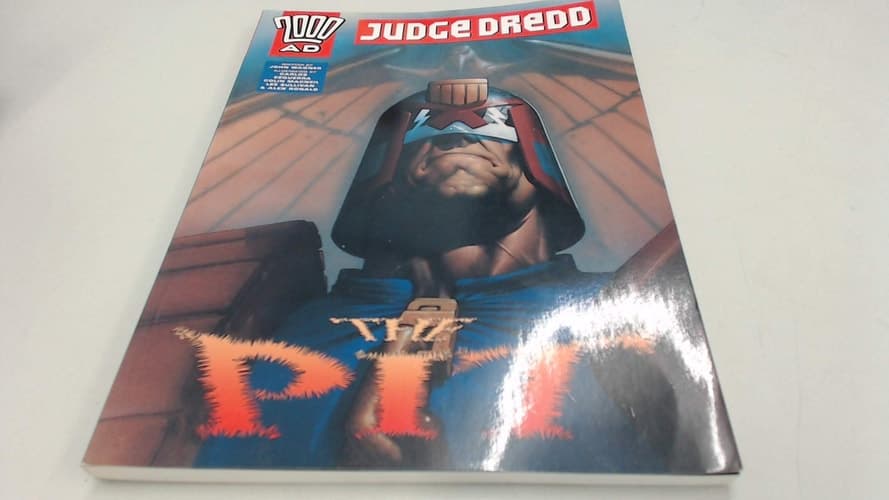
The Pit
by John Wagner
Sinclair shares Norris's gift for depicting industrial America as a brutal arena where individuals are crushed by larger systems—here it's the Chicago wheat exchange rather than the railroad, but the moral complexity remains identical. Both novels refuse to let you root for a simple hero; instead, they show how ambition and greed corrupt everyone equally, from farmers to speculators to railroad barons.
View book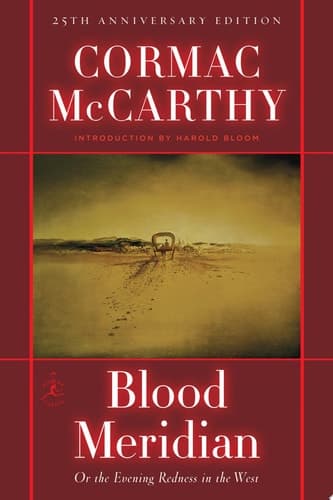
Blood Meridian, Or, The Evening Redness in the West
by Cormac McCarthy
McCarthy takes the frontier violence that simmers beneath Norris's novel and makes it the entire landscape—a pitiless depiction of the American West as fundamentally lawless and brutal. Where Norris uses naturalism to examine economic systems, McCarthy uses it to examine human nature itself, but both authors refuse sentimentality about the frontier myth.
View book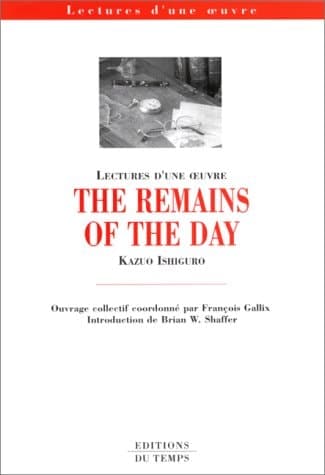
The remains of the day de Kazuo Ishiguro
by Gallix/François
This might seem like a departure, but Ishiguro does what Norris does with institutional power—he shows how systems (here, a rigid class hierarchy and an aristocratic household) grind individuals into complicity with their own diminishment. The quiet tragedy of watching someone rationalize away their agency mirrors how Norris's farmers become trapped by their own logic.
View book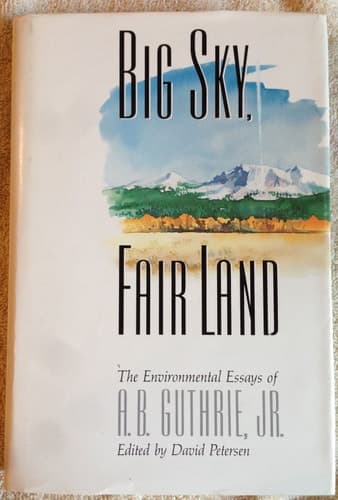
Big Sky, Fair Land: The Environmental Essays of A. B. Guthrie, Jr.
by Alfred Bertram, Jr. Guthrie
Guthrie captures the same elegiac tone Norris uses for the dying frontier, but through the eyes of mountain men and fur traders rather than farmers—it's a quieter, more introspective take on how civilization inevitably destroys the wilderness and the people who live in it. Both novels are deeply interested in land as a character that shapes and ultimately defeats human ambition.
View book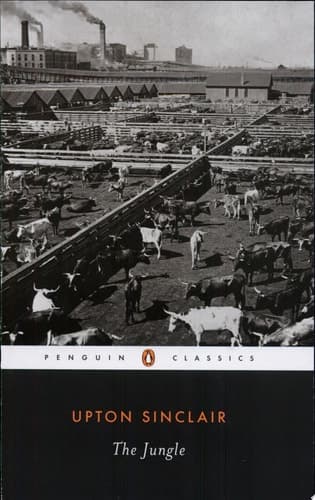
The Jungle
by Upton Sinclair
Lewis's novel operates at the same scale and with the same investigative fury as Norris—both are interested in how monopolistic systems (meatpacking here, railroads there) exploit workers and farmers alike. But Lewis focuses more tightly on individual suffering, making the abstract economic violence Norris depicts feel viscerally personal.
View bookAbout Frank Norris
F
Frank Norris
1870–1902
Frank Norris, (1870-1902), was an American novelist and journalist and a leader of the Naturalism movement. Norris believed that a novel should serve a moral purpose. "The novel with a purpose," he explained, "brings the tragedies and griefs of others to notice" and "prove(s) that injustice, crime, and inequality do exist." [Source][1] [1]: http://www.pbs.org/wnet/americannovel/timeline/norris.html
View author page