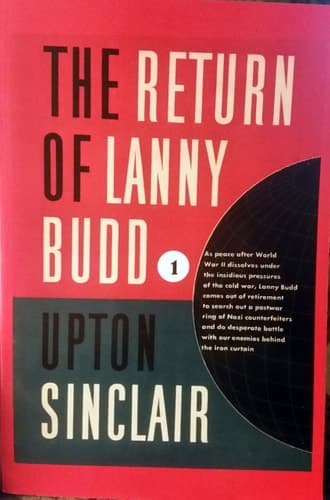
The Return of Lanny Budd
Upton SinclairPublished2001
Pages304
Formatpaperback
PublisherSimon Publications, Incorporated
Synopsis
Book by Sinclair, Upton
Recommendations
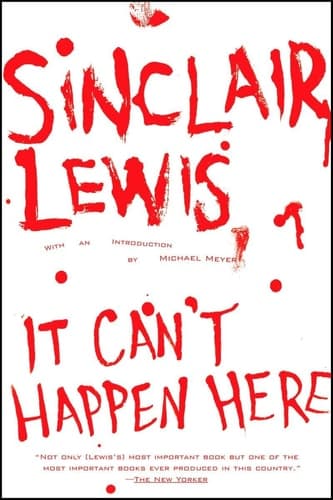
It Can't Happen Here
by Sinclair Lewis
Lewis shares Sinclair's gift for embedding political critique into narrative momentum—here, a chillingly plausible American fascism unfolds through the eyes of ordinary people who rationalize increasingly authoritarian measures. Where Lanny Budd observes European upheaval, Berzelius Windrip's rise forces Americans to confront how easily democratic institutions erode from within, using the same documentary-realist style that makes Sinclair's social arguments feel inevitable rather than preachy.
View book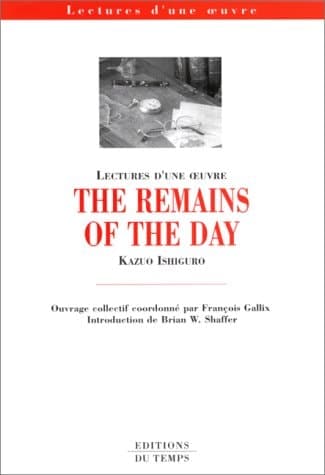
The remains of the day de Kazuo Ishiguro
by Gallix/François
This is the surprise pick, but hear me out: both novels are built on the unreliable perspective of someone embedded in historical currents they're only partially aware of. Stevens's careful, buttoned-up narration about his decades at Darlington Hall operates the same way Lanny's earnest observations do—you gradually realize how much the narrator is *not* seeing about complicity and moral compromise. Ishiguro achieves through restraint what Sinclair achieves through exposure, but the emotional gut-punch lands in the same place.
View book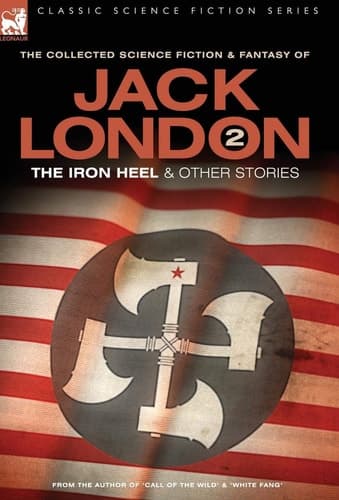
Jack London 2 - The Iron Heel and Other Stories
by Jack London
London's 1908 dystopia shares Sinclair's conviction that capitalism contains the seeds of its own authoritarian transformation, but he tells it as a fragmented historical document—letters and diary entries that create an almost noir atmosphere of resistance and paranoia. Where Sinclair's Lanny moves through events with a kind of privileged access, London's revolutionaries operate in shadows, making the political argument feel more visceral and less didactic.
View book
The Apocalyptic Vision of Mikhail Bulgakov's the Master and Margarita (Studies in Slavic Language & Literature)
by Edward E. Ericson
Bulgakov writes about totalitarianism from inside it, and like Sinclair, he refuses to separate the personal from the political—but he does it through magical realism and dark comedy rather than straightforward realism. The novel's interwoven narratives (a Soviet Moscow storyline, a Pontius Pilate flashback, a love story) create the same sense of historical forces colliding with individual lives that animates Lanny Budd, except Bulgakov lets the absurdity show.
View bookAbout Upton Sinclair
U
Upton Sinclair
1878–1968
Upton Sinclair, Jr., was a Pulitzer Prize-winning American author who wrote over 90 books in many genres. He achieved popularity in the first half of the 20th century, acquiring particular fame for his 1906 muckraking novel The Jungle. It exposed conditions in the U.S. meat packing industry, causing a public uproar that contributed in part to the passage a few months later of the 1906 Pure Food and Drug Act and the Meat Inspection Act. --Wikipedia
View author page