Synopsis
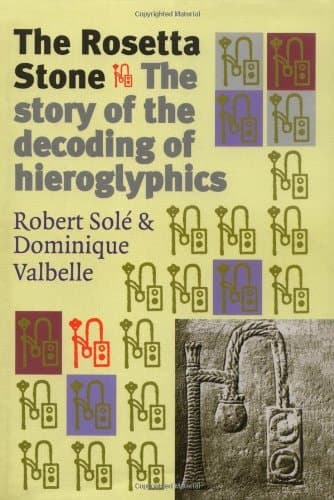
In July 1799, a French officer serving in Napoleon's Egyptian expedition unearthed a granite block bearing text in three different scripts — Greek, demotic Egyptian, and hieroglyphics. Following the discovery, a remarkable competition ensued for possession of the stone as well as for decoding its inscription. Using all the elements of a detective thriller, the authors, a well-known novelist and a leading Egyptologist, tell the story of international intrigue surrounding the intellectual quest to crack the stone's code — the key to reading ancient Egyptian texts for the first time in 14 centuries. Also included are reproductions of the stone and its inscriptions as well as portraits of the key figures involved in its translation.
Recommendations
The New Additive Code Breaker Everything You Should Know about Additives in Your Food
by Maurice Hanssen
Isaacson captures that same detective-story energy as Solé does with the Rosetta Stone—here it's the race to understand CRISPR gene editing, complete with international competition, eureka moments, and flawed geniuses clashing over credit. You'll get that intellectual thriller satisfaction but with modern science stakes that feel equally world-changing.
View book
The Historian
by Elizabeth Kostova
This is my surprise pick for you—it's structured as a literary mystery rather than straight history, but it scratches the same itch: a protagonist following breadcrumbs across centuries and continents, piecing together fragmentary clues about Dracula's real history. Kostova weaves historical research into the narrative itself, so you're discovering alongside the characters, much like watching the Rosetta Stone's secrets unfold.
View book
1491 New Revelations of the Americas Before Columbus
by Charles C. Mann
Mann does for pre-Columbian history what Solé does for Egyptology—he shows how new evidence completely rewrites what we thought we knew, and he tells it with genuine narrative momentum rather than textbook dryness. You'll appreciate how he traces the detective work of archaeologists and historians challenging established orthodoxy, piece by piece.
View book
In Search of the Lost City Legend of the Sun Stone : from the Alan Bunt Journal
by Eduardo A. Robles
Preston combines adventure journalism with archaeological mystery—a lost Honduran city, jungle expeditions, and the painstaking work of deciphering a civilization's remains. It has that same blend of physical artifact discovery and intellectual puzzle-solving that made the Rosetta Stone story so compelling, but with the added tension of a modern expedition unfolding in real time.
View book
Simians, Cyborgs, and Women The Reinvention of Nature
by Donna Jeanne Haraway
Wulf reconstructs Humboldt's life as a series of interconnected discoveries—how one brilliant mind synthesized seemingly separate observations into revolutionary understanding. Like the Rosetta Stone's three scripts revealing one meaning, Humboldt saw how ecology, geography, and culture were all part of one readable system. It's biography as intellectual thriller.
View bookAbout Robert Sole
Biography coming soon.
View author page