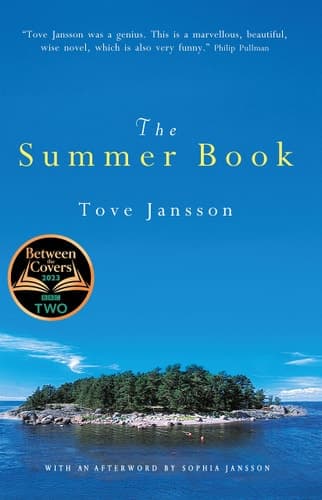
Synopsis
Tove Jansson's classic, bestselling novel'Distils the essence of summer' Robert Macfarlane'Magical, life-affirming' Elizabeth Gilbert The Worldwide Classic about a tiny island and larger love.An elderly artist and her six-year-old grand-daughter while away a summer together on a tiny island in the gulf of Finland. As the two learn to adjust to each other's fears, whims and yearnings, a fierce yet understated love emerges - one that encompasses not only the summer inhabitants but the very island itself.Written in a clear, unsentimental style, full of brusque humour, and wisdom, The Summer Book is a profoundly life-affirming story. Tove Jansson captured much of her own life and spirit in the book, which was her favourite of her adult novels. With a foreword by Esther Freud and an afterword by Sophia Jansson (on whom the child 'Sophia' is based) who returns to the island during the pandemic at the point of becoming a grandmother herself.Includes a 15pp epilogue by Tove's niece Sophia Jansson - the inspiration for 'Sophia' - on a personal and moving return to the island.'Eccentric, funny, wise, full of joys and small adventures. This is a book for life.' Esther Freud'Tove Jansson was a genius. This is a marvellous, beautiful, wise novel, which is also very funny.' Philip Pullman
Recommendations
Securing the Commonwealth Debt, Speculation, and Writing in the Making of Early America
by Jennifer J. Baker
Like Jansson, Offill distills profound emotional truths into spare, almost fragmentary prose—but here she's capturing the interior life of a marriage and motherhood rather than a summer. The book has that same quality of finding wisdom in small domestic moments, and the same unsentimental approach to love that makes The Summer Book so moving, except Offill's narrator is wrestling with ambivalence rather than contentment.
View book
The remains of the day de Kazuo Ishiguro
by Gallix/François
Both novels are deceptively quiet studies of a relationship—here between an aging butler and his housekeeper—where what's *not* said carries as much weight as what is. Ishiguro shares Jansson's gift for embedding profound regret and tenderness within a seemingly simple narrative, and his prose has that same clear-eyed, unsentimental quality that makes emotional moments land harder.
View book![Cover of Giovanni Ba[t]tista Piranesi The Prisons (le Carceri)](/_next/image?url=https%3A%2F%2Fcovers.whatshouldireadnext.com%2Feditions%2F9780486215402%2Flg.jpg&w=3840&q=75)
Giovanni Ba[t]tista Piranesi The Prisons (le Carceri)
by Giambattista Piranesi
This is my surprise pick—it's a fantasy novel, but it operates on the same wavelength as The Summer Book: a meditation on memory, love, and one's relationship to place that unfolds through quiet observation rather than plot mechanics. Clarke's protagonist discovers his world the way Sophia discovers the island, and there's that same sense of a character learning to see what's always been there.
View book
Carol Shields's The Stone Diaries A Reader's Guide
by Abby Werlock
Shields traces an entire life in fragmented, lyrical moments—much like how Jansson captures a whole emotional universe in one summer. Both writers are interested in the texture of ordinary days and the way small gestures accumulate into meaning. Shields has that same wry humor and refusal to sentimentalize, even when writing about love and loss across decades.
View book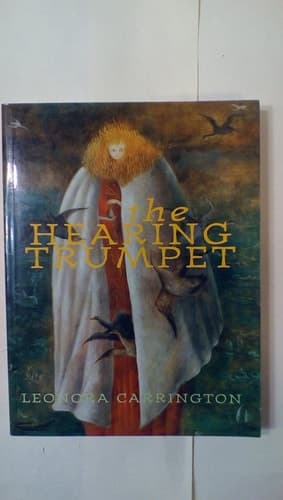
The Hearing Trumpet
by Leonora Carrington
Published in 1974, this is a genuinely eccentric novel about an elderly woman discovering freedom and adventure late in life—it has The Summer Book's brusque humor and refusal to treat aging as decline, but filtered through surrealism and anarchic joy. Carrington was a visual artist like Jansson, and both bring that painter's eye to describing the world, finding the strange and magical in everyday moments.
View bookAbout Tove Jansson
T
Tove Jansson
1914–2001
Finnish novelist, painter, and professor of philosophy, best known for the <i>Moomin</i> books.
View author page