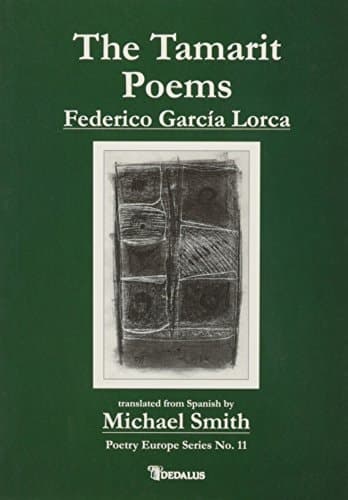
The Tamarit Poems: A Version of Divan Del Tamarit (Poetry Europe Series) (English and Spanish Edition)
Federico García LorcaPublished2002
Pages68
Formatpaperback
PublisherDedalus Pr
Synopsis
Por primera vez se restituye el Diván del Tamarit , una de las más intensas obras líricas de García Lorca, a los términos en que fue concebido y parcialmente impreso en 1936, con el prólogo escrito por Emilio García Gómez. La gran elegía Llanto por Ignacio Sánchez Mejías ha sido fijada a partir de la primera edición (1935) y de un autógrafo que conservó José María de Cossío. Incluye este volumen doce sonetos enmarcables en una de las series conocida bajo el título de Sonetos de amor oscuro .
Recommendations
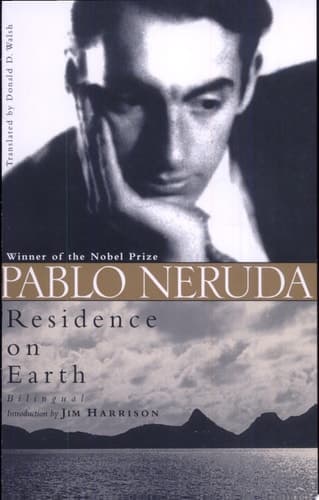
Residence on Earth
by Pablo Neruda
Like Lorca, Neruda channels surrealist imagery and erotic intensity through Spanish verse, but his approach is more expansive and sensual—where Lorca's *Tamarit* poems feel like intimate confessions carved into stone, Neruda's *Residence* sprawls across dreamscapes of desire and dissolution. You'll recognize the same linguistic richness and the way both poets use natural imagery (water, earth, darkness) as emotional architecture.
View book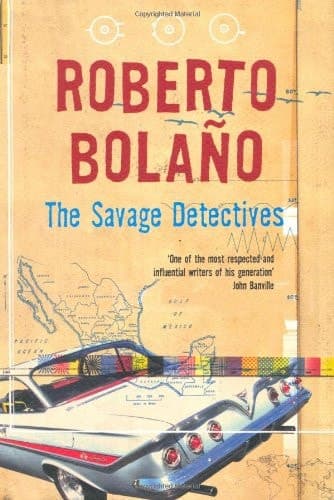
The Savage Detectives A Novel
by Roberto Bolaño
This is a departure into prose, but hear me out: Bolaño shares Lorca's obsession with the relationship between beauty and destruction, and his novel reads like an extended meditation on poets chasing meaning through fragmented narratives. The book's structure—shifting perspectives, incomplete stories, a haunting central absence—creates the same emotional vertigo you feel reading Lorca's *Llanto por Ignacio Sánchez Mejías*, that sense of trying to hold onto something already slipping away.
View book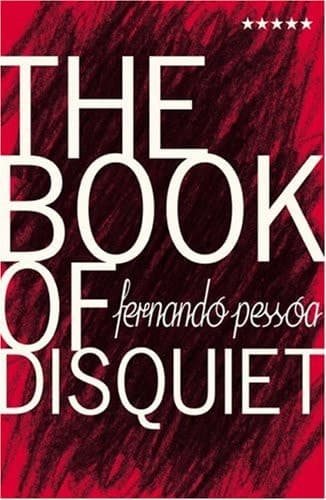
The Book of Disquiet
by Fernando Pessoa
Pessoa's fragmented, philosophical prose-poems operate in the same emotional register as Lorca's *Tamarit*—both writers are obsessed with the gap between inner feeling and outer expression, with longing that can't quite be articulated. Where Lorca uses formal verse structures to contain passion, Pessoa lets his thoughts spill across the page in aphorisms and reveries, but the underlying ache is remarkably similar.
View book
The Apocalyptic Vision of Mikhail Bulgakov's the Master and Margarita (Studies in Slavic Language & Literature)
by Edward E. Ericson
A genuine surprise, but Bulgakov's novel shares Lorca's gift for weaving the mythic and the personal together—his Devil is as seductive and dangerous as Lorca's dark muse. Both writers use fantastical elements not as escape but as a way to speak about love, betrayal, and artistic creation in a world that wants to silence them. The novel's structure mirrors the *Tamarit* poems' movement between different registers of reality.
View book
Die Wiederkehr der Zeichen: Eine psychoanalytische Studie zu Knut Hamsuns «Hunger» (Texte und Untersuchungen zur Germanistik und Skandinavistik) (German Edition)
by Thomas Fechner-Smarsly
Published in 1890, this is your historical outlier, but Hamsun's psychological intensity and his narrator's obsessive, fragmentary consciousness anticipate exactly the kind of emotional extremity Lorca captures in his *Sonetos de amor oscuro*. Both works refuse to sentimentalize suffering; instead, they render it with unflinching precision, and both writers understand that desire and degradation are often inseparable.
View bookAbout Federico García Lorca
Biography coming soon.
View author page