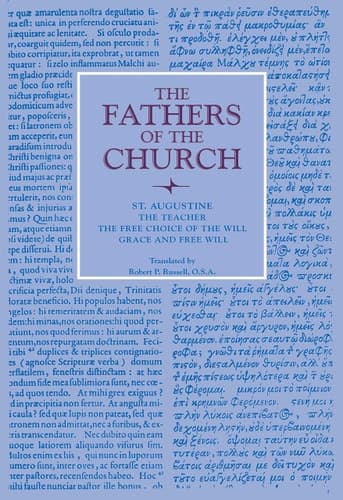
The Teacher; The Free Choice of the Will; Grace and Free Will
Saint AugustinePublished2004
Pages331
Formatpaperback
PublisherCatholic University of America Press
Synopsis
No description available
Recommendations
Confessions of a Rock 'n' Roll Wannabe The Verse and Prose of Michael Patrick King: Volume One
by Michael Patrick King
Where Augustine turns his philosophical gaze inward to examine divine grace, Montaigne does something equally radical for his time—he makes the personal essay itself a vehicle for philosophical inquiry. You'll find that same wrestling with human nature and self-knowledge, but Montaigne's skeptical, conversational tone offers a fascinating counterpoint to Augustine's theological certainty, almost like watching two brilliant minds debate across centuries.
View book
Fyodor Dostoevsky's the Brothers Karamazov (Bloom's Modern Critical Interpretations)
by Unknown
Dostoevsky doesn't just discuss free will and divine grace—he dramatizes the agony of choosing between them through characters who feel the weight of that choice in their bones. The Grand Inquisitor chapter alone is a novelistic argument with Augustine's theology, presenting the same tensions you've just read about, but filtered through human suffering and doubt in ways that make the abstractions visceral.
View book
Immanuel Kant's Critique Of Pure Reason V2: In Commemoration Of The Centenary Of Its First Publication
by Immanuel Kant
This is the surprise recommendation, but hear me out: Kant's wrestling with how we know anything at all is the philosophical heir to Augustine's questions about grace and human agency. Where Augustine asks 'how can we have free will if God knows the future?', Kant asks 'how can we have free will if causality governs everything we perceive?' It's denser than Augustine, yes, but it's the conversation that had to happen next in Western thought.
View book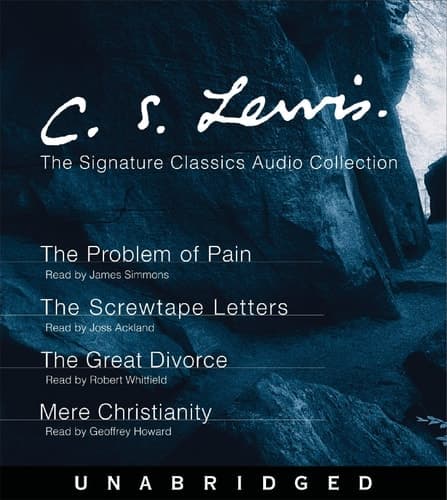
C.S. Lewis: The Signature Classics Audio Collection: The Problem of Pain, The Screwtape Letters, The Great Divorce, Mere Christianity
by C. S. Lewis
Lewis is essentially doing what Augustine did—defending divine goodness against the problem of human suffering and free will—but he's writing for the 20th century reader who's lost patience with pure theology. His arguments are Augustine's arguments, but he grounds them in concrete examples and speaks in a voice that feels like a thoughtful friend rather than a Church Father, making the same hard questions feel newly urgent.
View book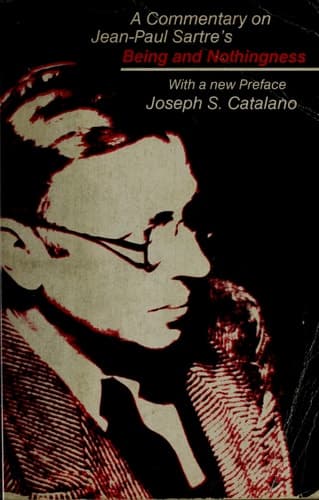
A Commentary on Jean-Paul Sartre's Being and Nothingness
by Joseph S. Catalano
Sartre takes Augustine's framework and inverts it—instead of grace determining our freedom, Sartre argues we're radically, uncomfortably *free* with no divine safety net. Reading this after Augustine is like watching someone take your premises and arrive at the opposite conclusion through rigorous logic. It's a philosophical argument that only makes sense if you've internalized what you just read.
View bookAbout Saint Augustine
Biography coming soon.
View author page