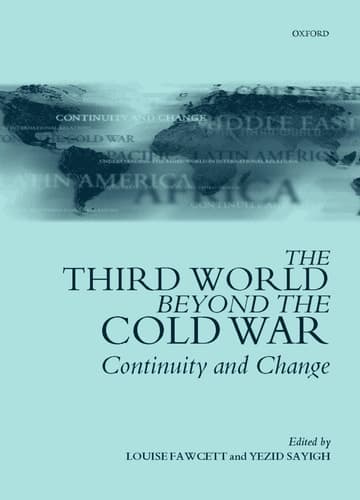
The Third World Beyond the Cold War: Continuity and Change
Louise FawcettPublished2000
Pages404
Formatpaperback
PublisherOxford University Press
Synopsis
This broad ranging study presents an overview of the changes brought about in Third World countries since the end of the Cold War. Section One uses themes as a way of highlighting major areas of change in the Third World. Section Two uses regional case studies as a means of isolating changes specific to certain regions.
Recommendations
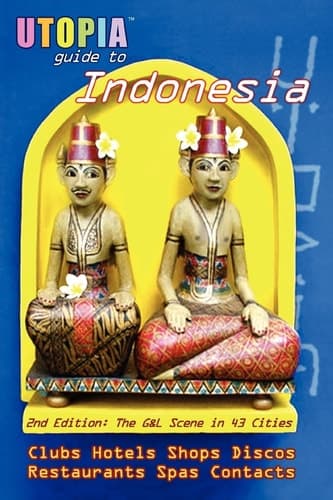
Utopia Guide to Indonesia (2nd Edition) The Gay and Lesbian Scene in 43 Cities Including Jakarta and the Island of Bali
by John Goss
Where Fawcett examines how Third World nations navigated post-Cold War transitions, Prashad digs into the machinery that shaped those very transitions—documenting covert interventions and their lasting consequences. He writes with the same scholarly rigor but adds a crucial counternarrative that contextualizes the 'changes' Fawcett describes, showing you the hidden architecture behind the surface shifts.
View book
Open Veins of Latin America Five Centuries of the Pillage of a Continent
by Eduardo Galeano
Published in 1971, this earlier work provides the historical foundation for understanding why the Third World faced the specific challenges Fawcett analyzes in 2000. Galeano's lyrical, essayistic approach to economic history reads almost like poetry, yet it's forensically detailed—a completely different writing style than Fawcett's academic framework, but it illuminates the same structural problems from their roots.
View book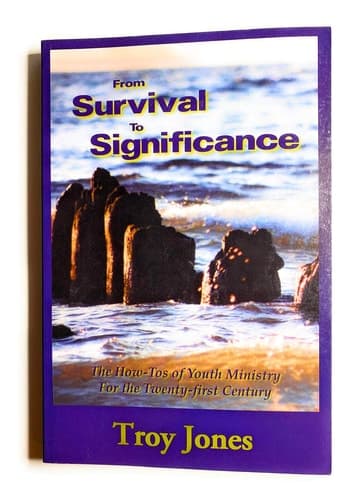
From Survival to Significance The How-tos of Youth Ministry for the Twenty-first Century
by Troy Jones
This might seem like a left turn into science fiction, but it's actually a sophisticated exploration of how global institutions navigate competing national interests and development priorities in a climate-changed world—essentially asking what happens to Third World sovereignty and development when the stakes become existential. Robinson uses multiple narrative voices and regional perspectives much like Fawcett's case-study approach, but through speculative scenarios that let you see the consequences of policy choices in real time.
View book
The Shock Doctrine The Rise of Disaster Capitalism
by Naomi Klein
Klein traces how neoliberal economic policies were imposed on Third World nations during moments of crisis—which is precisely the post-Cold War period Fawcett covers. Where Fawcett presents the changes thematically and regionally, Klein shows you the ideological machinery and the human cost, with the narrative drive of an investigative journalist uncovering a pattern across decades and continents.
View book
Pioneer Photographers from the Mississippi to the Continental Divide A Biographical Dictionary, 1839-1865
by Peter E. Palmquist
Hickel challenges the very metrics used to measure Third World 'development' and progress—asking whether the changes Fawcett documents actually represent improvement or just different forms of extraction. He combines historical sweep with contemporary data analysis, and his contrarian approach to what 'development' means will make you reconsider how to interpret the transformations Fawcett describes.
View bookAbout Louise Fawcett
Biography coming soon.
View author page