
Synopsis
Why is Professor Childermass acting so strange? Johnny Dixon and his friend Fergie decide to sneak over to the professor's house to investigate. What they find is wilder than anything they could have imagined, for the professor leads them through a secret cellar door and onto a rickety old trolley. It's a time machine to yesterdays, and soon Johnny and Fergie are off on the ride of their lives: to Constantinople during the Turkish invasion of 1453!
As the Byzantine Empire prepares for battle, the professor decides to try to save the people hiding in the Church of the Holy Wisdom. But Johnny and Fergie. Desperate to stop him, have hitched a ride, recklessly unaware that they risk their lives--and risk being lost in the past...forever!
Recommendations
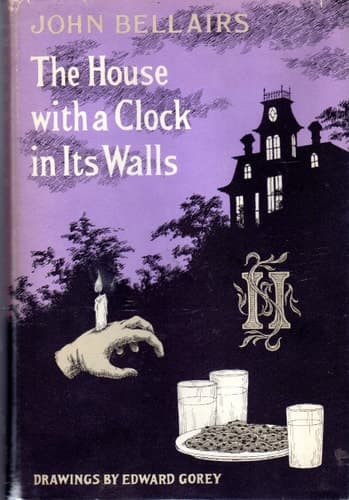
The House with a Clock in Its Walls
by John Bellairs
Like Bellairs' own work, this novel pairs a young protagonist with an eccentric adult mentor uncovering supernatural mysteries hidden in plain sight within a house full of secrets. The pacing has that same breathless quality where ordinary suburban life suddenly cracks open to reveal something genuinely dangerous lurking beneath, and the friendship between the boys mirrors Johnny and Fergie's dynamic perfectly.
View book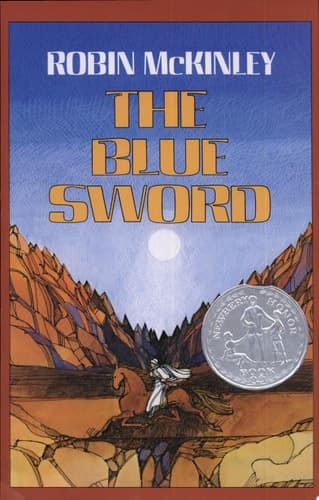
The Blue Sword
by Robin McKinley
McKinley does what Bellairs does—thrust a young person into a world operating by unfamiliar rules and let them navigate both the external danger and their own uncertainty about belonging. The historical setting (inspired by colonial India rather than Constantinople, but equally immersive) and the way she builds tension through small details of culture and landscape will feel familiar, though her prose is more lyrical where Bellairs is more propulsive.
View book
The Phantom Tollbooth
by Norton Juster
This 1961 novel shares Bellairs' gift for making intellectual curiosity feel like genuine adventure—a boy discovers a mysterious tollbooth in his room and travels through kingdoms where language and logic are literal landscapes. Where Bellairs uses time travel as the mechanism for wonder, Juster uses wordplay and conceptual geography, but both authors trust young readers to follow complex ideas while staying completely entertained by the plot.
View book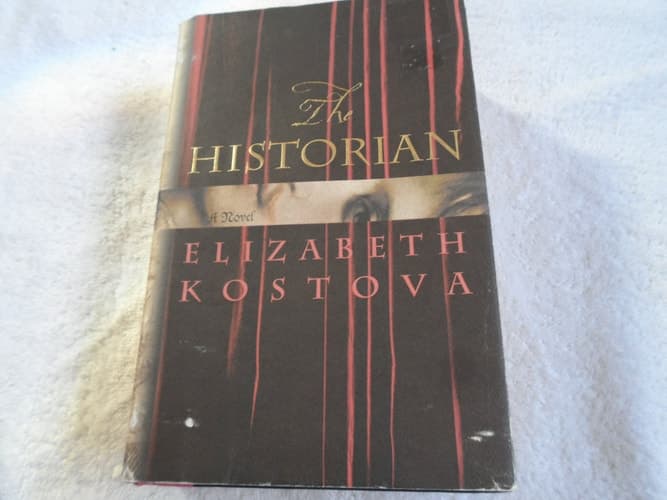
The Historian
by Elizabeth Kostova
This is the sophisticated cousin of *The Trolley to Yesterday*—a mystery that unfolds across time periods and geography, with characters chasing historical secrets that turn out to be dangerously real. Kostova builds the same sense of creeping dread that Bellairs does, but she layers it with academic research and Eastern European atmosphere; it's what happens when you give the time-travel adventure to an adult sensibility without losing the sense of genuine peril.
View book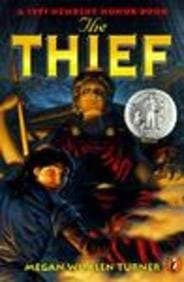
The Thief
by Megan Whalen Turner
Turner constructs her fantasy world with the same architectural precision Bellairs uses for his mysteries—every detail matters, and the real pleasure comes from realizing how carefully the author has been laying groundwork. A young thief is sent on a seemingly straightforward quest that becomes something far more complex and dangerous; like Johnny and Fergie, the protagonist discovers that adults aren't always trustworthy and that understanding what's *really* happening requires paying attention to what's being left unsaid.
View bookAbout John Bellairs
J
John Bellairs
1938–1991
<b><a href="http://bellairsia.com">John Bellairs</a></b> (1938–1991) was an American novelist working primarily in the Gothic genre. He is best-known for the children's classic <i>The House with a Clock in its Walls</i> 1973) and for the pathbreaking fantasy novel <i>The Face in the Frost</i> (1969). Bellairs held a bachelor's degree from Notre Dame University and a master's in English from the University of Chicago. He combined writing and teaching from 1963 to 1971, including a year at <a href="http://shimer.edu">Shimer College</a> that coincided with that school's storied <a href="http://www.bellairsia.com/the_life/il/gis.html">Grotesque Internecine Struggle</a>. After 1971, he took up writing as his full-time work. (from <a href="http://shimercollege.wikia.com/John_Bellairs">Shimer College Wiki</a>)
View author page