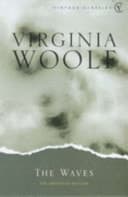
Synopsis
Introduced by Angelica Garnett
Regarded by many as Virginia Woolf's masterpiece, this novel was written partially to exorcise her private ghosts. It traces the lives of six people who are almost imperceptibly revealed through the kaleidoscopic accumulation of their reflections on themselves and each other.
Recommendations
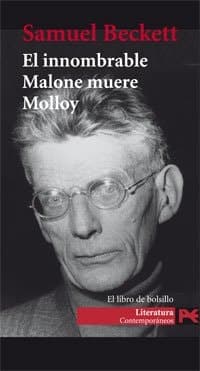
Estuche - Samuel Beckett: Molloy - Malone muere - El innombrable (Spanish Edition)
by Samuel Beckett
Like Woolf, Beckett fragments consciousness itself—but where The Waves shows six voices accumulating into something almost symphonic, Molloy gives you a single mind that contradicts itself, forgets, and spirals. Both writers refuse to let you settle into comfortable narrative; instead, they make you experience the actual texture of how human consciousness actually works, stutters, and doubles back on itself.
View book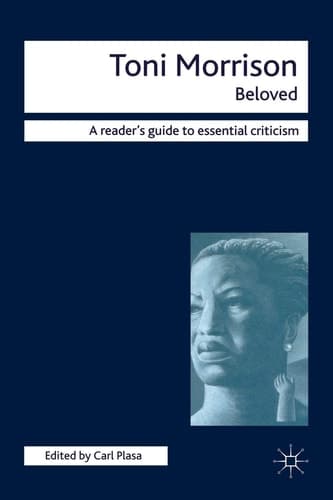
Toni Morrison - Beloved
by Carl Plasa
Morrison does what Woolf does—layers multiple perspectives and temporalities until past and present become simultaneous—but she's working with historical trauma and collective memory rather than individual introspection. The way she moves between Sethe's, Paul D's, and Beloved's interior worlds has that same kaleidoscopic quality, except the reflections are haunted by something real and devastating.
View book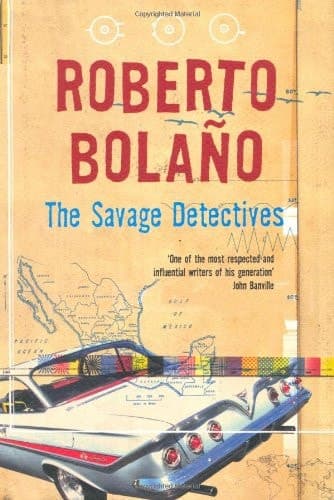
The Savage Detectives A Novel
by Roberto Bolaño
Here's your surprise pick: this is a 700-page novel that reads like a fever dream of literary obsession, told through diary entries, interviews, and fragmented accounts. Like The Waves, it's about a group of people whose lives intersect and diverge, but Bolaño makes it a detective story where the mystery is whether meaning itself is recoverable. It's maximalist where Woolf is minimalist, but equally demanding of your attention.
View book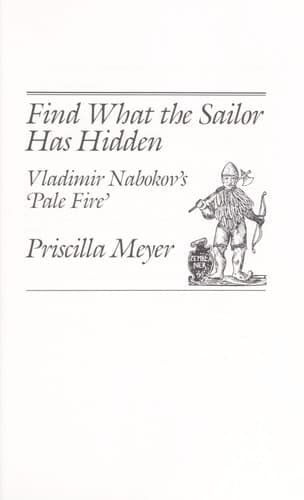
Find what the Sailor Has Hidden Vladimir Nabokov's Pale Fire
by Priscilla Meyer
Nabokov gives you a poem, a commentary, and an unreliable narrator all at once—a structure that forces you to hold multiple realities in your mind simultaneously, much like Woolf's six voices. But where Woolf's reflections illuminate each other, Nabokov's narrator actively distorts and obscures. It's a brilliant inversion of The Waves' transparency.
View book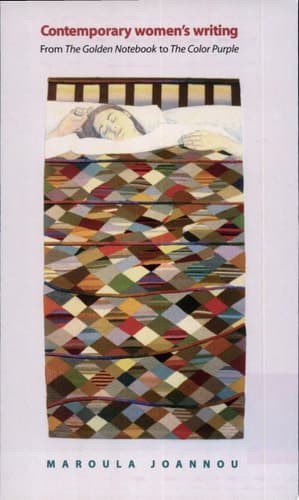
Contemporary Women's Writing From The Golden Notebook to The Color Purple
by Maroula Joannou
Published in 1962, this one's from a different era entirely, but Lessing was wrestling with the same problem Woolf was: how do you capture a consciousness that's fractured across different roles, desires, and political commitments? She uses actual notebooks as her formal device—a more concrete approach than Woolf's poetic reflections, but equally committed to showing how identity splinters and reforms.
View bookAbout Virginia Woolf
V
Virginia Woolf
1882–1941
Virginia Woolf was an English novelist, essayist, diarist, epistler, publisher, feminist, and writer of short stories, regarded as one of the foremost modernist literary figures of the twentieth century. ([Source][1].) [Comment from Ursula Le Guin on The Guardian][2]: > You can't write science fiction well if you haven't read it, though not all who try to write it know this. But nor can you write it well if you haven't read anything else. Genre is a rich dialect, in which you can say certain things in a particularly satisfying way, but if it gives up connection with the general literary language it becomes a jargon, meaningful only to an ingroup. Useful models may be found quite outside the genre. I learned a lot from reading the ever-subversive Virginia Woolf. > I was 17 when I read [Orlando][3]. It was half-revelation, half-confusion to me at that age, but one thing was clear: that she imagined a society vastly different from our own, an exotic world, and brought it dramatically alive. I'm thinking of the Elizabethan scenes, the winter when the Thames froze over. Reading, I was there, saw the bonfires blazing in the ice, felt the marvellous strangeness of that moment 500 years ago – the authentic thrill of being taken absolutely elsewhere. > How did she do it? By precise, specific descriptive details, not heaped up and not explained: a vivid, telling imagery, highly selected, encouraging the reader's imagination to fill out the picture and see it luminous, complete. > In [Flush][4], Woolf gets inside a dog's mind, that is, a non-human brain, an alien mentality – very science-fictional if you look at it that way. Again what I learned was the power of accurate, vivid, highly selected detail. I imagine Woolf looking down at the dog asleep beside the ratty armchair she wrote in and thinking what are your dreams? and listening . . . sniffing the wind . . . after the rabbit, out on the hills, in the dog's timeless world. > Useful stuff, for those who like to see through eyes other than our own. [1]:http://en.wikipedia.org/wiki/Virginia_Woolf [2]: http://www.guardian.co.uk/books/2011/may/14/science-fiction-authors-choice [3]: http://openlibrary.org/works/OL39360W/Orlando [4]: http://openlibrary.org/works/OL39320W/Flush
View author page