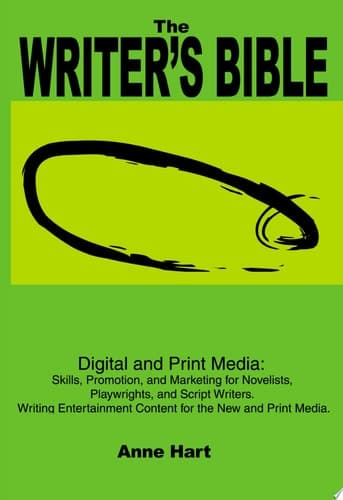
Synopsis
The Writer's Bible is a popular textbook, guide, and mentor to fiction, entertainment, and nonfiction writers in the new and print media. The book helps writers write their business plan as well as acquire skills. It's a career planning and writing-skills textbook and a popular book for authors headed for print-on-demand and traditional publishers as well as the electronic media.
If you write fiction, nonfiction, drama, learning materials, multimedia, and digital media or for the Internet, you'll find the information in this book useful and timely.
Here's how to be your own manuscript doctor and mentor, plan your writing career, acquire the skills to turn your writing into salable work, and acquire knowledge of how print-on-demand publishing works compared to traditional publishing, whether you write for the Internet and the new media (digital media) or for traditional publishing companies or yourself.
Plan your writing career and get the skills you'll need to move ahead in the current atmosphere of the literary arena and the world of information dissemination and re-packaging. Every writer needs a Bible and role models as well as a map to navigate places that buy author's works.
Recommendations
Bird by Bird Some Instructions on Writing and Life
by Anne Lamott
Where Hart's book is your strategic business blueprint, Lamott's is your creative conscience—she tackles the psychological and emotional barriers that keep writers stuck, using the same accessible, mentor-like voice you appreciated in The Writer's Bible. If you found Hart's practical guidance helpful, you'll treasure Lamott's permission to write badly first and her insistence that the real work happens in revision, not in planning.
View book
The Art of Fiction Notes on Craft for Young Writers
by John Gardner
Published in 1983, this predates Hart's work and offers something her textbook doesn't: a deep dive into the actual mechanics of how fiction creates the illusion of reality. Gardner writes like a master craftsman teaching an apprentice—he'll show you why certain narrative choices work while others fail, which complements Hart's focus on the business side with the artistic rigor that separates publishable work from merely competent work.
View book
Me, Inc. How to Master the Business of Being You A Personalized Program for Exceptional Living
by Scott W. Ventrella
Friedman updates Hart's framework for today's fragmented publishing landscape—she's written the book Hart would write if she were starting fresh in 2020, covering everything from platform-building to contract negotiation to the realities of hybrid publishing. You'll recognize the same systematic approach to treating writing as a career, but with current data on what actually sells and how authors make sustainable income.
View book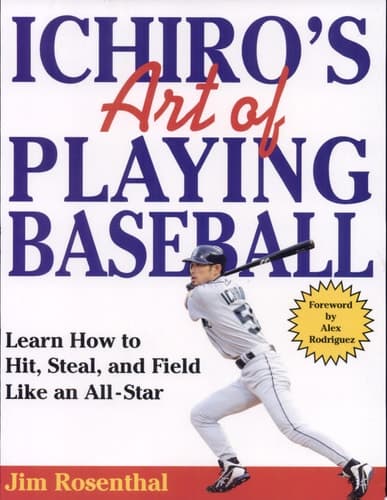
Ichiro's Art of Playing Baseball Learn How to Hit, Steal, and Field Like an All-Star
by Ichirō Suzuki
This is the surprise pick—it's not a writing manual at all, but a visual meditation on creative influence and originality that will fundamentally shift how you think about the 'skills' Hart emphasizes. Kleon argues that good writers don't start from scratch; they remix, reference, and build on what came before. If you're planning a writing career, understanding how to develop a distinctive voice through deliberate imitation is the missing piece between Hart's technical skills and actual publishable work.
View book
Wonderboy and the Black Hole of Nixvy Veck
by TERRY L. MIRLL
VanderMeer writes for the writer who's absorbed Hart's business lessons and Gardner's craft principles and now wants to understand how to build entire worlds—his book treats worldbuilding, character development, and plot as interconnected systems rather than separate skills. The illustrations and modular structure mean you can dip in by problem ("How do I make my setting feel alive?") rather than reading linearly, making it a practical reference tool alongside Hart's more comprehensive textbook approach.
View bookAbout Anne Hart
A
Anne Hart
Born 1941
Biography coming soon.
View author page