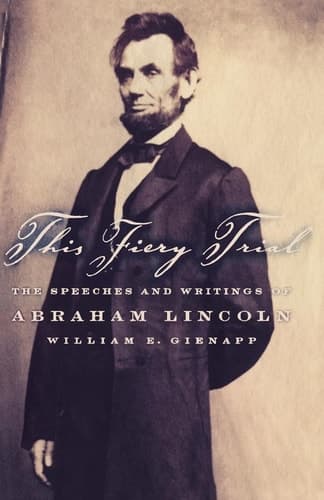
Synopsis
The most eloquent president in our history, Abraham Lincoln's literary ability was extraordinary. In This Fiery Trial, William Gienapp has brought together more than one hundred pieces by Lincoln, ranging from his first published political statement, printed in the Sangamo Journal in 1832, to his final public address, delivered just before his assassination.
Here are some of the greatest speeches in American history, including the Gettysburg Address and the Second Inaugural Address. Other pieces include Lincoln's "A House Divided" speech to the Republican State convention in 1858, excerpts from his famed debates with Stephen Douglas, and the text of the Emancipation Proclamation. The writings provide a documentary account of Lincoln's thought and how it evolved over time. Students can trace, for instance, how his thoughts on slavery and emancipation changed through the course of the war, from a rather limited view (free slaves for military purposes only) to his ringing endorsement of the Thirteenth Amendment, which ended slavery forever. Gienapp has provided detailed introductory headnotes for each piece, and the book includes an extensive chronology of Lincoln's life.
Often eloquent, frequently amusing, and occasionally profound, these writings offer an intimate portrait of Lincoln--in his own words.
Recommendations
Team of Rivals The Political Genius of Abraham Lincoln
by Doris Kearns Goodwin
You've just read Lincoln's own words—now see how he wielded them in action. Goodwin reconstructs the political chess matches where Lincoln's rhetoric became strategy, showing how his speeches weren't just eloquence but calculated moves to hold his cabinet together. It's the perfect companion piece that reveals the man behind the words you just encountered.
View book
The Autobiography of Benjamin Franklin - 1896
by Benjamin Franklin
Franklin's self-portrait has that same intimate, conversational quality you loved in Lincoln's writings—a founding figure speaking directly to you across centuries. But where Lincoln's voice grew darker and more philosophical, Franklin's is wry and practical, filled with aphorisms and self-deprecating humor. You'll notice how differently two great American minds processed their own significance.
View book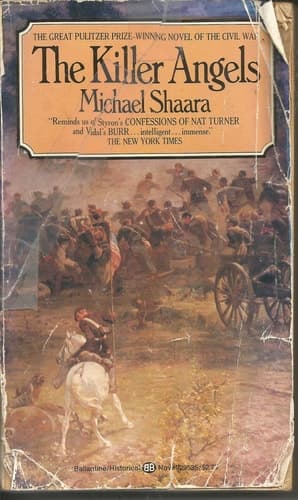
The Killer Angels
by Michael Shaara
Here's your surprise pick: a novel rather than a collection, but one that lets you inhabit the Civil War through the perspectives of the men Lincoln was commanding. Shaara reconstructs Gettysburg by imagining the internal thoughts of Lee, Longstreet, and Union officers—it's a way of experiencing the war's turning point that complements the documentary precision of Lincoln's own writings with human uncertainty and doubt.
View book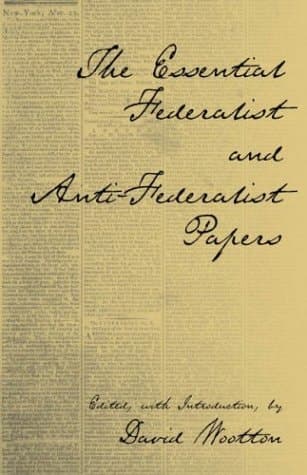
The Essential Federalist and Anti-Federalist Papers
by Alexander Hamilton
If you appreciated how Lincoln's speeches built arguments brick by brick—especially the logical architecture of the Gettysburg Address—you'll find the same intellectual rigor here, though in a different register. These essays are persuasion as philosophy, written in real time to convince a skeptical public. They show you how American political rhetoric was forged in the generation before Lincoln.
View book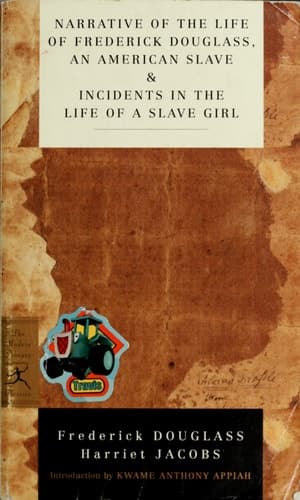
Narrative of the Life of Frederick Douglass, an American Slave & Incidents in the Life of a Slave Girl
by Frederick Douglass
Douglass was writing during Lincoln's lifetime, and his autobiography offers the counterpoint to Lincoln's evolving position on slavery—the voice of someone who lived the institution rather than theorizing about it. Reading these two voices together creates a dialogue: Douglass's searing indictment of slavery's brutality against Lincoln's careful political maneuvering toward emancipation. It's essential context for understanding what Lincoln's words actually meant to the people they affected.
View bookAbout Abraham Lincoln
A
Abraham Lincoln
1809–1865
Abraham Lincoln served as the 16th President of the United States from March 1861 until his assassination in April 1865. As an outspoken opponent of the expansion of slavery in the United States, Lincoln won the Republican Party nomination in 1860 and was elected president later that year. - [*Wikipedia*][1] The Library of Congress has shared [lots of photographs of Abraham Lincoln][2] in the Flickr Commons. [1]: http://en.wikipedia.org/wiki/Abraham_Lincoln [2]: http://www.flickr.com/photos/library_of_congress/tags/abrahamlincoln/
View author page