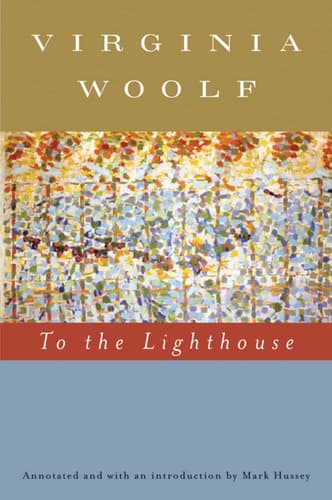
Synopsis
Virginia Woolf's To the Lighthouse is one of her greatest literary achievements and among the most influential novels of the twentieth century.
The serene and maternal Mrs. Ramsay, the tragic yet absurd Mr. Ramsay, and their children and assorted guests are on holiday on the Isle of Skye. From the seemingly trivial postponement of a visit to a nearby lighthouse, Woolf constructs a remarkable, moving examination of the complex tensions and allegiances of family life and the conflict between men and women.
Recommendations
Safe at Last in the Middle Years The Invention of the Midlife Progress Novel : Saul Bellow, Margart Drabble, Anne Tyler, and John Updike
by Margaret Morganroth Gullette
Ernaux does something Woolf pioneered but takes it in a radically different direction—she fragments narrative perspective across decades of French family life, but instead of diving into individual consciousness, she pulls back to show how history and social forces shape intimate moments. Where Woolf gives you the interior texture of a single day, Ernaux gives you the emotional archaeology of an entire era, and both writers share that unsettling ability to make the mundane feel profound.
View book
The remains of the day de Kazuo Ishiguro
by Gallix/François
This is a quieter book than it first appears—Ishiguro uses an unreliable narrator to explore how people construct narratives around their own lives, much like Woolf examines the gap between what people say and what they actually feel. Both novels are essentially about the stories we tell ourselves to survive, and both use precise, controlled prose to suggest emotional depths the characters themselves can't quite articulate.
View book
The Apocalyptic Vision of Mikhail Bulgakov's the Master and Margarita (Studies in Slavic Language & Literature)
by Edward E. Ericson
Here's your surprise: where Woolf gives you the interior monologue of a bourgeois family, Bulgakov gives you Soviet Moscow possessed by literal chaos—yet both novels are fundamentally about how art and human connection persist against forces that would crush them. The tonal shifts and the way Bulgakov moves between realism and the fantastical might feel like a departure, but the emotional core—that fierce attention to how people actually relate to each other—is pure Woolf.
View book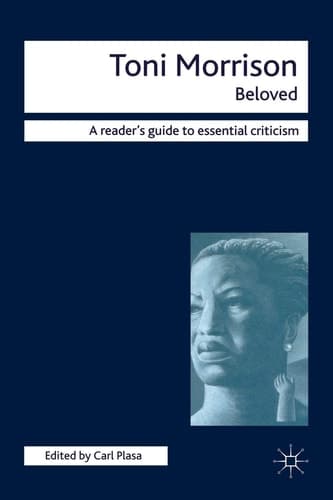
Toni Morrison - Beloved
by Carl Plasa
Morrison inherits Woolf's technique of fractured time and interior consciousness but weaponizes it to explore trauma and memory in ways Woolf couldn't quite reach. Both writers refuse linear narrative and insist that the past lives inside the present moment; Morrison's prose has that same lyrical density as Woolf's, but it's doing the harder work of reckoning with historical violence alongside domestic intimacy.
View book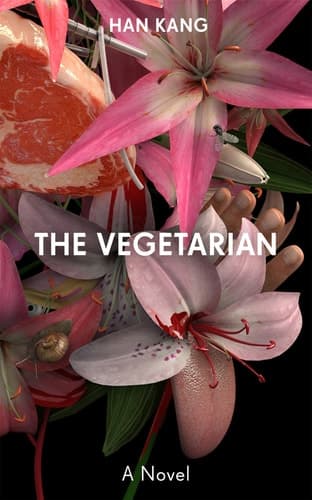
The Vegetarian A Novel
by Kang Han
Han Kang writes in that Woolfian space where a small, seemingly personal decision (refusing to eat meat) becomes a prism for examining family obligation, desire, and the violence of everyday life. Her prose has that same precision and psychological intensity as Woolf, but she's working in a contemporary Korean context, and her fragmented perspectives across family members create a portrait of how one person's autonomy destabilizes everyone around them—it's like watching a lighthouse beam sweep across different rooms and seeing what it illuminates.
View bookAbout Virginia Woolf
V
Virginia Woolf
1882–1941
Virginia Woolf was an English novelist, essayist, diarist, epistler, publisher, feminist, and writer of short stories, regarded as one of the foremost modernist literary figures of the twentieth century. ([Source][1].) [Comment from Ursula Le Guin on The Guardian][2]: > You can't write science fiction well if you haven't read it, though not all who try to write it know this. But nor can you write it well if you haven't read anything else. Genre is a rich dialect, in which you can say certain things in a particularly satisfying way, but if it gives up connection with the general literary language it becomes a jargon, meaningful only to an ingroup. Useful models may be found quite outside the genre. I learned a lot from reading the ever-subversive Virginia Woolf. > I was 17 when I read [Orlando][3]. It was half-revelation, half-confusion to me at that age, but one thing was clear: that she imagined a society vastly different from our own, an exotic world, and brought it dramatically alive. I'm thinking of the Elizabethan scenes, the winter when the Thames froze over. Reading, I was there, saw the bonfires blazing in the ice, felt the marvellous strangeness of that moment 500 years ago – the authentic thrill of being taken absolutely elsewhere. > How did she do it? By precise, specific descriptive details, not heaped up and not explained: a vivid, telling imagery, highly selected, encouraging the reader's imagination to fill out the picture and see it luminous, complete. > In [Flush][4], Woolf gets inside a dog's mind, that is, a non-human brain, an alien mentality – very science-fictional if you look at it that way. Again what I learned was the power of accurate, vivid, highly selected detail. I imagine Woolf looking down at the dog asleep beside the ratty armchair she wrote in and thinking what are your dreams? and listening . . . sniffing the wind . . . after the rabbit, out on the hills, in the dog's timeless world. > Useful stuff, for those who like to see through eyes other than our own. [1]:http://en.wikipedia.org/wiki/Virginia_Woolf [2]: http://www.guardian.co.uk/books/2011/may/14/science-fiction-authors-choice [3]: http://openlibrary.org/works/OL39360W/Orlando [4]: http://openlibrary.org/works/OL39320W/Flush
View author page