Synopsis
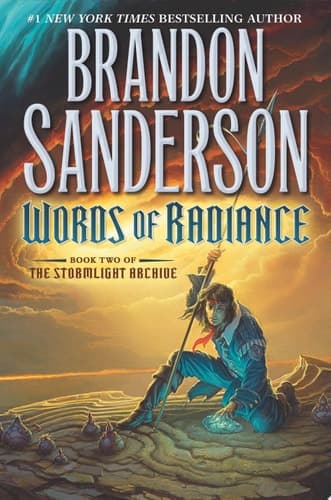
The eagerly awaited sequel to the New York Times bestselling The Way of Kings.
Six years ago, the Assassin in White, a hireling of the inscrutable Parshendi, assassinated the Alethi king on the very night a treaty between men and Parshendi was being celebrated. So began the Vengeance Pact among the highprinces of Alethkar and the War of Reckoning against the Parshendi.
Now the Assassin is active again, murdering rulers all over the world, using his baffling powers to thwart every bodyguard and elude all pursuers. Among his prime targets is Highprince Dalinar, widely considered the power behind the Alethi throne. His leading role in the war would seem reason enough, but the Assassin’s master has much deeper motives.
Expected by his enemies to die the miserable death of a military slave, Kaladin survived to be given command of the royal bodyguards, a controversial first for a low-status darkeyes. Now he must protect the king and Dalinar from every common peril as well as the distinctly uncommon threat of the Assassin, all while secretly struggling to master remarkable new powers that are somehow linked to his honorspren, Syl.
Brilliant but troubled Shallan strives along a parallel path. Despite being broken in ways she refuses to acknowledge, she bears a terrible burden: to somehow prevent the return of the legendary Voidbringers and their civilization-ending Desolation. The secrets she needs can be found at the Shattered Plains, but even arriving there proves more difficult than she imagined.
Meanwhile, at the heart of the Shattered Plains, the Parshendi are making an epochal decision. Hard pressed by years of Alethi attacks, their numbers ever shrinking, they are convinced by their war leader, Eshonai, to risk everything on a desperate gamble with the very supernatural forces they once fled. The consequences for Parshendi and humans alike—indeed, for Roshar itself—are as dangerous as they are incalculable.
Recommendations

The Name of the Wind
by Patrick Rothfuss
Like Kaladin, your protagonist here is a gifted young man learning to harness mysterious powers while carrying deep shame about his past, and Rothfuss layers in the same meticulous magic system that rewards close attention. The frame narrative structure also gives you that same sense of unreliable perspective—you're piecing together what really happened alongside the narrator's own uncertain recollection.
View book
The Poppy War A Novel
by R. F. Kuang
Kuang gives you that same slow-burn revelation of supernatural power tied to identity and heritage, but she cranks the moral complexity to devastating effect—your protagonist's shamanic abilities come with costs that make Kaladin's struggles look almost gentle. The Asian-inspired worldbuilding and the way she uses magic as a weapon of war rather than heroism will feel both familiar and genuinely unsettling.
View book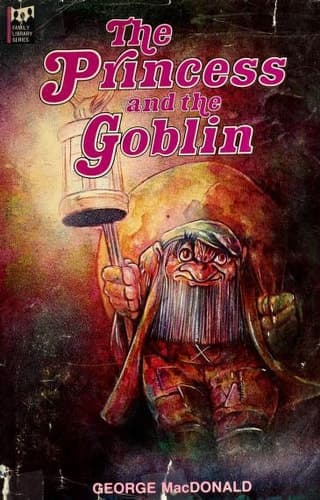
The Princess and the Goblin
by George MacDonald
This is my surprise pick for you—it's quieter than Sanderson's epic scope, but it shares his fascination with how systems of power actually work and how decent people navigate them. Where Words of Radiance gives you intricate magic and continental stakes, Addison gives you intricate court politics and the deeply human challenge of a protagonist trying to do right in a broken institution, with similar attention to how language and custom shape reality.
View book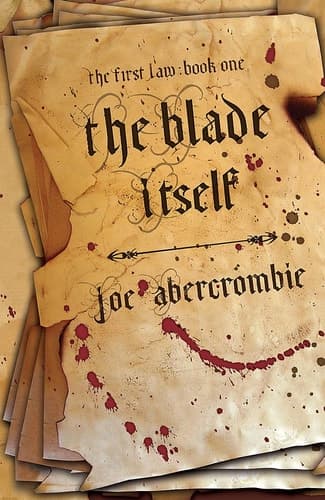
The Blade Itself
by Joe Abercrombie
Abercrombie does something Sanderson doesn't—he takes the epic fantasy framework and fills it with morally compromised characters who don't get clean redemption arcs. If you loved the Parshendi perspective-shifting in Words of Radiance, you'll appreciate how he gives you multiple viewpoints that genuinely contradict each other, and none of them are reliable narrators of their own virtue.
View book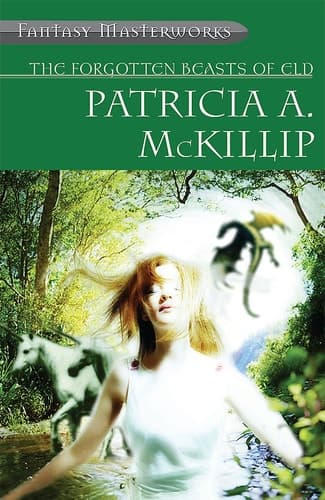
The Forgotten Beasts of Eld
by Patricia A. McKillip
Published in 1974, this predates your source material by four decades, but it's essential reading for anyone who loves Sanderson's approach to magic as something that requires study and carries real consequences. McKillip's prose is more lyrical than Sanderson's, but she shares his belief that magic systems should feel internally consistent and that a character's power is inseparable from their emotional and spiritual journey.
View bookAbout Brandon Sanderson
B
Brandon Sanderson
Born 1975
Brandon Sanderson (born December 19, 1975) is an American author known for his intricate and imaginative works in the genres of fantasy and science fiction. Born in Lincoln, Nebraska, Sanderson developed a passion for writing at a young age. He attended Brigham Young University, where he studied English and later earned a master's degree in creative writing. Sanderson is best known for creating the Cosmere, a vast fictional universe that encompasses many of his fantasy novels, where they share subtle connections and a common mythology, including the *Mistborn* series and *The Stormlight Archive*. The *Mistborn* trilogy, starting with the novel [*Mistborn: The Final Empire*][3], is a thrilling fantasy heist story set in a dystopian world ruled by a tyrannical lord. *The Stormlight Archive*, starting with the novel [*The Way of Kings*][8], is an epic fantasy series that combines political intrigue, war, and extensive world-building. In addition to his work within the Cosmere, Sanderson completed [Robert Jordan's][4] epic fantasy series "The Wheel of Time" after Jordan's passing. He has also authored several young adult series, such as *The Reckoners* and the *Skyward* series. Sanderson's analytical approach to world-building includes his "Sanderson's Laws of Magic," which distinguish between "hard" and "soft" magic systems in fantasy literature. His ability to create immersive worlds and compelling characters has earned him a dedicated fan base and numerous accolades, including the Hugo Award in 2013 for his novella [*The Emperor's Soul*][5], the Romantic Times Reviewers' Choice Award for his novels [*Elantris*][6] in 2005, and [The Hero of Ages][7] in 2008, as well as David Gemmell Legend Awards in 2011 for [*The Way of Kings*][8] and in 2015 for [*Words of Radiance*][9]. In 2022, Sanderson's Kickstarter campaign for four secret novels became the most successful in history, raising over $41 million. As of 2022, he is a co-creator and former host of the *Writing Excuses* podcast, an educational podcast for writers by writers that was started in 2008. (Sources: [1][1],[2][2]) [1]: https://www.brandonsanderson.com/pages/hello-my-names-brandon [2]: https://en.wikipedia.org/wiki/Brandon_Sanderson [3]: https://openlibrary.org/works/OL5738148W [4]: https://openlibrary.org/authors/OL233594A [5]: https://openlibrary.org/works/OL19960448W [6]: https://openlibrary.org/works/OL5738147W [7]: https://openlibrary.org/works/OL5738154W [8]: https://openlibrary.org/works/OL15358691W [9]: https://openlibrary.org/works/OL16813053W
View author page