Synopsis
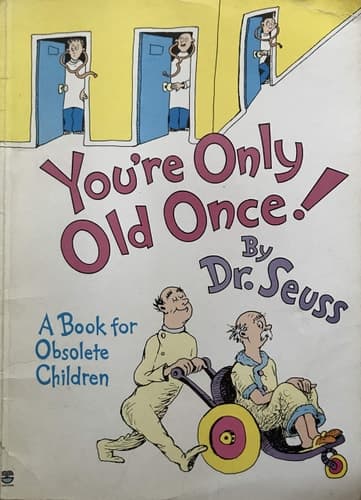
If laughter is the best medicine, then Youâ€re Only Old Once! is a delightful new defense against aging. Anyone who has ever submitted to a battery of medical tests will empathize with Dr. Seussâ€s Everyman as we follow him through his checkup with the experts at the Golden Years Clinic. From the initial Eyesight and Solvency Test through all the stops along Stethoscope Row to finally being “properly pilled†and “properly billed,†Dr. Seuss lightens the aches and pains of growing old with his inimitable wit and wisdom. A perfect gift for anyone over 50!From the Hardcover edition.
Recommendations
The Grapes of Wrath John Steinbeck
by John Steinbeck
Here's your surprise pick—a literary classic that shares Seuss's gift for finding dignity and dark humor in hardship. Where Seuss uses whimsy to deflate the indignities of aging, Steinbeck uses unflinching realism to show ordinary people enduring extraordinary challenges, but with the same stubborn grace. Both authors refuse to let their characters be pitied, instead celebrating their resilience.
View book
Bossypants
by Tina Fey
Fey writes memoir the way Seuss writes verse—with a comedic rhythm that makes you laugh at genuine truths about getting older, dealing with institutions (in her case, show business rather than medicine), and the absurdity of being a human body in the world. She has that same ability to be both silly and wise without ever becoming sentimental.
View book
The Tuesday Club Murders
by Agatha Christie
Osman captures that same spirit of aging as an adventure rather than a decline—his four retirees are clever, capable, and funny in ways that have nothing to do with their age. Like Seuss, he treats his older characters as the heroes of their own story, complete with genuine stakes and surprises, while maintaining a light touch that never feels patronizing.
View book
The Phantom Tollbooth
by Norton Juster
Both Seuss and Juster are masters of the literary pun and the invented world that teaches you something while you're laughing—but Juster builds an entire landscape of wordplay and logic puzzles that rewards the kind of sharp, observant mind that appreciates Seuss's medical satire. It's whimsy with intellectual backbone.
View book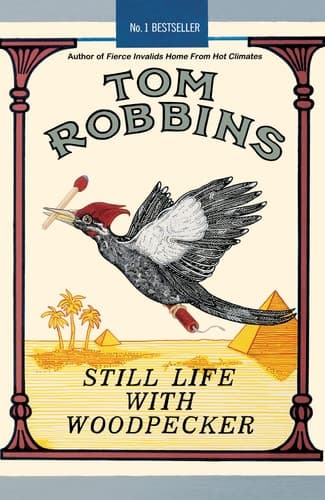
Still Life with Woodpecker
by Tom Robbins
Robbins shares Seuss's belief that language itself is a playground—his sentences twist and loop with the same kind of anarchic joy—but he applies it to adult themes of love, freedom, and what it means to stay vital and curious. If you loved the inventive language in Seuss, Robbins will make you fall in love with English all over again.
View bookAbout Dr. Seuss
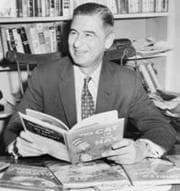
Theodor Seuss Geisel was born on in Springfield, Massachusetts to German-American parents. He attended public schools and then went to Dartmouth College, where he became editor of the Dartmouth _Jack-O-Lantern_. When he was barred from all extracurricular activities, he continued to write for the paper using the pseudonym "Seuss." After he graduated he became a contributor to the magazine The Judge, and began to sign his work as "Dr. Seuss." He attended Lincoln College, Oxford to earn a D.Phil in literature, but married Helen Palmer in 1927 and returned to the United States without earning the degree. He published humorous articles and illustrations in _The Judge_, _The Saturday Evening Post_, _Life_, _Vanity Fair_, and _Liberty_ and supported himself and his wife through the Great Depression with commercial illustrations for General Electric, NBC, Standard Oil, and many other companies. He also wrote and drew a short-lived comic strip called _Hejji_ in 1935. In 1937, returning from an ocean voyage to Europe, he wrote his first book, _And to Think That I Saw It on Mulberry Street_. When World War II began, he began to create political cartoons and became an editorial cartoonist for the left-wing New York City newspaper, _PM_. His political cartoons were later published in _Dr. Seuss Goes to War_. In 1942, he began producing propaganda posters for the Treasury Department and the War Production Board. In 1943, he joined the Animation Department of the First Motion Picture Unit of the U.S. Army Air Forces, where he wrote propaganda and training films. After the war, he and his wife moved to La Jolla, California. He returning to writing and illustrating children's books. In 1954, _Life_ magazine published an article on the dullness of children's books, and Geisel was inspired to write _The Cat in the Hat_. In 1967, his wife Helen committed suicide. He married Audrey Stone Dimond in 1968. Geisel died in La Jolla, California in 1991. Over the course of his career, Geisel wrote over 60 children's books, either under the pseudonym "Dr. Seuss" for the ones he wrote and illustrated himself, "Theo. LeSieg" for books he wrote but others illustrated, or "Rosetta Stone" for _Because a Little Bug Went Ka-choo_ (1975). He also wrote two books for adults: _The Seven Lady Godivas_; _Oh, The Places You'll Go!_; and _You're Only Old Once_.
View author page