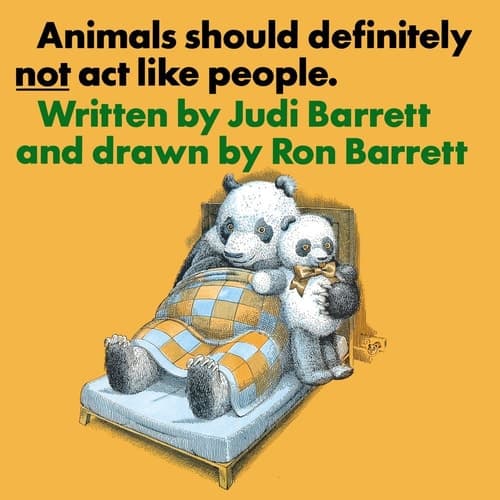
Animals Should Definitely Not Act Like People
Judi BarrettPublished1980
Pages32
Formathardcover
PublisherAtheneum Books for Young Readers
Synopsis
Animals should definitely not act like people.
...because it would be foolish for a fish, so silly for a sheep, and preposterous for a panda -- as Ron Barrett's wonderfully detailed drawings show.
This book will show children a new way of looking at animals and people, even as they laugh.
Recommendations
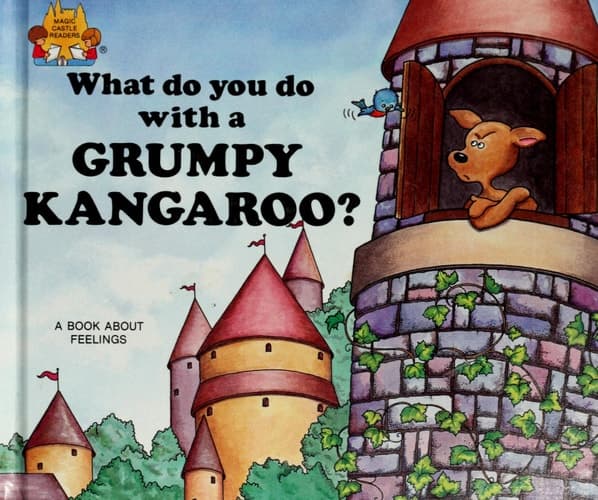
What Do You Do with a Grumpy Kangaroo?
by Jane Belk Moncure
Mayer takes the same premise—animals behaving in absurdly human ways—but flips it by having a girl wake up to find animals in her house doing distinctly un-animal things. The humor lands in that same sweet spot of visual comedy and gentle logic-breaking that makes Barrett's book so delightful, with illustrations that are equally detailed and expressive.
View book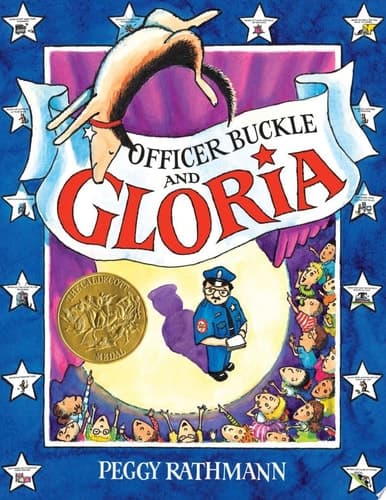
Officer Buckle and Gloria
by Peggy Rathmann
This Caldecott winner shares Barrett's gift for finding comedy in the contrast between how animals *should* behave and how they actually do—here, a police dog who steals the show by acting like a showman rather than a service animal. Rathmann's illustrations have that same meticulous, expressive quality that makes every page worth studying.
View book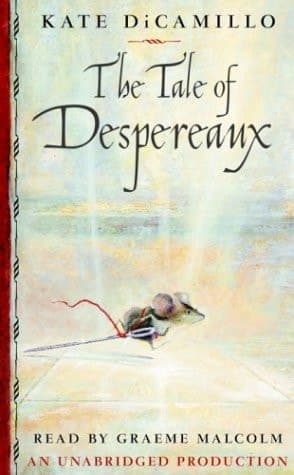
The Tale of Despereaux
by Kate DiCamillo
Here's your genre-shift: a chapter book that uses anthropomorphic animals not for comedy but for genuine emotional storytelling. DiCamillo writes a mouse who's brave, a rat who's lonely, and a princess who's forgotten—all with the kind of tender observation that shows how animal characters can reveal human truths rather than just mock them. It's what happens when you take the premise of animals-acting-like-people seriously.
View book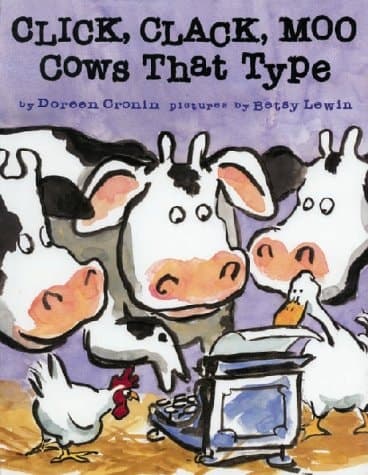
Click, Clack, Moo Cows that Type
by Doreen Cronin
Cronin's farm animals scheme and negotiate like unionized workers—they're not just acting like people, they're acting like *specific kinds* of people with agendas and personalities. The humor is more sophisticated than it appears, with animals using distinctly human problem-solving (and stubbornness), and Betsy Lewin's illustrations capture that mischievous intelligence perfectly.
View book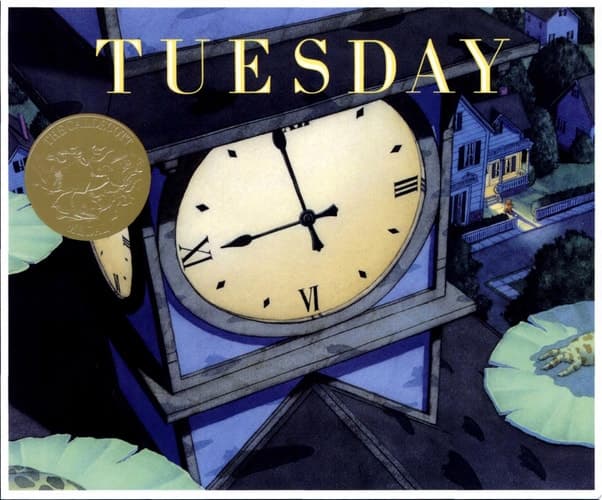
Tuesday
by David Wiesner
A wordless picture book from 1991 where frogs spend an evening doing decidedly un-frog things—flying on lily pads, exploring a town, causing gentle chaos. Like Barrett, Wiesner uses detailed, imaginative illustrations to show us the absurdity and wonder of animals breaking their own rules, but he trusts you to read the story entirely through pictures, which gives it an almost dreamlike quality.
View bookAbout Judi Barrett
Biography coming soon.
View author page