Synopsis
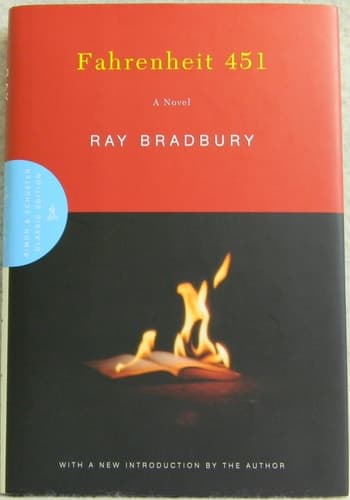
Fahrenheit 451 is a 1953 dystopian novel by American writer Ray Bradbury. Often regarded as one of his best works, the novel presents a future American society where books are outlawed and "firemen" burn any that are found. The book's tagline explains the title as "'the temperature at which book paper catches fire, and burns": the autoignition temperature of paper. The lead character, Guy Montag, is a fireman who becomes disillusioned with his role of censoring literature and destroying knowledge, eventually quitting his job and committing himself to the preservation of literary and cultural writings.
The novel has been the subject of interpretations focusing on the historical role of book burning in suppressing dissenting ideas for change. In a 1956 radio interview, Bradbury said that he wrote Fahrenheit 451 because of his concerns at the time (during the McCarthy era) about the threat of book burning in the United States. In later years, he described the book as a commentary on how mass media reduces interest in reading literature.
In 1954, Fahrenheit 451 won the American Academy of Arts and Letters Award in Literature and the Commonwealth Club of California Gold Medal. It later won the Prometheus "Hall of Fame" Award in 1984 and a "Retro" Hugo Award, one of a limited number of Best Novel Retro Hugos ever given, in 2004. Bradbury was honored with a Spoken Word Grammy nomination for his 1976 audiobook version.
Recommendations

Margaret Atwood - The Handmaid's Tale (French Edition)
by Helene Greven
Like Montag, Atwood's protagonist lives under a regime that weaponizes information control, but she explores how totalitarianism colonizes the body and language itself rather than just burning books. The slow realization of what's been lost—both personally and culturally—will feel familiar, but Atwood's focus on how power operates through intimacy and reproduction gives it a distinctly different angle on censorship.
View book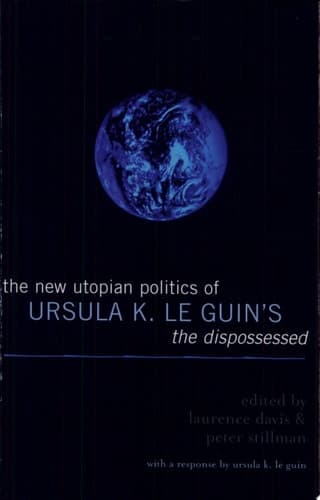
The New Utopian Politics of Ursula K. Le Guin's The Dispossessed
by Laurence Davis
This 1974 novel shares Bradbury's interest in how societies structure themselves around ideas, but Le Guin complicates the binary of oppression versus freedom by imagining two worlds with radically different values—one capitalist, one anarchist—and showing how each constrains human flourishing in different ways. It's philosophical science fiction that trusts readers to think alongside the narrative, much like Fahrenheit 451 does.
View book
Toni Morrison - Beloved
by Carl Plasa
This might seem like a departure, but Morrison's novel is fundamentally about how a society attempts to erase and deny historical knowledge—the trauma of slavery—and how that erasure haunts the present. Like Bradbury, she's investigating what happens when a culture tries to burn away inconvenient truths, except she's doing it through lyrical, fragmented prose that mirrors the fractured consciousness of people living under that denial.
View book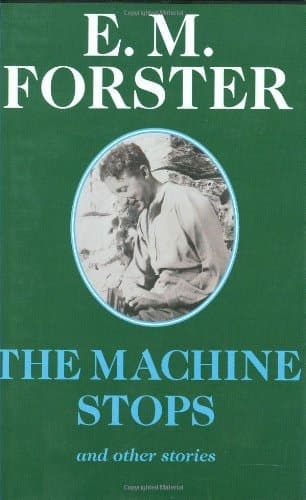
The Machine Stops: And Other Stories (Abinger Editions)
by E.M. Forster
Written in 1909, this novella predates Bradbury by nearly half a century and imagines a world where humanity has become dependent on a vast technological system that controls all information and movement—making it a surprising ancestor to Fahrenheit 451's concerns. Forster's prose is elegant and restrained where Bradbury is urgent, but both writers are asking: what happens when we outsource our thinking to systems we don't understand?
View book
El nombre de la rosa / The Name of the Rose
by Umberto Eco
Eco's medieval mystery is ostensibly about a murder in a monastery, but it's really a novel about how institutions control knowledge through architecture, cataloging, and secrecy—the inverse of Bradbury's book burning. A librarian-detective uncovers how a library can be designed as a labyrinth to prevent certain books from being read, making this a meditation on censorship that's playful, erudite, and occasionally maddening in the best way.
View bookAbout Ray Bradbury
Biography coming soon.
View author page